
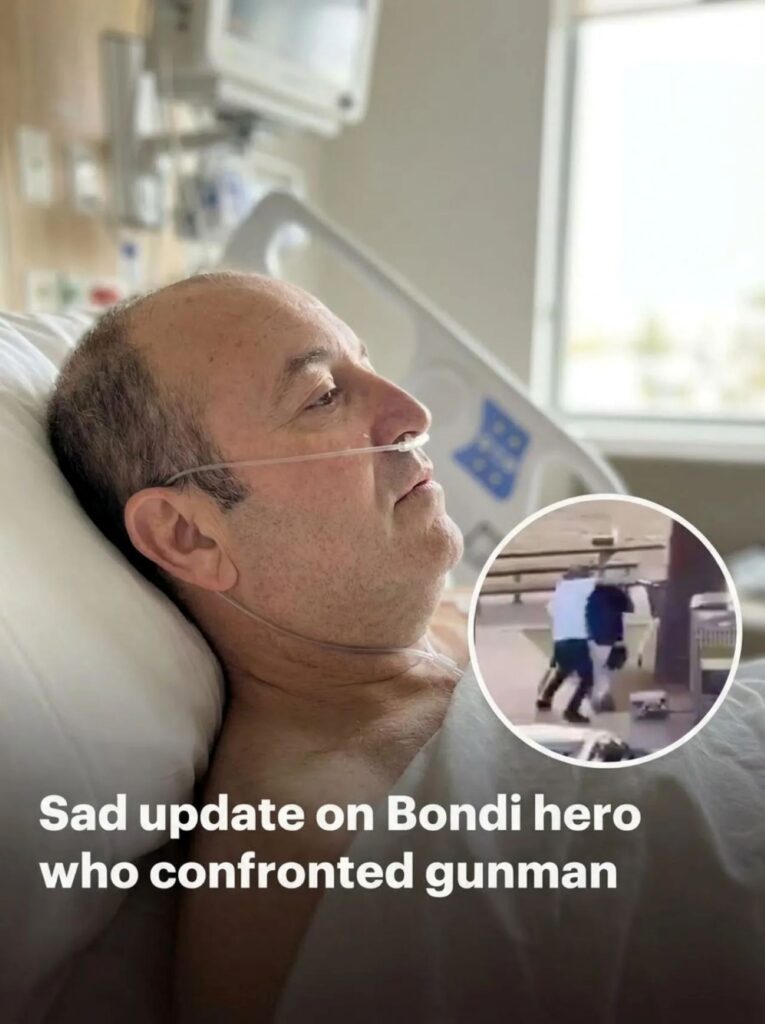
Ahmed Al-Ahmed, the Sydney shop owner whose split-second bravery during the Bondi Beach attack helped prevent even greater loss of life, is continuing a long and complex recovery as new details emerge about the seriousness of his injuries. While the nation has focused on his heroic actions, those close to him say the physical toll has been far heavier than first understood, requiring ongoing hospital care, multiple procedures, and careful monitoring by specialist doctors.
Al-Ahmed, 43, remains under treatment at St George Hospital, where medical teams are addressing a combination of injuries sustained when he intervened during one of Australia’s most confronting public safety emergencies in decades. According to his former migration lawyer, Sam Issa, who has remained in close contact with the family, Al-Ahmed has already undergone several medical procedures and is still experiencing reduced sensation in one arm. Doctors believe the issue may be linked to nerve damage, a complication that could take months—or longer—to fully assess.
One injury in particular has raised concern among his medical team, requiring ongoing observation and a cautious long-term approach to treatment. While doctors are optimistic, they have emphasized that recovery will not be quick or simple. For a man who earns his living through hands-on work and provides for a young family, the uncertainty adds another layer of strain to an already overwhelming situation.
Despite this, those who know Al-Ahmed say his mental strength remains intact. Issa has described him as emotionally resilient, calm, and unwavering in his belief that he did the right thing. At no point, Issa says, has Al-Ahmed expressed regret for intervening. He has repeatedly explained that his actions were instinctive, driven by an immediate need to protect others when he realized the danger unfolding in front of him.
The incident took place during Hanukkah by the Sea, a peaceful community gathering where families had assembled to mark the beginning of the Jewish holiday. What should have been a celebration of light and tradition instead became a scene of chaos, fear, and unimaginable tragedy. As an armed individual moved through the crowd, panic spread rapidly. In that moment, Al-Ahmed made a decision that would define him in the public eye.
Video footage later circulated widely across social media platforms and major Australian news outlets, showing Al-Ahmed approaching the attacker from behind, restraining him, and helping secure the weapon. Security experts and law enforcement officials have since suggested that his intervention may have prevented the situation from escalating even further, potentially saving additional lives. The footage sparked nationwide debate about courage, community responsibility, and the unpredictable nature of heroism.
Family members later revealed that in the moments before stepping in, Al-Ahmed quietly asked a relative to pass on a message to his loved ones. He understood the risk he was taking. He understood that he might not survive. Yet he moved forward anyway. Those closest to him say this moment reflects who he is at his core—a man guided by compassion rather than calculation.
Al-Ahmed immigrated to Australia from Syria more than a decade ago, building a life in Sydney as a small business owner, husband, and father to two young daughters. Friends say he has always been deeply committed to family and community, values shaped by his experiences and faith. A Muslim by faith, Al-Ahmed has made it clear that his actions had nothing to do with the identities, beliefs, or backgrounds of those present at the event. He has said he simply could not stand by while innocent people were in danger.
In the aftermath of the attack, his story has resonated far beyond Sydney. Political leaders, community figures, and international voices have publicly praised his bravery. Prime Minister Anthony Albanese described the incident as a powerful example of Australians stepping up to protect strangers in moments of crisis, highlighting the country’s shared values of courage and solidarity. New South Wales Premier Chris Minns went further, calling Al-Ahmed a genuine hero whose actions undoubtedly helped save lives.
Messages of support have poured in from across the globe, including from high-profile international figures such as Donald Trump. Social media platforms have been flooded with tributes, fundraising efforts, and calls for official recognition. For many Australians, Al-Ahmed’s actions have become a symbol of unity in a time marked by grief, fear, and difficult conversations about public safety, violent crime, and extremism.
At the same time, advocates have emphasized the importance of not letting the hero narrative overshadow the human cost. Recovery from traumatic injuries—particularly those involving nerve damage—can be slow, painful, and emotionally draining. Medical experts note that patients often face months of rehabilitation, uncertainty around long-term function, and psychological aftereffects such as anxiety or post-traumatic stress. Support systems, both medical and community-based, play a crucial role in long-term outcomes.
As discussions continue around national security, event safety, and emergency response protocols, Al-Ahmed’s case has also reignited conversations about the everyday individuals who find themselves thrust into extraordinary circumstances. His story challenges the assumption that heroism comes from training or authority alone, showing instead how ordinary people sometimes act decisively when systems fail or moments demand immediate action.
For now, Al-Ahmed’s focus remains on healing and returning to his family. Doctors have not provided a definitive timeline for his recovery, and those close to him say patience will be essential. His daughters have visited him in hospital, a powerful reminder of what was at stake that day and why his actions have resonated so deeply with the public.
In a country still grappling with the shock of the Bondi Beach attack, Ahmed Al-Ahmed’s ongoing recovery stands as a reminder that the aftermath of violence does not end when headlines fade. It continues quietly in hospital rooms, rehabilitation wards, and family homes. Yet for many, his resilience also represents something else: proof that in moments of darkness, courage and humanity can still rise—often from the most unexpected places.