
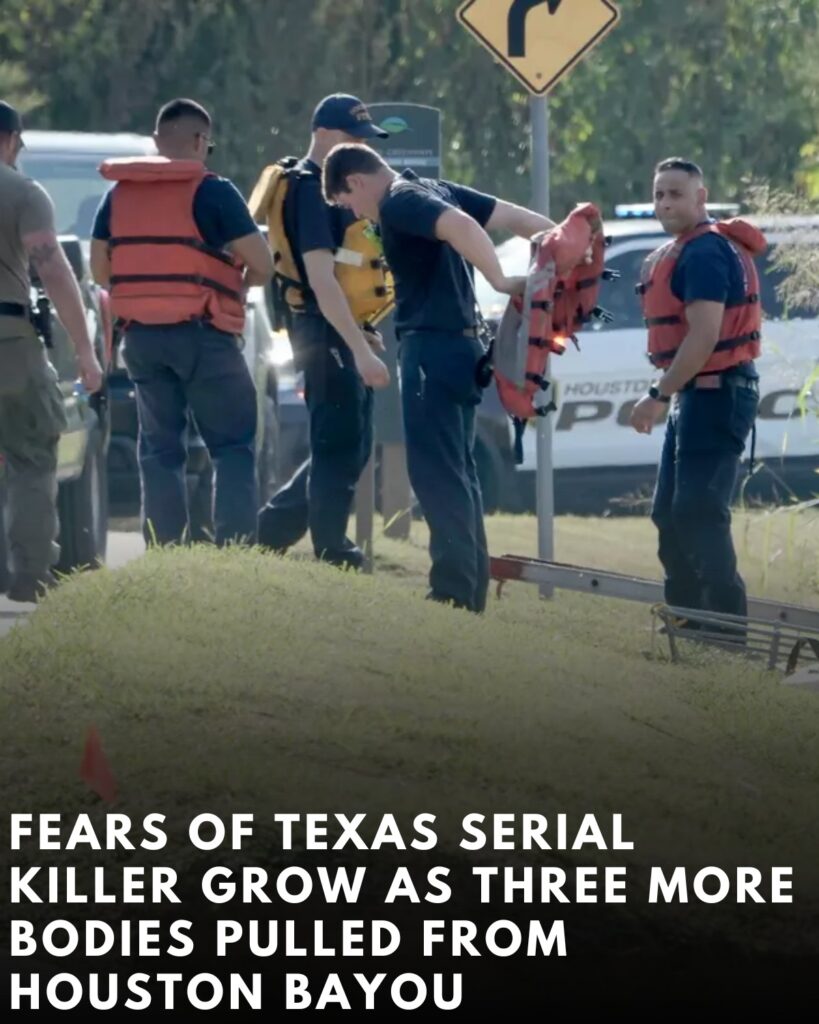
Three more bodies recovered from Houston-area bayous over the past week have fuelled a fresh wave of fear and online speculation about a possible serial killer, even as police and criminal justice experts insist there is no evidence linking the deaths.
Houston Police and other local agencies have investigated a steady flow of “bayou deaths” for years in a city criss-crossed by waterways, but the pace of recoveries in recent days has reignited public anxiety, particularly on social media, where some users have claimed a single offender may be responsible. Authorities say those rumours are unhelpful, and that each case must be examined on its own facts.
Two of the most recent recoveries came on the Monday before Christmas, when police were called to separate locations along two bayous. In one case, a body was found in Buffalo Bayou near downtown Houston after a passer-by called 911. A second body was discovered near Brays Bayou, on rocks close to the water near Texas Spur 5 and Old Spanish Trail, with both recoveries occurring around mid-morning, according to local reporting.
Investigators have not publicly identified the deceased in either case, and police said at least one of the bodies was so significantly decomposed that officers could not determine age or other identifying details at the scene. Autopsies and formal identification are handled by the Harris County Institute of Forensic Sciences, which determines cause and manner of death once examinations are complete.
The uncertainty around many waterway deaths has become a central feature of the public debate. Local outlets have reported that the number of bodies recovered from Houston’s bayous this year is in the low-to-mid 30s, close to last year’s total of 35. In some cases, medical examiners are able to conclude a death was accidental, suicidal, natural, or a homicide, but a significant number are ultimately classified as “undetermined” when available evidence cannot support a definitive finding.
Experts say that does not mean an investigation has failed, but reflects what water and time can do to the human body and to potential forensic evidence. “What that means is that the pathologist has done as thorough as an examination as they possibly can,” Dr Elizabeth Gilmore, a forensic criminologist at the University of Houston, told KPRC 2. “And what they have decided is that they cannot attribute what the manner of death would be… there’s just not enough information for the doctor to say this is what happened.”
Gilmore and others have noted that bodies in waterways can sink and remain submerged until decomposition gases cause them to rise, sometimes long after death. In a warm climate such as Houston’s, heat can accelerate decomposition, affecting soft tissue and complicating efforts to determine how long a body has been in the water or whether injuries occurred before death. Identification may also be delayed, requiring dental records, fingerprints where possible, or DNA testing.
For families, those scientific limitations can translate into months or years without answers. KPRC 2 reported on the case of Anthony Curry, whose body was found in White Oak Bayou. Although his death was ruled accidental, his sister, Alexis Curry, described the emotional toll of uncertainty. “It’s heartbreaking… to not know for real,” she told the station. “It just has your mind running… it’s scary and it’s heartbreaking.” She added: “For some people, your mind just runs all day trying to figure it out.”
That sense of unease has been amplified by periodic clusters of recoveries, when multiple bodies are found within days. In September, ABC13 reported that police recovered five bodies in less than a week, and the station said the latest round of recoveries has again stirred the question online: is a serial killer operating near the bayous?
ABC13 said experts’ answer is no, and it interviewed residents and visitors who remain unconvinced. “The math isn’t mathing, I think there’s a serial killer,” Juan Sandoval, who was visiting Houston, told the station, describing how the discussion had spread widely on social media beyond Texas. Erick Cortez, a Houston resident interviewed alongside him, said: “There must be someone out there, no? Because it’s ridiculous that so many people are dying in the bayou, I think it’s unfortunate that they haven’t found the person.”
Police leadership has publicly pushed back on the speculation. “For us as an agency, rumors stir fear and anxiety in our communities,” Houston Police Chief Noe Diaz said during a September news conference, according to ABC13. The station reported that experts say there is no evidence a single person is responsible, and that many deaths have separate circumstances consistent with accidents, intoxication, self-harm, or unrelated criminal incidents.
University of Houston criminal justice professor Krista Gehring told ABC13 that popular portrayals of water as a place to dispose of evidence can shape public perception. “Because a lot of times people think, ‘Oh they’re in the bayou, they are dumping the body to get rid of evidence,’ because that’s what we see in those shows, that the water will wash away the evidence’ people could have just had an accident, people could’ve done this to themselves, people could’ve been intoxicated,” she said.
Retired Houston Police Captain Greg Fremin also urged caution about drawing conclusions while still encouraging people to take sensible precautions. “I tell the citizens of Houston, we have a relatively safe city for the most part, but it’s just like any other big city, there is crime, you have to be vigilant, have situational awareness of what’s going on but this is not anything to be concerned about,” he said.
Local reporting has also emphasised that some investigations remain active and may change with new evidence, including surveillance video, witness statements, or tips from the public. Police have urged anyone with relevant information about missing persons or suspicious activity near waterways to come forward, even if the details seem minor.
While the latest recoveries have become the focus of online discussion, officials and forensic experts say the broader picture is more complex: a large city with extensive waterways, long stretches of poorly lit paths, heavy traffic corridors, and a mix of recreational and industrial areas. In that environment, they say, deaths found in or near water can arise from many causes, and the challenge for investigators is sorting each case into facts rather than patterns.