
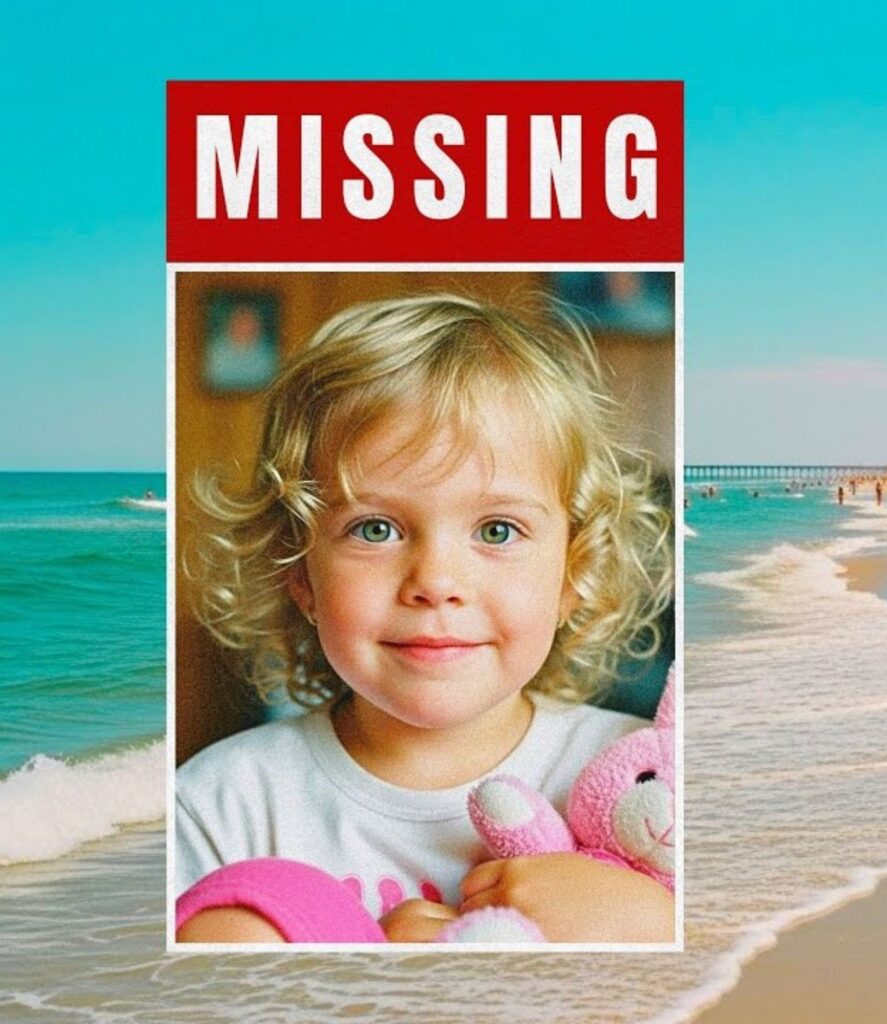
The Girl Who Was Stolen by a Smile: How a Passport Clerk Solved the 31-Year Mystery of Lily Cooper
Milbrook, Pennsylvania. There are stories that keep you up at night because they are violent, and then there are stories that haunt you because they are quiet. The disappearance of Lily Marie Cooper is the latter—a nightmare that didn’t begin with a scream in the dark, but with a plate of warm chocolate chip cookies and a neighborly smile on a sunny Thursday afternoon. It is a story that proves the monsters we fear aren’t always hiding under the bed; sometimes, they are living right next door, watering their lawns, borrowing sugar, and patiently waiting for the moment we look away. For 31 years, the town of Milbrook held its breath, haunted by the memory of a four-year-old girl in a pink swimsuit who waved goodbye and simply ceased to exist. But as we learned in a stunning twist that has set the internet on fire this week, the truth was hiding in the most bureaucratic, mundane place imaginable: a passport office in Portland, Oregon.
The year was 1990, a time that now feels like a different planet. It was an era before Amber Alerts lit up our smartphones, before Ring cameras watched our front porches, and before we tracked our children’s locations with GPS dots on a map. In the rolling hills of central Pennsylvania, life moved at the speed of a ceiling fan on a humid afternoon. Milbrook was the kind of American sanctuary where “stranger danger” was a lecture given in school assemblies, not a daily reality. People left their doors unlocked. Kids rode bikes until the streetlights hummed to life. And in this world of perceived safety, the Cooper family—David, Patricia, and their four children—were the portrait of suburban normalcy.
Lily Cooper was the baby of the family, a four-year-old spark of light with curly blonde hair and bright green eyes that seemed too big for her face. She was the kind of child who was perpetually protected, surrounded by a phalanx of loving siblings: 12-year-old Michael, 10-year-old Sarah, and 8-year-old Jennifer. She was rarely out of sight, shadowing her mother, Patricia, around the kitchen or coloring quietly with her favorite pink crayon. But the Coopers had a blind spot, one shared by almost everyone in their tight-knit community: they trusted their neighbors. And why wouldn’t they? Frank and Carol Hayes, who lived just two streets over in a neat brick ranch house, were the definition of “good people.”
Frank Hayes worked at the steel mill with Lily’s father, David. They shared shifts, coffee breaks, and the camaraderie of blue-collar labor. Carol Hayes volunteered at the local library with Patricia, helping organize summer reading programs and bringing homemade treats for the staff. They were a childless couple in their 40s, quiet but friendly, the type who always remembered birthdays and waved from their car. They had integrated themselves into the fabric of the Coopers’ lives so seamlessly that they were practically family. So, when Carol knocked on the Coopers’ screen door that Thursday in July 1990, holding a plate of cookies and offering to take Lily to the beach, no alarm bells rang.
The pitch was perfect in its innocence. Frank and Carol were heading to Ocean City, Maryland, for a weekend getaway to escape the stifling Pennsylvania heat. “We thought maybe Lily would like to come,” Carol said, sipping iced tea at the Coopers’ kitchen table. It was a casual offer, framed as a favor to tired parents who deserved a break. Patricia hesitated—that primal maternal instinct flickering for a brief second—but logic won out. It was just two nights. The older kids were away at a cousin’s house. Lily knew and loved the Hayes couple. David agreed, thinking it would be a nice adventure for his little girl. They said yes.
That Friday morning is a scene that has likely replayed in Patricia Cooper’s mind every single day for the last three decades. The image of Lily, dressed in her pink shorts and white t-shirt, clutching her worn pink stuffed rabbit. The way Carol buckled her into the car seat of the blue sedan, double-checking the straps with a performance of care that is chilling in hindsight. The wave through the back window as the car pulled away. “We’ll see you Sunday,” Carol had promised. But Sunday came, and the sun went down, and the driveway remained empty.
The panic didn’t hit all at once; it crept in. First, it was just annoyance that they were running late. Then, worry when the phone didn’t ring. By 9:00 PM on Sunday, the silence in the Cooper house was deafening. David called Frank’s brother, who hadn’t heard from them. They drove to the Hayes’ house on Maple Street, expecting to see lights, maybe a flat tire in the driveway. Instead, they found a dark house. No car. No movement. When police finally entered the home, the reality of the situation hit them like a physical blow. The house wasn’t just empty; it was purged.
This wasn’t a family that had gone on a weekend trip and got delayed. This was a calculated, scorched-earth extraction. The closets were bare. The furniture was gone. The trash cans were scrubbed clean. Frank and Carol Hayes hadn’t just left for the weekend; they had packed up their entire lives, erased their footprint, and vanished, taking Lily Cooper with them. Investigators found only one clue in the hollowed-out shell of a home: a single letter from a P.O. Box in Portland, Oregon, with a cryptic note: “Everything is ready. Come when you can.”
The investigation that followed was a masterclass in frustration. In 1990, connecting the dots between states was a slow, agonizing process of fax machines and phone tag. Detective James Crawford, a veteran cop who took the case personally, found that Frank and Carol were ghosts. They had quit their jobs days before the abduction, unbeknownst to the Coopers. They had been planning this for months, perhaps years. They were predators who had been lying in wait, grooming an entire family for the sole purpose of stealing a child.
As the weeks turned into months, and months into years, the Cooper family began the slow, torturous descent into “ambiguous loss”—that unique hell where you cannot grieve because you do not know. Patricia Cooper kept a candle burning in the front window every single night, a beacon for a child who might never see it. They kept Lily’s room exactly as she left it, a museum of 1990 childhood, with stuffed animals gathering dust and a silence that screamed. The siblings grew up in the shadow of the sister who wasn’t there, their lives shaped by the void at the dinner table.
Across the country, the FBI joined the hunt. Agent Rebecca Martinez, a specialist in child abduction, recognized the pattern. This wasn’t a ransom kidnapping. It wasn’t a murder. It was a theft of life. The Hayes couple wanted a child, and they decided to take one. They were “caregivers” in their own twisted minds, likely convincing themselves they were saving Lily or giving her a better life, while simultaneously destroying the family that actually loved her. But despite national alerts and age-progression photos, the trail went cold. The Hayes had slipped through the cracks of a pre-digital world.
Fast forward 31 years. The world has changed. We are all connected now. Data is king. And in May 2021, the digital dragnet finally caught a snag. In a passport office in Portland, Oregon—over 2,500 miles from the empty bedroom in Milbrook—a 35-year-old woman named Jessica Martin walked up to the counter. She was a graphic designer, living a quiet, somewhat sheltered life. She needed a passport for a work trip to Canada. It was a routine administrative task, the kind we all dread but do without thinking.
But there was a problem. When the clerk, Linda Stevens, typed “Jessica Martin” into the system, the screen blinked back a void. No birth certificate. No social security record from birth. Nothing. Jessica was a ghost in the machine. When Linda gently questioned her, Jessica explained that she had been born at home, raised by parents who didn’t trust the government, isolated and homeschooled. To a trained eye, these weren’t just quirks of a bohemian upbringing; they were the classic red flags of a hidden child.
Linda Stevens did something that day that deserves a medal. She didn’t just turn the customer away. She trusted her gut. She went to the back and accessed the National Center for Missing and Exploited Children database. She plugged in the parameters: female, approx 35, blonde hair, green eyes. And there, staring back at her from a cold case file filed in 1990, was the face of Lily Cooper. The age-progression photo next to it was a haunting mirror image of the woman sitting in the lobby.
The moment the FBI arrived at that passport office is the stuff of cinema. Imagine the scene: Jessica, confused and terrified, being told by Agent Sarah Chen that her entire identity might be a fabrication. “Where were you born?” the agent asked. Jessica recited the story she’d been told—the rural Oregon cabin, the snow (which she vaguely remembered, oddly, despite Oregon’s climate). But the cracks were forming. Jessica agreed to a DNA test, her world tilting on its axis. “What if I am her?” she asked, tears streaming down her face. “Then we bring you home,” the agent replied.
The raid on the “parents’” home outside Portland was swift. Agents found Carol—now an old woman in her 70s—living alone. Frank had died of a heart attack two years prior, escaping earthly justice. When confronted, Carol didn’t fight. She crumbled. She confessed everything. They had lost their own daughter to cancer decades ago. Grief had warped into madness. They saw Lily, the perfect blonde angel, and decided she was their second chance. They stole her, renamed her, and loved her with a possessive, suffocating love that required wiping her memory and her history.
The reunion in Philadelphia was a moment 31 years in the making. Patricia Cooper, now gray-haired and weary, walked into a conference room and saw the woman who used to be her baby. Jessica—or Lily—didn’t remember them. How could she? She was four when she was taken. But she remembered the feeling. She remembered the stuffed rabbit Patricia brought to the reunion, the one left behind on the pillow. “I remember this,” Jessica whispered, holding the worn pink toy. It was the totem that bridged the gap between the two lives she had lived.
The aftermath of this case leaves us with complex, messy emotions. Carol Martin (née Hayes) was arrested and charged, but the justice system is a blunt instrument. Due to her age and the plea deal, she was sentenced to just five years. Five years for stealing a life. Five years for 31 years of torture inflicted on the Cooper family. It feels woefully inadequate, a slap in the wrist for a crime that strikes at the very heart of human trust.
But the real story here isn’t about the punishment; it’s about the resilience of identity. Jessica Martin has chosen to keep her name but has legally reclaimed “Lily Marie” as part of her identity. She is navigating a relationship with the biological family she never knew she had, learning to be a sister again, learning to be a daughter to the woman who kept the candle burning.
Analysis: The terrifying reality of “Nice Neighbors”
This story strikes a nerve because it violates the social contract we all live by. We teach our kids to avoid the creepy van, the stranger in the trench coat. We don’t teach them to fear the nice lady who bakes cookies. The Hayes couple weaponized trust. They used their social standing as “good neighbors” to lower the defenses of the Cooper family. It forces us to ask: how well do we really know the people waving to us from across the street?
Furthermore, the “passport clerk” element highlights how difficult it is to hide in the modern world. In 1990, you could move to Oregon and become a new person. In 2021, the digital grid is inescapable. It was a bureaucratic algorithm—a lack of a digital footprint—that finally undid a 30-year-old crime. It’s a comforting thought, in a way, that our data trails might one day be the thing that saves us.
Netizen Reactions: The Internet Weeps and Rages
As news of the reunion broke, social media platforms lit up with a mixture of joy, horror, and fury. The comment sections on YouTube and Reddit are overflowing with emotion.
“I’m sobbing at my desk,” one user wrote. “The fact that the mom kept the room the same for 31 years… that is a level of love and pain I can’t even comprehend. She knew her baby was out there.”
Others focused on the betrayal. “This is why I have trust issues. They weren’t strangers! They were friends! That is pure evil. To look a mother in the eye, eat her food, and plan to steal her kid? There is a special place in hell for Frank and Carol.”
The “homeschooling” angle also sparked debate. “This is a classic tactic,” an armchair detective noted. “Isolate the kid, tell them the government is bad, and you never have to produce a birth certificate. It’s terrifying how easy it was for them to hide her in plain sight.”
And, of course, the sentencing drew fire. “Five years?! She stole 31 years of a life! She should rot in jail until she dies. The system is a joke.”
The Light Still Burns
The story of Lily Cooper is a miracle, but it’s also a tragedy of lost time. Patricia Cooper got her daughter back, but she missed the first days of school, the prom, the heartbreaks, and the triumphs. She got a woman back, but the child is gone forever, existing only in that preserved bedroom and the memories of a summer in 1990.
Yet, as the Cooper family gathers for dinners now, laughing and making up for lost time, there is a powerful message for every family still waiting by the phone. Lily’s light—the literal candle in the window—worked. It defied the odds. It defied the logic that said “give up.”
So, to everyone watching this story unfold, let it be a reminder: check on your neighbors, trust your gut, and never underestimate the power of a diligent clerk doing their job. And to the families still searching—keep the light burning. You never know when the phone might finally ring.
What do you think? Does a 5-year sentence for a 31-year abduction feel like justice to you? And how do you think you would handle finding out your entire life was a lie? Drop your thoughts in the comments below—this is a conversation we need to have.