
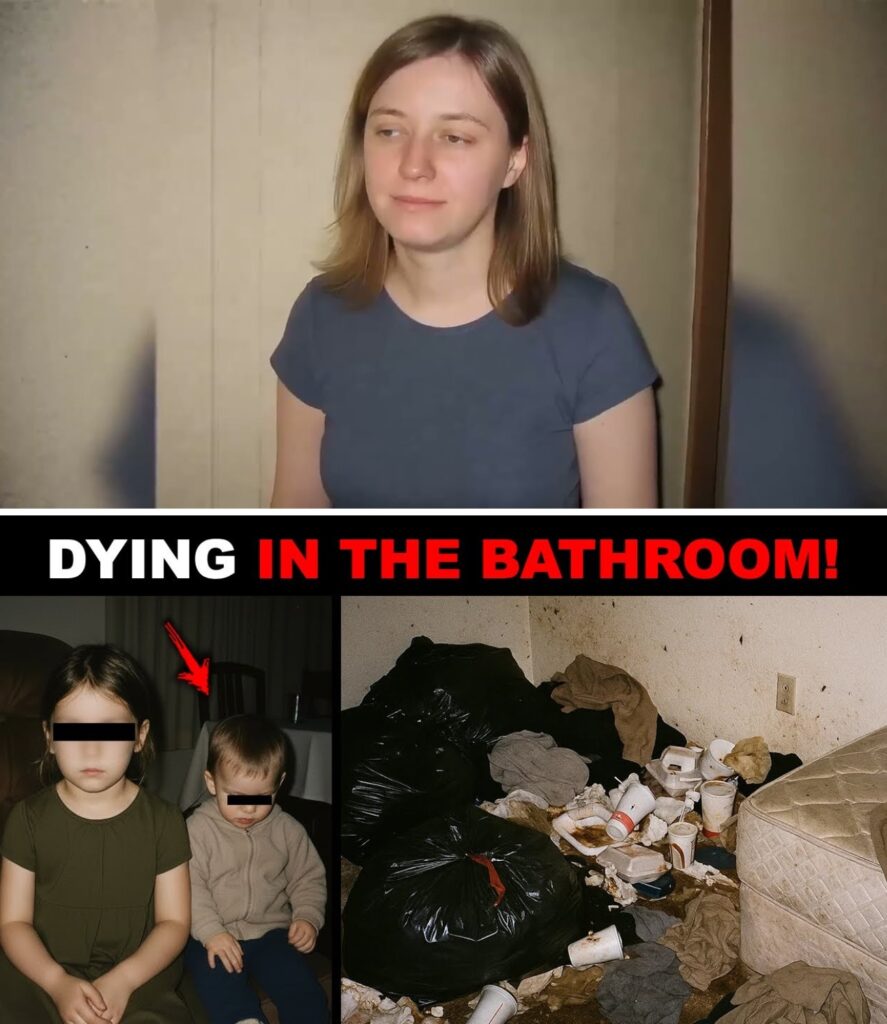
The smell was the first thing that hit them. It wasn’t just the stale odor of an old apartment building or the scent of unwashed laundry. It was something primal, heavy, and sickeningly sweet—a stench that clung to the back of the throat and refused to let go. For the residents of a nondescript five-story walk-up in Drohobych, a quiet city near Lviv, that smell became a daily horror, seeping through the cracks of the first-floor apartment door. They tried to ignore it at first, blaming the building’s crumbling plumbing or perhaps a dead rat in the ventilation, but deep down, they knew. The air grew heavier with each passing day, thick with the undeniable, suffocating scent of death. And while the neighbors gagged in the hallway, covering their noses with their shirts, the woman inside Apartment 1 sat perfectly still.
Her name was Marina Castrova, a 32-year-old librarian who seemed, to the outside world, like the very definition of “quiet and respectable.” She sat at her kitchen table, the blue light of a smartphone illuminating a face completely void of emotion. Her thumb swiped up, then up again, in an endless, hypnotic rhythm. She was watching TikToks. Funny cat videos. Makeup tutorials. Fashion hauls. Just six feet away, behind a bathroom door secured with a heavy metal hook, her two young children, Sophia and Dennis, were silent. They had been silent for a long time. And as the police finally battered down the door, choking on the foul air that rushed out to meet them, Marina didn’t even look up. She just kept scrolling.
To understand how a mother could become a monster, you have to peel back the layers of a life that was meticulously curated to look unremarkable. Marina had moved to the city in 2020, fleeing a small village and a past she was desperate to bury. She arrived with two small children in tow: Sophia, a bright-eyed five-year-old, and Dennis, a toddler of just three. To the landlord, she was the perfect tenant. She paid her rent on time, never threw parties, and kept to herself. Her documents were pristine, though one detail stood out to those who looked closely—the line for “Father” on the children’s birth certificates was a stark, empty dash. No name. No history. It was as if she had engaged in a spontaneous creation, or perhaps, a desperate deletion.
For the first few years, the neighbors saw little of the family. The children were like ghosts, appearing only briefly in the courtyard in the late evenings, always under the strict, watchful eye of their mother. They were quiet kids, perhaps too quiet for their age. They didn’t run screaming through the playground or skin their knees on the asphalt. They walked close to Marina, their small hands gripping her coat, their eyes cast downward. It was strange, the neighbors whispered, but not criminal. In a city where everyone minded their own business, a withdrawn single mother was hardly a cause for alarm. Marina worked at the local library, stamping books and shelving novels with a robotic efficiency that discouraged conversation. Her colleagues knew nothing about her, not even her favorite color. She was a blank slate, a woman who existed without making a ripple.
But behind the closed door of the first-floor apartment, a dark transformation was taking place. The “quiet librarian” was beginning to resent the very existence of the little lives she was responsible for. It started slowly, insidious and creeping. The neighbors began to hear sounds that didn’t fit the image of a happy home. At first, it was just crying—the high-pitched, desperate wailing of a child who has been ignored for too long. Then came the thuds. Heavy, dull sounds, like furniture toppling over or small bodies hitting the floor. The walls of the old Soviet-era building were thin, carrying secrets from one apartment to the next. Residents would pause in the stairwell, ears strained, exchanging worried glances. “Did you hear that?” they would whisper. “Should we do something?”
By March 2023, the whispers turned into action. The sounds had become too frequent, too distressing to ignore. A collective anxiety gripped the building, and the residents filed an official complaint with social services. They described the crying, the banging, the eerie silences that followed. They expected a swift intervention, a rescue. But Marina was cunning. She was a predator who knew exactly how to blend into the tall grass. When the notification of the inspection arrived, she didn’t panic. She prepared. Like a stage director setting a scene, she transformed the apartment of horrors into a model home.
She scrubbed the floors until they shone. She bought fresh groceries—colorful fruits, milk, cartons of juice—and arranged them conspicuously on the kitchen counter. She dressed Sophia and Dennis in their best clothes, combing their hair and scrubbing the grime from their faces. But her preparation went deeper than surface aesthetics. She drilled the children. “Sit still,” she told them. “Be quiet. Don’t say a word.” When the inspectors arrived, they found a scene of domestic tranquility. The children sat on the sofa, hands folded in their laps, eyes wide but silent. The apartment smelled of cleaning products, not neglect. The fridge was full. The inspectors, overworked and seeing only what they wanted to see, ticked the boxes on their forms. “Living conditions satisfactory.” Case closed.
It was a masterclass in deception, a performance worthy of an Oscar. As soon as the door clicked shut behind the social workers, the mask fell. The fresh food was left to rot. The clean clothes were stripped away. The darkness returned, heavier than before. The neighbors, confused and disheartened, convinced themselves they had overreacted. “Maybe she’s just strict,” they told themselves. “The authorities said it was fine.” It is a tragedy common in modern society—the reliance on official stamps of approval over the gut instinct that something is terribly, horribly wrong. The system had failed Sophia and Dennis, but their mother was just getting started.
Summer came, and the heat made everything worse. In July 2023, the noises returned with a vengeance. The crying was constant now, a background track to the neighbors’ lives. It happened during the day, at night, in the early hours of the morning. It was the sound of misery. Once again, the residents rallied. They wrote a second complaint in August, their tone more urgent, more desperate. “It’s getting worse,” they pleaded. “Please check again.” This time, the social services decided on a surprise inspection. No warning. No time to prepare. It should have been the end of Marina’s reign of terror. It should have been the moment the children were saved.
But fate, cruel and twisted, intervened. Two days before the scheduled surprise visit, Marina was coming home from the store when she overheard two neighbors talking by the entrance. Their hushed voices carried the words she needed to hear: “second complaint,” “inspectors,” “any day now.” A cold realization washed over her. She didn’t panic. She didn’t pack bags and flee. She simply went upstairs and reset the stage. When the knock came on the evening of August 18th, she opened the door with a calm smile. The apartment was impeccable. The children were clean, silent props in her twisted play. The inspectors looked in the cupboards, checked the bathroom, even peered into the fridge. They found nothing.
Once again, the system walked away. Once again, the door closed, sealing Sophia and Dennis inside their prison. But this time, something in Marina snapped. Perhaps it was the stress of the inspections, or perhaps it was the cold realization that she could get away with anything. She decided she was done pretending. She was done with the noise, done with the demands, done with the burden of motherhood. She wanted the “freedom” she saw on her phone screen, the carefree lives of influencers and solo travelers. And she decided to take it, right there in her first-floor apartment.
The timeline of the final tragedy is a descent into madness. In May 2024, the “lockdowns” began. Marina started locking the children in the bathroom for hours at a time while she cleaned or relaxed. It was a punishment, a way to silence them. But as the weeks went on, the hours turned into days. By June, the bathroom had become their primary residence. It was a small, windowless room with a cast-iron tub and a toilet. The ventilation was broken. The air was stagnant. It was a cell. Marina would let them out occasionally, tossing them scraps of food like animals in a cage, before shoving them back in and hooking the door.
The “Final Episode,” as investigators would later call it, began on August 10, 2024. It was a Saturday. Marina walked to the bathroom door, where her children, now skeletal and weak, were huddled together. She didn’t say goodbye. She didn’t offer a final meal. She simply closed the door and fastened the metal hook on the outside. Then, she walked to the kitchen, sat down, and opened TikTok. For the next seven days, she lived a life of bizarre normalcy just meters away from her dying children. She ordered sushi. She bought anti-aging creams online. She liked videos of dancing teenagers and cooking hacks.
The children banged on the door at first. They cried out for “Mama.” They begged for water. But Marina just turned up the volume on her phone. She existed in a digital bubble, a dissociative state where the reality of her starving children simply didn’t register. She wasn’t insane, not in the medical sense. She was just… done. She had decided that her life would be better without them, and she was waiting for nature to take its course. It was a passive murder, a killing by omission, executed with a chilling degree of patience.
Inside the bathroom, the conditions were hellish. There was no food. No water. The children, weakened by months of malnutrition, didn’t stand a chance. They huddled together in the dry bathtub, finding comfort only in each other as their bodies shut down. The heat of August turned the small room into an oven. Dehydration set in quickly. Delirium followed. And finally, silence. The neighbors stopped hearing the crying. They stopped hearing the thuds. They thought, perhaps, the family had gone away. But then came the smell.
It started faint, then grew aggressive. By mid-August, it was inescapable. It seeped under doors and into the stairwell, a thick, cloying reminder that something was rotting. On August 17, 2024, the police arrived with a warrant. They didn’t need to knock for long. When they forced the door, the wave of stench that hit them forced seasoned officers to recoil, gagging into their sleeves. They put on masks and stepped into the gloom. The apartment was a wreck—garbage piled high, cockroaches skittering across the walls, dirty dishes stacked in the sink.
And there, in the middle of the filth, sat Marina. She was clean. She was dressed. She was holding her phone. “Why didn’t you open the door?” an officer choked out, his eyes watering from the smell. Marina looked up, her expression mild, almost bored. “They finally stopped crying,” she said simply. It was a sentence that would haunt every officer in that room for the rest of their lives. She didn’t point to the bathroom. She didn’t need to. The officers saw the hook. They saw the grime around the door handle. They knew.
When they opened the bathroom door, the horror was absolute. In the bathtub, under a damp towel, lay the bodies of Sophia and Dennis. They were incredibly small, wasted away to skin and bone. There was a piece of petrified bread on the floor and an empty water bottle. That was it. No toys. No comfort. Just the cold porcelain of the tub and the darkness. The forensic experts who arrived later would say it was one of the worst scenes they had ever witnessed. One seasoned veteran, a man who had seen car crashes and gang hits, had to step outside to compose himself, his hands trembling.
Marina was arrested on the spot. She didn’t resist. She didn’t scream. She carefully placed her phone on the table, screen down, as if she were worried about scratching it, before offering her wrists for the handcuffs. In the interrogation room, her demeanor was even more chilling. She didn’t ask for a lawyer. She didn’t ask about her children. She spoke about her life as if she were recounting a grocery list. “I was tired,” she told the detectives, her voice flat. “I wanted freedom. I didn’t want to take care of anyone anymore.”
The investigators, desperate to find a reason—any reason—for such cruelty, looked into her finances. Maybe she was starving too? Maybe she had no choice? The evidence destroyed that theory in minutes. Bank records showed Marina received regular monthly transfers from her mother, totaling around 12,000 hryvnia (approx. $300) a month, plus her librarian salary. It wasn’t a fortune, but it was enough to survive. More damning were her expenditures. In the months leading up to the tragedy, she had spent thousands on herself. Perfume. Clothes. Cosmetics. And food—so much food.
Receipts showed daily deliveries of pizza, sushi, and restaurant meals. The fridge was full of rotting produce she hadn’t bothered to eat, while her children gnawed on dry bread a few feet away. She wasn’t poor. She was selfish. She had taken out a loan for 20,000 hryvnia, blowing it all on personal luxuries while her children wasted away. It was a grotesque display of narcissism. She fed her online persona, her vanity, and her stomach, while actively starving her own flesh and blood.
Her defense team tried the only play they had left: the insanity defense. “She couldn’t have known what she was doing,” they argued. “She is mentally ill.” The public was torn. It was easier, in a way, to believe she was crazy. The alternative—that a sane mother could watch her children die of hunger while she watched TikToks—was too terrifying to contemplate. But the psychiatric evaluation came back with a verdict that was cold and hard as stone: Sane. Marina Castrova knew exactly what she was doing. She was fully aware of the consequences. She just didn’t care.
During the trial in January 2025, the courtroom was packed. Journalists, angry neighbors, and shocked citizens filled the benches. Marina stood in the glass defendant’s box, looking like a bored spectator at someone else’s trial. When asked if she had anything to say, she didn’t beg for forgiveness. She didn’t cry for her babies. “It was a mistake to have them,” she said, shrugging. “I just wanted to live my life.” The jury didn’t take long. The verdict was guilty on all counts: premeditated murder with extreme cruelty. The judge, his face grim, sentenced her to life imprisonment.
The aftermath of the case sent shockwaves through the country. Heads rolled at the social services department. Investigations were launched into the inspectors who had been so easily duped by a clean floor and a fake smile. Reforms were promised. But for Sophia and Dennis, it was too little, too late. They had been failed by everyone—their father, who abandoned them; their neighbors, who hesitated; the social workers, who didn’t look hard enough; and most of all, the woman who gave them life only to take it away for the sake of “freedom.”
The internet, naturally, exploded with rage. The story went viral, shared millions of times across the very platforms Marina had loved so much. The comments section became a virtual vigil and a pillory. “She deserves to rot in that cell forever,” wrote one user from Ohio. “Imagine eating sushi while your babies are dying in the next room. I can’t breathe.” Another comment, liked thousands of times, read: “This is the true face of evil. It’s not a monster under the bed; it’s a mom on her phone.”
Others pointed out the chilling modern aspect of the crime. “The fact that she was watching ‘funny’ videos while they suffered… it’s like her brain was completely disconnected. Is this what social media does to us?” a user speculated. The contrast between the vibrant, dopamine-fueled world of TikTok and the dark, silent horror of that bathroom struck a nerve with a generation addicted to their screens. It raised uncomfortable questions about empathy, dissociation, and how much we really know about the people scrolling next to us.
Marina Castrova will spend the rest of her life in a prison cell, a confined space not unlike the one she forced upon her children. But unlike them, she will be fed. She will have water. She will have a bed. The irony is bitter and hard to swallow. She wanted freedom from her children, and in a twisted way, she got it. But the price was her humanity, and the lives of two innocents whose only crime was needing a mother.
As the door to her cell clanged shut, one has to wonder: does she still miss her phone? Does she dream of the endless scroll, the blue light, the escape? Or does she finally hear them? The crying. The banging. The silence. In the end, Marina Castrova got the solitude she so desperately craved. But in the darkness of her cell, she might find that true silence is the loudest sound of all.
What do you think? Was justice served with a life sentence, or does the system need to answer for its failures? Drop a comment below and share this story. Let’s make sure Sophia and Dennis are never forgotten.