
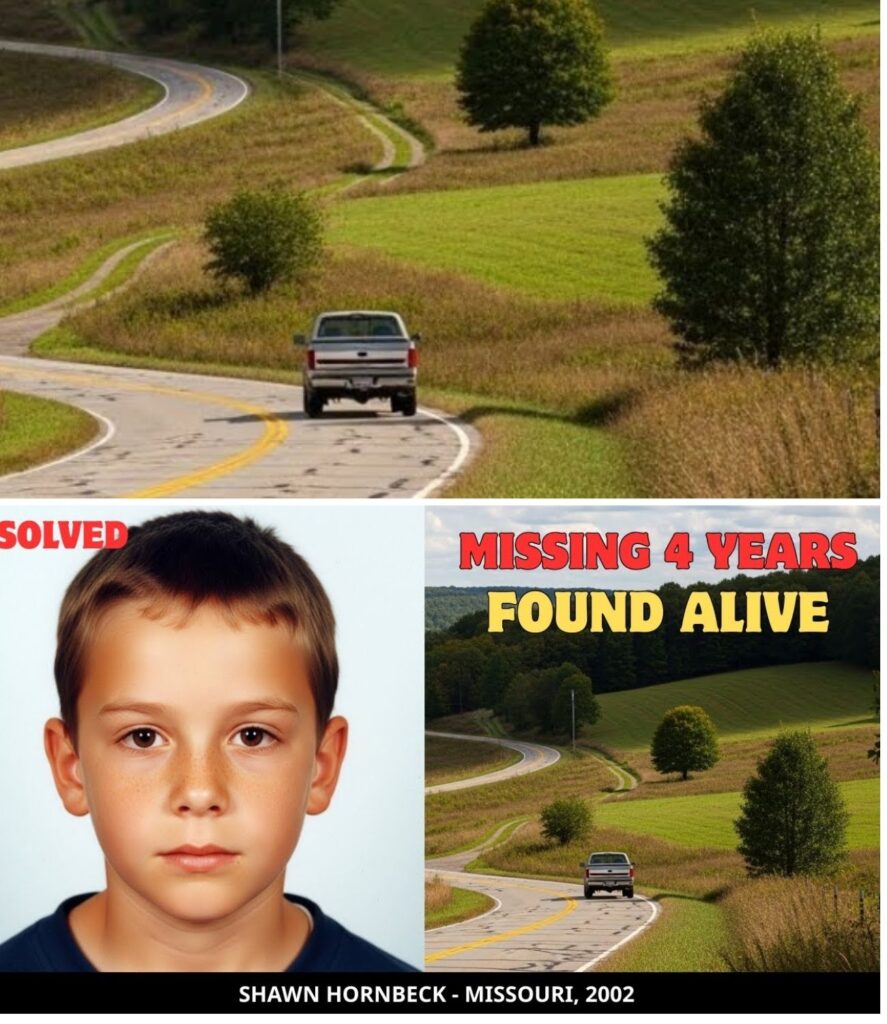
Imagine a quiet Sunday afternoon in rural Missouri, the kind of day where the air feels still and the only sound is the crunch of gravel under bicycle tires. Eleven-year-old Shawn Hornbeck sets off on his lime-green mountain bike, heading to a friend’s house. It is October 6, 2002.
Within minutes, the world as his family knows it shatters. Shawn never arrives at his destination. For the next four grueling years, his parents, Pam and Craig Akers, would live every parent’s ultimate nightmare, searching for a boy who had seemingly dissolved into the thick, rolling hills of Washington County.
For over 1,500 days, Shawn’s face haunted the nation. He was the boy on the milk carton, the subject of a thousand flyers, and the reason for a foundation that never stopped searching. His parents refused to accept he was gone, appearing on national television to plead for his safe return.
Little did they know, Shawn was hiding in plain sight just 50 miles away in Kirkwood, Missouri. He was living as “Shawn Devlin,” the supposed son of a quiet pizza parlor manager named Michael Devlin. The boy was even allowed to play outside and go online, yet he remained a prisoner.
The breakthrough didn’t come from a high-tech forensic lab or a career detective’s lucky hunch. It came in 2007, thanks to another kidnapping. When 13-year-old Ben Ownby vanished from a bus stop, a sharp-eyed teenager named Mitchell Hultz noticed a white Nissan pickup truck that just didn’t look right.
Mitchell’s split-second decision to memorize a partial license plate changed history. His report led police to the apartment of Michael Devlin. When investigators burst through the door expecting to find only Ben, they were met with a teenage boy who identified himself with words that stopped their hearts: “Shawn Hornbeck.”
The news of the “Missouri Miracle” sent shockwaves through the internet before “viral” was even a common term. Fans of true crime and families across the globe were captivated by the sight of Shawn, now fifteen, reuniting with his parents. The emotional footage of that long-awaited embrace remains legendary today.
How does an eleven-year-old boy survive four years with a captor and never run away? This question ignited a massive public debate about psychological coercion and “trauma bonding.” While some critics were confused by his lack of flight, experts quickly pointed to the terrifying threats Devlin made against Shawn’s family.
Michael Devlin wasn’t just a kidnapper; he was a master manipulator. He convinced Shawn that if he tried to leave, his parents would be killed. This psychological cage was stronger than any physical lock. It’s a chilling reminder that the most effective prisons are often built inside a victim’s own mind.
Shawn’s return to normalcy was nothing short of heroic. He had missed the foundational years of middle school, but he showed the kind of resilience that leaves people speechless. He caught up on his education, stayed out of the sensationalist spotlight, and focused on reclaiming the life that was stolen.
The impact on the community was profound. The Shawn Hornbeck Foundation, which had spent years looking for him, pivoted to helping others. It became a beacon of hope for thousands of families with missing children, proving that even after years of silence, a miracle is still possible if you search.
Social media platforms, then in their infancy, were flooded with support. Forums and message boards were filled with users saying, “I never stopped praying for this boy.” The story gave a global audience a rare, happy ending in a genre that usually ends in tragedy and unanswered questions.
Netizens often revisit the case today, with many modern fans expressing deep empathy for Shawn’s situation. One popular comment on a recent retrospective video reads, “The way people judged him for not running away was so unfair. He was a child being threatened by a monster. Stay strong, Shawn.”
Another fan wrote, “I remember seeing his face on the news for years. When they found him, it felt like the whole world could finally take a breath. It’s a reminder to never give up on the missing.” This sentiment echoes the unwavering faith of his parents throughout the ordeal.
Analysis of the case often focuses on the “teen hero,” Mitchell Hultz. Without his vigilance, Michael Devlin might have continued his predatory behavior indefinitely. It’s a powerful lesson for the internet age: sometimes, the most important thing you can do is pay attention to your own neighborhood.
Michael Devlin’s eventual guilty plea and multiple life sentences provided a sense of justice, though it could never truly repay the years he stole. He is currently serving his time in a Missouri prison, a man who became a symbol of the darkness that can hide behind a quiet neighbor’s door.
For Shawn, life as an adult has been about privacy and peace. He has largely stayed away from the “fame” associated with his survival, choosing instead to live with the dignity of someone who has overcome the impossible. He remains a living testament to the power of the human spirit.
What does this mean for the future of missing person cases? The Hornbeck story revolutionized the way law enforcement views long-term disappearances. It taught investigators that just because a trail is cold doesn’t mean the person is gone. It reinforced the importance of the AMBER Alert system nationwide.
The “Missouri Miracle” also forced the public to confront the reality of child grooming and abduction. It sparked conversations in schools and homes across America about safety and the signs of predatory behavior. Shawn’s tragedy, in a bittersweet way, likely saved countless other children from a similar fate.
Today, Shawn Hornbeck is a name that evokes a mix of sorrow and immense joy. He represents every parent’s fear and every parent’s hope. His story is a permanent fixture in American true crime history, not for the horror, but for the light that eventually broke through the darkness.
Online reactions continue to be a source of strength for the family’s legacy. On anniversary posts, you’ll find comments like, “I wish every missing child case had this ending. It’s the miracle we all needed.” These voices keep the story alive for a new generation of internet users.
The “entertainment” value of this case lies in its sheer dramatic scale. From the lime-green bike to the white truck to the Kirkwood apartment, the details feel like a high-stakes thriller. Yet, at its core, it is a deeply human story about the unbreakable bond between a child and his parents.
As true crime content continues to dominate streaming platforms, the Hornbeck case stands out as a foundational narrative. It reminds us why we are so drawn to these stories—not just for the mystery, but for the chance to see justice served and families made whole again.
We invite you to share your memories of this case. Do you remember when the news broke in 2007? How did it change your perspective on safety and community? The conversation around Shawn Hornbeck is far from over, and your voice helps keep the mission of the missing alive.
In the end, Shawn’s ordeal is a story of survival that refuses to be forgotten. It is a narrative of a boy who endured the unthinkable and a family that redefined what it means to hope. It is, quite simply, the greatest miracle Missouri has ever seen.
Thank you for diving into this deep look at a case that touched the heart of America. Make sure to comment below with your thoughts and share this article to remind everyone: never stop looking, because sometimes, they really do come home.
Stay tuned for more in-depth coverage of the cases that shaped our world. The stories are many, but the message is clear: vigilance and love are our greatest tools. Until next time, keep your loved ones close and never underestimate the power of a single, observant witness.