
THE GHOSTS OF YESTERDAY: How DNA Just Unmasked America’s Most Elusive Monsters and Shattered 50 Years of Silence
It was a different time. You’ve heard the cliché a thousand times before—it was an era when folks left their front doors unlocked, when kids rode their bikes until the streetlights flickered on, and when the word “predator” was something you associated with nature documentaries, not your friendly next-door neighbor. But nostalgia has a funny way of painting over the cracks in the pavement. Beneath the veneer of mid-century American innocence, monsters were prowling in plain sight. They were hiding behind the pulpit, lurking in the shadows of seaside dunes, and slipping through the unlocked windows of college apartments. For decades, their crimes sat in dusty cardboard boxes in police archives, labeled “COLD.” Families withered away in agonizing limbo, detectives retired with heavy hearts, and the killers? They grew old. They lived their lives. They thought they had gotten away with it.
But they forgot one thing: Science doesn’t forget. And it certainly doesn’t forgive.
In a stunning wave of breakthroughs that has rocked the true crime community to its core, the last few years have seen the resolution of some of the country’s most haunting mysteries. Thanks to the relentless march of genetic genealogy—the same technology you use to find out if you’re 5% Irish—the ghosts of the past are finally pointing a finger at their killers. Today, we are diving deep into three of these recently solved cases. These aren’t just stories; they are tragedies of betrayal, brutality, and the breathtaking power of truth. So, grab your coffee, lock your doors (seriously), and settle in. We need to talk about the monsters who finally lost their masks.
THE WOLF IN THE SHEPHERD’S CLOTHING: The Heartbreaking Betrayal of Gretchen Harrington
Let’s rewind to August 15, 1975. The setting is Marple Township, Pennsylvania—a leafy, quiet suburb where the biggest concern was usually the summer heat. Eight-year-old Gretchen Harrington was a beacon of light in her community. With her bright eyes and trusting smile, she was the kind of kid who saw the best in everyone. Her father wasn’t just a dad; he was a pastor at the Reformed Presbyterian Church, a pillar of moral fortitude in the town. Religion, faith, and community were the cornerstones of Gretchen’s life.
That morning started like any other innocent summer day. Gretchen put on her clothes, perhaps eager to see her friends, and stepped out into the morning sun to walk to the Trinity Chapel Christian Reformed Church for summer Bible School. It was a walk she had likely done before, a route that should have been safe. The church was less than half a mile away. In the calculus of 1975 parenting, this was zero risk. But Gretchen never made it to the steps of the chapel. She vanished into the humid air, leaving behind only a void that would swallow her family whole.
Panic didn’t set in immediately—these things take time to ripple through a trusting community—but when her father realized she wasn’t at the Bible School, the dread was instant. He did what any frantic parent would do: he reached out to the people he trusted most. He called the pastor of the church where Gretchen was heading, a man named David Zandstra. Zandstra wasn’t just a colleague; he was a close family friend. His daughter was best friends with Gretchen. They had broken bread together, prayed together. Zandstra was the one who called the police to report her missing. He was the one who stood by the family, offering comfort, offering prayers, offering the steady hand of a man of God in a time of crisis.
Two months later, the hope that Gretchen was just lost or had run away was extinguished. Her skeletal remains were found in Ridley Creek State Park, a sprawling woodland not far from her home. The discovery was grim. The medical examiner confirmed she had suffered severe trauma to the skull. It was a homicide. A child had been snatched from the road and brutally murdered. The community was paralyzed with fear. Who would do this? A drifter? A stranger passing through town? The police chased leads, interviewed witnesses, and combed through the evidence, but the technology of 1975 wasn’t enough. The trail went cold. The seasons changed, years turned into decades, and Gretchen’s killer remained a phantom.
Fast forward to 2023. Nearly half a century had passed. The world had changed—we had the internet, smartphones, and advanced DNA profiling. But investigators hadn’t forgotten the little girl in the summer dress. A new lead emerged, not from a laboratory initially, but from a voice from the past. A woman, who had been best friends with Zandstra’s daughter back in the 70s, came forward with a story that made blood run cold. She had kept diaries from her childhood, and in those pages, she had written about a “secret.” She recalled waking up during sleepovers at the Zandstra house to find the pastor touching her inappropriately. She wrote about a suspicion she had, even as a child, that “Mr. Z” might have been the one who took Gretchen.
Armed with this new testimony and modern interrogation techniques, investigators decided to pay a visit to David Zandstra. Now 83 years old, living a quiet retirement in Georgia, he probably thought his secrets were buried deep in the Pennsylvania soil. He was wrong.
In a confrontation that feels like the climax of a Hollywood thriller, detectives pressed him. Initially, the old man played the part of the confused senior citizen. He denied everything. But when confronted with the evidence of his past behavior, the façade crumbled. The “Man of God” confessed. He admitted that on that fateful morning in 1975, he saw Gretchen walking alone. He pulled over. Because she knew him—because she trusted him as a second father—she got into his car. He drove her not to the safety of the church, but to the isolation of the woods. He asked her to remove her clothing. When the terrified eight-year-old refused, the wolf shed his sheep’s clothing. He struck her. He killed her. He dumped her body and then went back to his life, leading prayers and comforting the very parents whose lives he had just destroyed.
The revelation sent shockwaves through the nation. Delaware County District Attorney Jack Stollsteimer didn’t mince words, calling Zandstra a “monster” and a “remorseless child predator.” The betrayal is almost too heavy to comprehend. For 48 years, this man walked free, breathing the air that Gretchen was denied, hiding behind a Bible while harboring the darkest of sins.
THE SILENCED DREAMER: The Lonely Death of Laura Kempton

Six years after Gretchen’s disappearance, another tragedy struck, this time in the coastal town of Portsmouth, New Hampshire. It was 1981, the era of neon, new wave, and young people chasing dreams. Laura Kempton was 23 years old, a beauty school student with a “big personality” and a free spirit. She was studying to be a hairdresser, working at a gift shop and an ice cream parlor, hustling to build a life for herself. She lived in a ground-floor apartment on Chapel Street, a place that should have been her sanctuary.
On the morning of September 28, 1981, Laura was found dead in her apartment. The discovery was made by a police officer who had ironically come to serve her a summons for unpaid parking tickets. Instead of a mundane interaction, he stumbled upon a house of horrors. The front door had been broken into. Inside, Laura’s body was found covered by a mattress and bedding. She had been the victim of severe blunt force trauma—likely struck with a wine bottle—and sexually assaulted.
The brutality of the crime scene suggested a rage-filled attack, or perhaps a burglary gone wrong that escalated into ultimate violence. Portsmouth police worked tirelessly. They collected evidence, interviewed friends, and tried to reconstruct Laura’s last moments. But like Gretchen’s case, the leads dried up. DNA technology in 1981 was non-existent in the way we know it today. There was no national database to ping a suspect against. Laura’s case became one of New Hampshire’s most infamous cold cases, a haunting reminder of a life cut short.
Decades rolled by. Laura’s family waited. They aged, they grieved, and they wondered. It wasn’t until 2023—a banner year for cold case squads—that the Attorney General’s office finally had a name. Using forensic genetic genealogy, they traced the DNA found at the scene to a man named Ronnie James Lee.
Who was Ronnie James Lee? Was he a mastermind? A serial killer known to the FBI? No. He was, in many ways, terrifyingly ordinary in his criminality. In 1981, he was a 21-year-old man living in Portsmouth. He worked security. He was a thief. He had a record of burglaries and was known to be a “creeper” who broke into homes. The profile fits the crime—a burglary that turned into a sexual assault and murder when he found Laura home.
Here is the bitter pill of this resolution: Justice for Laura Kempton came with an asterisk. Ronnie James Lee died in 2005 at the age of 45 from “acute cocaine intoxication.” He never sat in a courtroom. He never wore handcuffs for this specific crime. He never had to look Laura’s family in the eye and explain why he snuffed out her light. He lived for 24 more years after killing Laura—years she never got. While the case is officially “solved” and the police have stated that had he been alive, he would be facing first-degree murder charges, there is a hollow ringing in the air. The universe took him out, yes, but earthly justice was cheated.
THE LADY OF THE DUNES: A Hollywood Legend Meets a Gritty Reality
If you are a true crime aficionado, you know the name “The Lady of the Dunes.” It is perhaps one of the most famous unsolved mysteries in New England history, a case that sat at the intersection of gruesome reality and urban legend.
On July 26, 1974, a teenage girl walking her dog in the Race Point Dunes of Provincetown, Massachusetts, stumbled upon something that looked like a mannequin. It wasn’t. It was the decomposing body of a woman. The scene was staged with a cruelty that suggested the killer wanted to erase her from existence. Her hands had been severed and removed, likely to prevent fingerprint identification. Her teeth had been pulled out, a gruesome attempt to thwart dental records. Her head had been nearly severed from her body.
She lay face down on a beach blanket, her toes painted pink—a heartbreaking detail of humanity amidst the carnage. Beneath her head were a pair of Wrangler jeans and a blue bandana. For decades, she had no name. She was just a body in the sand, a question mark haunting the Cape Cod community.
The mystery deepened over the years, spawning wild theories. The most famous one connected her to the movie Jaws. In 2015, Joe Hill, the son of horror author Stephen King, floated a theory that the Lady of the Dunes was an extra in the 1975 Spielberg classic, which was filming on nearby Martha’s Vineyard around the time of the murder. He spotted a woman in the background of a beach scene wearing a blue bandana and jeans, looking eerily like the victim. The theory went viral. It was the kind of story people wanted to believe because it gave the victim a moment of glamour, a connection to something bigger.
But real life isn’t a movie. The truth was far more domestic and far more sinister.
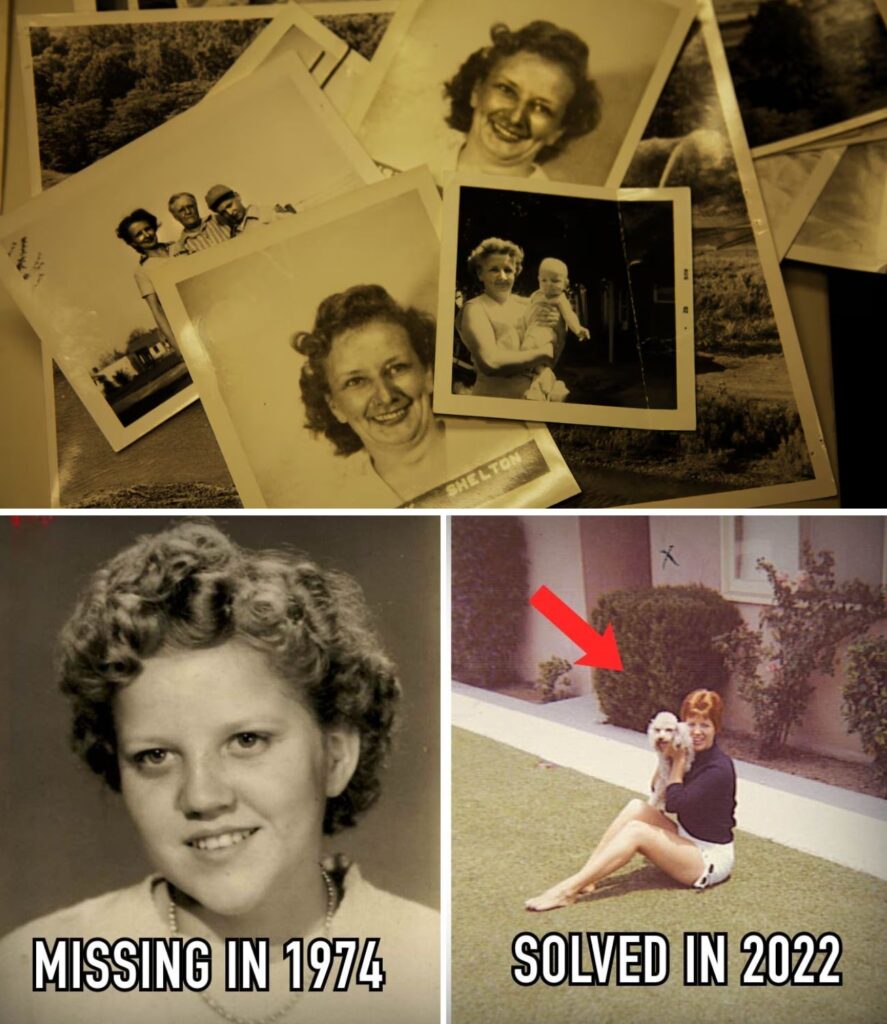
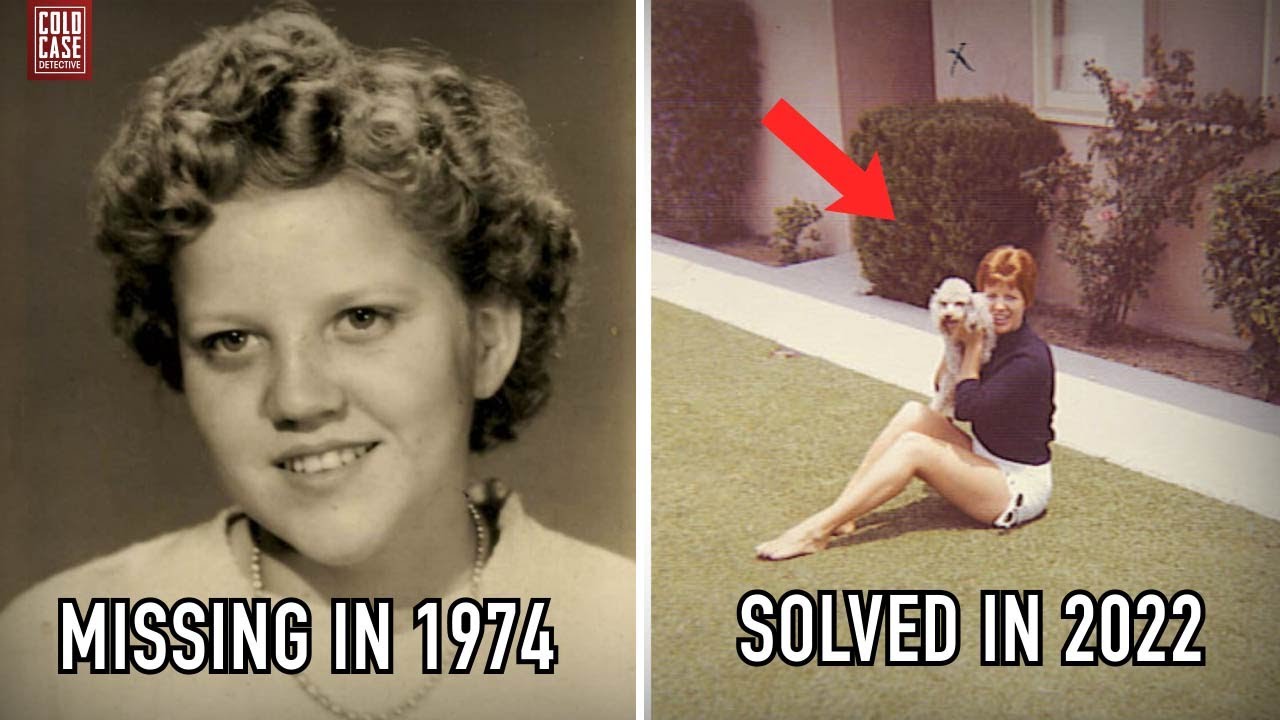
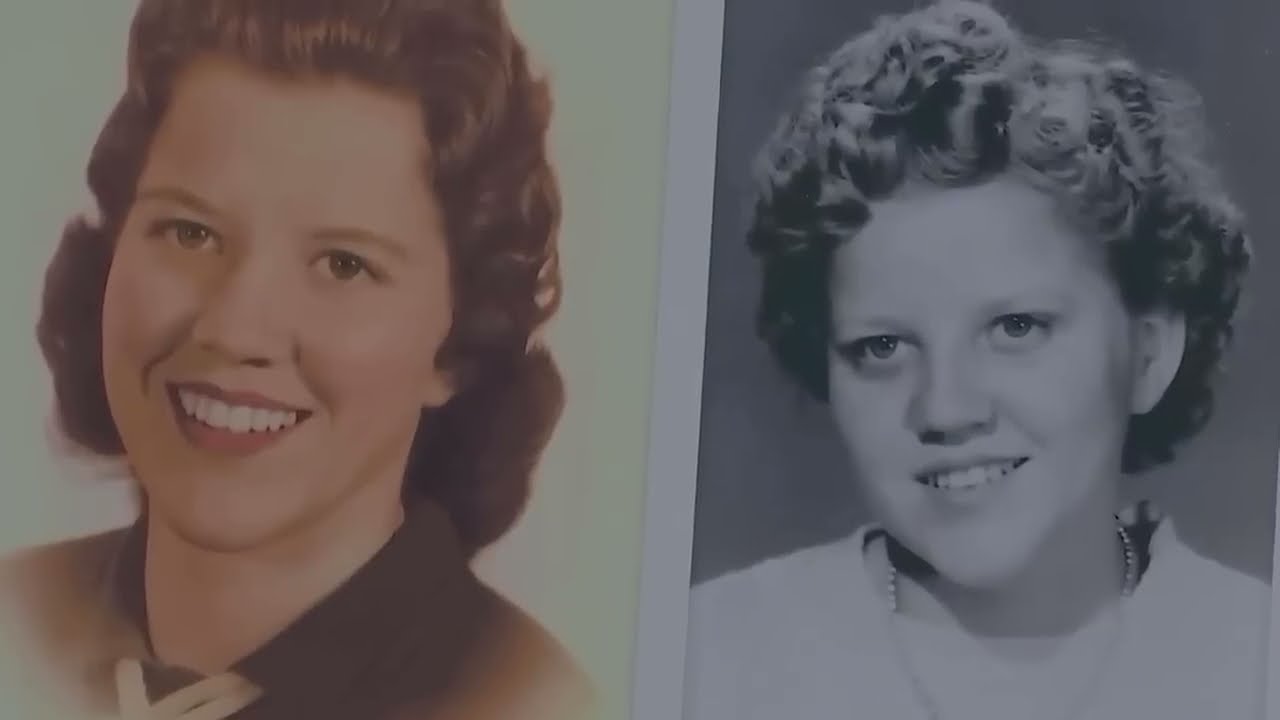
In 2022, after nearly 50 years of anonymity, the FBI used forensic genetic genealogy to finally give the Lady of the Dunes her name back. She was Ruth Marie Terry. Born in Tennessee in 1936, Ruth was a mother, a sister, and a woman described by her family as a “free spirit.” She wasn’t just a prop in a mystery; she was a real person who loved to cook, who had a family that missed her, and who had been searching for a life of adventure.
Once they had her name, the dominos fell quickly. Investigators looked at who she was with before she vanished. They zeroed in on her husband, a man named Guy Rockwell Muldavin. If David Zandstra was a wolf in sheep’s clothing, Muldavin was a wolf in wolf’s clothing. He was an antiques dealer, a charmer, and a man with a dark, dark history.
Muldavin had been the prime suspect in the disappearance of his previous wife and her daughter in Seattle back in 1960. Body parts had been found in his septic tank, but in a baffling failure of the justice system of the time, he was never charged with murder. He was a con artist, a manipulator who moved from state to state, changing his narrative, leaving a trail of missing women and stolen money in his wake.
Ruth married him in Reno, Nevada, in 1974. Months later, she was dead in the dunes. Muldavin returned to Tennessee to tell her family she had run off with a cult, or that she had left him—classic gaslighting tactics. He sold her belongings. He moved on. He lived until 2002, dying at the age of 78, a free man.
Identifying Ruth was a triumph of science, but realizing that Muldavin got away with (likely) multiple murders over decades is a punch to the gut. He was the embodiment of the “drifter killer” trope, a man who exploited the lack of communication between police departments in different states.
ANALYSIS: When the Grave Can’t Keep a Secret
What does it mean for us, as a society, to solve these cases now? We are living in the “Golden Age of Cold Cases.” The realization that crimes committed in 1974 or 1981 are being solved today changes the landscape of criminal justice. It sends a message: there is no statute of limitations on the truth.
However, these three stories highlight a complex spectrum of “closure.”
In the case of Gretchen Harrington, there is a visceral satisfaction—however delayed—in seeing David Zandstra in handcuffs. He is still alive. He will likely die in prison. He has to face the judgment of the public and the law. His legacy as a “good pastor” is incinerated. This is active justice. It validates the pain of the Harrington family and the witness who was ignored as a child. It proves that even the most respected figures can harbor the deepest evils.
But in the cases of Laura Kempton and Ruth Marie Terry, the emotion is murkier. Ronnie James Lee and Guy Rockwell Muldavin are dead. They cannot be punished. They cannot be questioned. We can’t ask Muldavin why he hated women so much. We can’t ask Lee what he was thinking that night. There is a frustration here. It feels like they cheated the system. They got to live their lives—maybe not good lives, but lives nonetheless—while their victims rotted.
Yet, we must not undervalue the power of simply knowing. For Ruth Marie Terry’s family, who spent decades thinking she abandoned them for a cult, the truth restores her dignity. She didn’t leave them; she was taken from them. For Laura Kempton’s family, the boogeyman now has a face. He isn’t a phantom stalking the night; he was just a drug-addicted burglar. It reduces the monster to a man, and there is power in that.
These cases also force us to re-evaluate our nostalgia. We often look back at the 70s and 80s as a simpler time. But these stories reveal that it was also a time of massive vulnerability. The lack of digital footprints, the lack of DNA testing, and the disjointed nature of police work allowed predators like Muldavin to thrive. We are safer now not just because we lock our doors, but because we are connected.
NETIZEN REACTIONS: The Internet Weeps and Rages
As these stories broke online, the reaction from the true crime community and the general public was a mix of heartbreak, fury, and awe at the technology.
On Twitter and Reddit, the revelation about the pastor in Gretchen Harrington’s case sparked intense debate about trust and authority figures. “I literally have chills,” wrote one user on a popular true crime forum. “Imagine sitting in church every Sunday listening to this man preach, knowing he killed your best friend. It’s the ultimate betrayal. He’s not a man of God; he’s the devil himself.”
Another user, reflecting on the sheer length of time passed, commented: “48 years. 48 YEARS. He lived a whole life. He probably held his grandkids. It makes me so sick I can’t even see straight. At least he’s spending his final days where he belongs.”
For the Lady of the Dunes case, the reaction was more focused on the tragedy of her identity. “I always believed the Jaws theory,” admitted a YouTube commenter. “Finding out she was just a normal woman from Tennessee who loved her family… it’s somehow sadder. She wasn’t a movie star extra; she was a mom and a sister. Rest in peace, Ruth. You have your name back.”
There was also a lot of anger directed at Guy Rockwell Muldavin. “The fact that this guy had body parts in his septic tank in the 60s and was still free to kill Ruth in the 70s is an indictment of the entire justice system of that era,” raged one Facebook user. “How many women have to die because police didn’t take domestic violence seriously?”
And regarding Laura Kempton, the sentiment was one of relief mixed with “what ifs.” “It’s terrifying to think this guy Lee was just a local security guard/thief,” said a TikTok creator covering the case. “He wasn’t some Hannibal Lecter genius. He was just a bad guy who got lucky because DNA didn’t exist yet. Glad they named him, even if he’s dead.”
Common sentiments across all platforms included praise for the DNA Doe Project and Othram Inc., the labs often responsible for these breakthroughs. “Science is the real MVP,” is a recurring comment. “There are no secrets anymore. If you did something in 1980, be scared. We are coming for you.”
CONCLUSION: The Truth Will Find You
If there is a lesson to be etched into the bedrock of our collective consciousness from these stories, it is this: Time is no longer a shield for the wicked.
For decades, David Zandstra, Ronnie James Lee, and Guy Rockwell Muldavin likely slept soundly, believing their secrets had decomposed along with their victims. They bet against the future. They bet that the world would never figure out how to read the microscopic codes written in blood and bone. They lost that bet.
The solving of these cold cases does more than just close a police file. It stitches up a wound in the fabric of the community. It tells the families of the missing and the murdered that they were never forgotten. It tells the victims that they matter. Ruth Marie Terry is no longer just a body in the dunes. Laura Kempton is no longer just a cautionary tale for college girls. Gretchen Harrington is no longer just a missing poster on a telephone pole. They are people who have been vindicated.
But the work isn’t done. There are thousands of boxes still sitting in basements, thousands of John and Jane Does waiting for their names. These recent successes are a call to action. They remind us to support organizations like the DNA Doe Project, to advocate for funding for cold case units, and to keep sharing the stories of those who are still missing.
So, to our readers: What do you think about the ethics of digging up the past? Does identifying a dead killer bring closure, or just frustration? And what about the pastor—do you think 83 is too old for prison, or is it exactly where he should be?
Drop your thoughts in the comments below. Let’s keep the conversation going, because as long as we keep talking about them, they are never truly gone. And to the families who finally got their answers: We see you, we support you, and we hope you finally found some peace.
Stay curious, stay safe, and remember: The truth has a funny way of surfacing, usually when you least expect it.