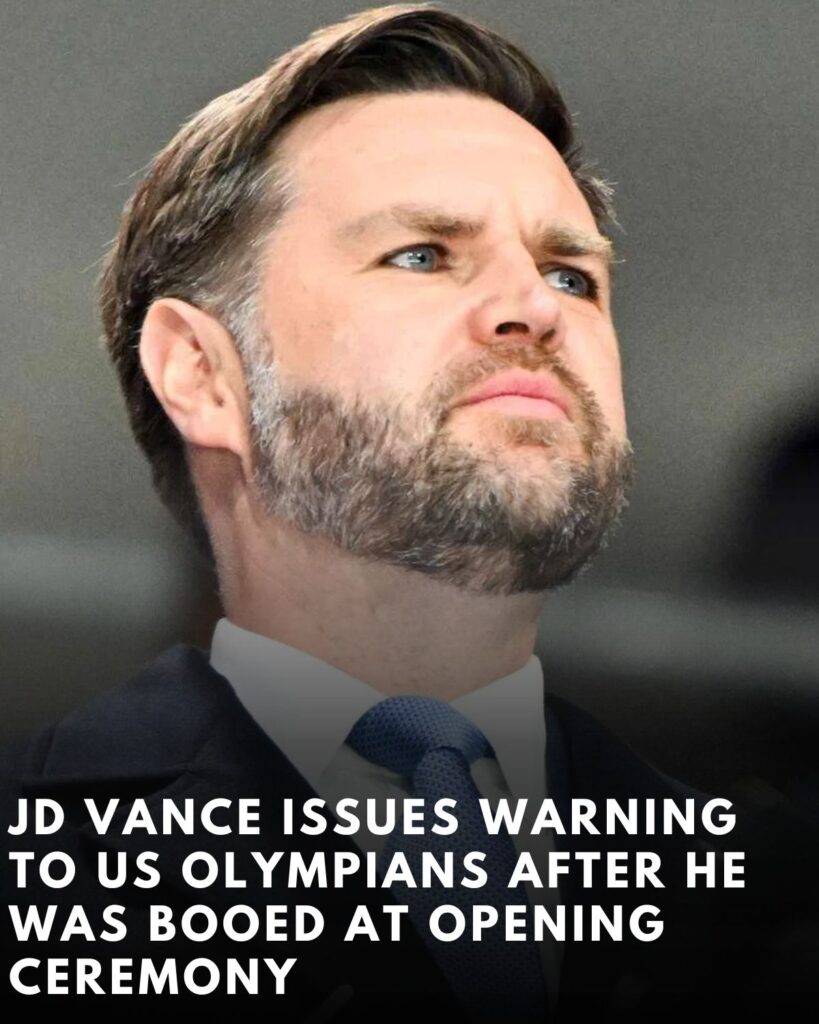
U.S. Vice President JD Vance has urged American athletes competing at the Milano Cortina Winter Olympics to avoid “popping off about politics”, after he and his wife, second lady Usha Vance, were booed when they appeared on stadium screens during the opening ceremony at San Siro in Milan.
The reaction came as Team USA entered the stadium to begin the parade of nations on Friday night. While the U.S. contingent drew cheers, the atmosphere shifted when the broadcast cut to the Vances, with audible jeers picked up on some international feeds. On Canada’s CBC coverage, a commentator was heard saying: “There’s the vice president, JD Vance… oops… those are not… eh, those are a lot of boos for him, whistling, jeering, some applause.”
Reporting from inside the stadium, The Independent’s Flo Clifford described “a largely positive reception for the US contingent” but “very definite boos and jeers” for the vice president and second lady as they waved flags when the camera briefly panned to them.
Vance’s remarks to athletes were carried in the days around the ceremony, after several members of Team USA spoke publicly about being conflicted while representing their country amid the political climate at home. In an interview cited by LADbible, Vance said: “You’re there to play a sport, and you’re there to represent your country and hopefully win a medal. You’re not there to pop off about politics.”
He added: “Yes, you’re going to have some Olympic athletes who pop off about politics. I feel like that happens at every Olympics.” He then framed his advice as an appeal for unity, saying: “My advice to them would be to try to bring the country together, and when you’re representing the country, you’re representing Democrats and Republicans.”
LADbible reported that Vance also told reporters: “When Olympic athletes enter the political arena, they should expect some pushback,” and argued: “The way to bring the country together is not to show up in a foreign country and attack the President … but it’s to play your sport.” The same report quoted him as saying: “Most Olympic athletes, whatever their politics, are doing a great job,” and that they “certainly enjoy the support of the entire country”.
The comments followed statements from athletes that were circulated widely during the opening week of the Games. Curler Richard Ruohonen, from Minnesota, was quoted as saying: “What’s happening in Minnesota is wrong. There’s no shades of grey. We love our country. We’re playing for Team USA. What the Olympics means is excellence, respect, friendship. We are playing for the people around the country who show those, share those same values, that compassion, that love, and that respect.”
Skier Hunter Hess, according to LADbible, said: “It brings up mixed emotions to represent the US right now.” The outlet reported that President Donald Trump criticised the athlete in a Truth Social post, calling him a “real loser”.
Trump also addressed the booing of the vice president, telling reporters, according to LADbible: “It’s surprising because people like him. Well, I mean, he is in a foreign country, in all fairness. But he doesn’t get booed in this country.”
The backdrop to the opening ceremony included protests in Milan over reports and claims about the involvement of U.S. immigration enforcement personnel during the Games, and wider anger in parts of Europe about U.S. domestic policy under Trump. Reuters reported that hundreds of protesters, many of them students, rallied in the city ahead of the ceremony, carrying banners including “ICE OUT” and criticising the presence of U.S. officials travelling for the Games. The report said demonstrators cited recent deaths involving U.S. immigration enforcement in Minnesota and opposed what they described as the expansion of American security operations abroad.
Reuters reported that the Italian government and the U.S. Olympic and Paralympic Committee said Immigration and Customs Enforcement agents were not involved in public security at the Games, and that only Homeland Security Investigations personnel were operating within diplomatic parameters. The same Reuters report described additional demonstrations on the day, including protests about the cost of staging the Olympics, housing pressures, and sponsorship concerns.
In the days before the ceremony, the International Olympic Committee sought to tamp down expectations of political protest or hostile crowd scenes. Reuters reported that IOC president Kirsty Coventry expressed hope that the opening ceremony would not be “marred by jeers against Americans” and would instead be respectful to athletes from all countries.
LADbible quoted Coventry urging people to use the opening ceremony “as an opportunity to be respectful of each other”.
After the boos for Vance, the IOC’s spokesperson Mark Adams was quoted by LADbible addressing the broader relationship between the Olympic movement and the United States with the next Summer Games due to be held in Los Angeles. “What I would say from the IOC point of view is with the next Games coming up in Los Angeles, we are super happy that the US administration is so engaged with the Games here and going forward,” he said. “That’s a great thing for the Olympic movement.”
Adams added: “We are largely a sports organisation and seeing the US team cheered as they were by the audience, fair play, that was fantastic, so very happy. In general at sporting events we like to see fair play, but in terms of having a good relationship with the administration, that’s good news for us.”
The opening ceremony itself was otherwise marked by the usual Olympic pageantry, with athletes and officials sharing the spotlight across the parade of nations. In one moment highlighted by The Independent, Israel’s athletes also faced boos as they entered the stadium, amid heightened tensions around international politics. Flo Clifford reported that there appeared to be a security detail following close behind the Israeli delegation as they marched, while the soundtrack and spectacle continued around them.
The noise directed at Vance in Milan echoed other recent public appearances in which he has faced hostile crowds, though the Olympic setting created a sharper contrast between diplomatic representation and athletic competition. On the NBC broadcast, according to Entertainment Weekly, the crowd reaction was less prominent, but the Canadian feed made the jeering more audible, underscoring how different coverage can shape the perception of what happened inside the stadium.
For the White House, the episode risks becoming another flashpoint in a wider argument over whether athletes should use high-profile international stages to comment on politics, or whether officials and sports bodies should seek to keep the Games focused on competition. Vance’s message, as quoted in multiple reports, was that political statements at the Olympics should be expected to draw backlash, and that the job of Team USA is to compete and represent the country rather than criticise its leaders.
For athletes, the tension has been about what it means to wear national colours at a moment of division, and whether speaking candidly about events at home is compatible with competing under the U.S. flag. Ruohonen’s remarks, in particular, framed his participation as representing values he associated with the Olympics, rather than endorsement of any administration, while Vance positioned the Games as a rare chance to “bring the country together” through sporting success.