

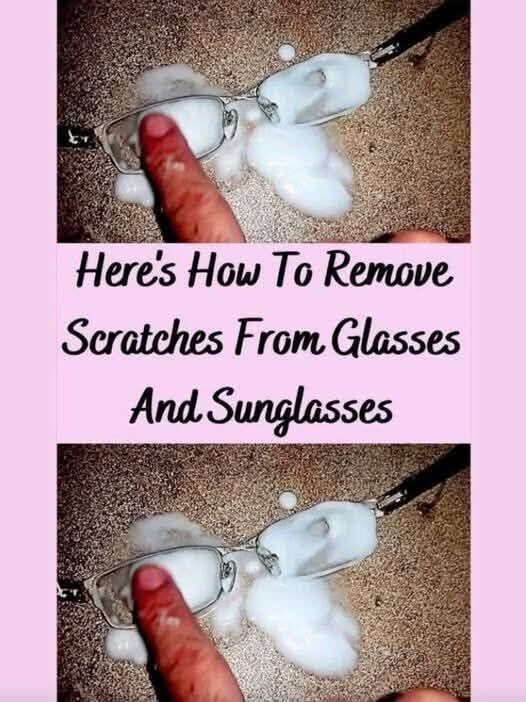
✅ How to Use It:
- Mix 1–2 teaspoons of baking soda with a few drops of distilled water to create a smooth, thin paste (never gritty).
- Clean lenses with lens cleaner or mild soap and water.
- Dry with a lint-free microfiber cloth.
- Using a clean fingertip or soft cotton ball, gently rub the paste over the scratch in small circular motions for 10–15 seconds.
- Rinse thoroughly with lukewarm water.
- Dry with a clean microfiber cloth.
👉 Best for: Tiny hairline scratches on uncoated plastic or glass lenses.
❌ Avoid if: Your lenses have anti-glare, anti-scratch, or blue-light coatings.
2️⃣ Non-Gel, Non-Whitening Toothpaste 🦷
Yes, toothpaste is one of the most talked-about DIY hacks—but it must be plain, non-abrasive, fluoride-only toothpaste. No gels. No whitening formulas. No “tartar control.”
✅ How to Use It:
- Apply a pea-sized amount to a damp microfiber cloth.
- Gently rub over the scratch in small circles for no more than 10 seconds.
- Rinse thoroughly.
- Dry with a clean microfiber cloth.
⚠️ Important: Most modern toothpastes contain silica and polishing agents that can permanently damage coated lenses. Use only as a last resort—and test on the edge first.
3️⃣ Car Wax or Lens Scratch Removers 🚗
Some people use car wax (like Turtle Wax) or commercial lens repair kits to temporarily reduce the appearance of fine scratches.
✅ How It Works:
These products don’t remove scratches—they fill them in with a clear layer that reduces light scatter.
How to Use:
- Clean lenses thoroughly.
- Apply a tiny drop to a microfiber cloth.
- Buff gently in circular motions.
- Wipe away all residue completely.
⚠️ Warning: Wax can haze coated lenses or interfere with anti-reflective treatments. Not ideal for daily prescription glasses—possibly safer for sunglasses or older backup pairs.
4️⃣ Brasso or Metal Polish? Absolutely Not. ❌
You may see online hacks recommending Brasso or metal polish. Don’t do it.
These products are highly abrasive and can permanently cloud, strip coatings, or etch your lenses beyond repair.
5️⃣ Prevention Is Better Than Repair 🛡️
The truth? You can’t truly “repair” scratched lenses. The best strategy is protecting them moving forward.
✔️ Store glasses in a hard case
✔️ Clean only with lens cleaner and microfiber cloth
✔️ Never use paper towels, tissues, or clothing
✔️ Place glasses lens-up when setting them down
✔️ Consider scratch-resistant coatings on new lenses
✔️ Keep a backup pair for active days
💡 When It’s Time to See Your Optician
Consider replacing your lenses if scratches are:
- In your direct line of sight
- Causing eye strain, glare, or headaches
- Accompanied by peeling coatings or cracks
Clear vision isn’t a luxury—it’s essential. Many vision plans cover annual updates, and your eyes deserve the best care.
🌟 Final Thought
Your glasses aren’t just accessories—they’re your window to the world.
While a baking soda trick might slightly soften a tiny mark on an old pair, risking your main prescription lenses with DIY experiments isn’t worth it.
Sometimes, the best fix isn’t a home remedy—it’s choosing clarity again.