
If you managed to watch James Cameron’s Titanic without catching a single historical inaccuracy or technical blooper, you likely weren’t looking for them. You were likely among the millions swept up in the film’s high-stakes transition from a lush Edwardian romance to a harrowing, no-holds-barred action-thriller.
Nearly 30 years since its 1997 premiere, the film remains a cultural juggernaut. I still recall the visceral experience of seeing it in a theater during its initial run; the special effects and CGI were lightyears ahead of their time, creating a cinematic world that felt dangerously real. It was a total tearjerker. I remember the moment the ship finally disappeared beneath the waves—the theater fell into a deafening silence, punctuated only by the collective sound of an audience sobbing in the dark.
The film would go on to sweep the Academy Awards, taking home 11 Oscars, including Best Picture and Best Visual Effects. Yet, beneath the accolades and the $2 billion box office, lies a trove of behind-the-scenes chaos, casting “what-ifs,” and a bond between its leads that was as complicated as it was enduring.

The Chemistry That Never Died
The heart of Titanic is the friction between Jack Dawson, the penniless artist, and Rose DeWitt Bukater, the suffocating socialite. From the first frame, the chemistry between Leonardo DiCaprio and Kate Winslet was undeniable—not just as actors, but as human beings.
The two became inseparable during the grueling shoot, finding levity in the intense production. That bond didn’t end when the cameras stopped rolling. Today, almost three decades later, the pair reportedly still text each other, often quoting lines from the film back and forth. Those gasps and smirks you see on screen? Most were entirely genuine.
However, Winslet did have a strict protocol for her co-star before their famous kissing scenes: no coffee, no onions, no garlic, and no smoking. DiCaprio, ever the provocateur, reportedly agreed to the terms and then cheekily broke every single one. Winslet affectionately dubbed him “Stinky Leo,” and to keep her on her toes, he would occasionally sneak his tongue into a take just to make her laugh.
Casting Chaos: The Actors Who Almost Boarded
The road to Jack and Rose was paved with some of the biggest names in Hollywood. Kate Winslet was relentless in her pursuit of the role, sending James Cameron daily notes from England and calling him incessantly. “You don’t understand! I am Rose!” she reportedly pleaded. When she finally secured the part, she sent Cameron a single rose with a note: “From Your Rose.”
Cameron’s search for Jack was even more arduous. He passed on Matthew McConaughey, Chris O’Donnell, and Billy Crudup, feeling they were too old to play a 20-year-old. Tom Cruise expressed interest but was deemed too expensive, while Jared Leto refused to even audition.
When a 21-year-old Leonardo DiCaprio was brought in, he initially showed zero interest in the project. He even refused to read the romantic scenes during his audition. Cameron recalled that DiCaprio “goofed around” until, for a split second, a “shaft of light” seemed to illuminate his talent. Even then, it was Winslet who ultimately sealed the deal. She tracked DiCaprio down at the 1996 Cannes Film Festival and cornered him in his hotel room. “I’m not doing this without him,” she recalled thinking.
Despite the film’s legendary status, both stars have looked back with a critical eye. Winslet has since called her American accent “awful,” while DiCaprio once dismissed his younger self as a “young punk.”

The Nude Scene and the Director’s Hand
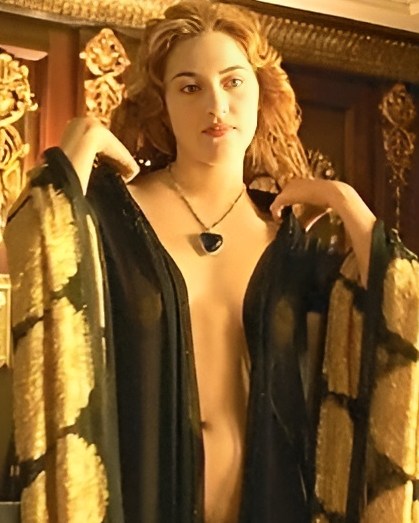
One of the film’s most iconic moments—the sketching of Rose—was a source of early tension that Winslet decided to break in a very unconventional way. Knowing she had to be nude in front of DiCaprio, she decided to “flash” him during their very first meeting to break the ice.
“I wasn’t prepared for that,” DiCaprio later revealed. “She had one up on me. I was pretty comfortable after that.”
A keen eye will notice that the hands seen sketching Rose aren’t actually DiCaprio’s. They belong to James Cameron himself. Because Cameron is left-handed and DiCaprio is right-handed, the director had to mirror-image the shots in post-production. Additionally, Jack’s line, “Over on the bed… the couch,” was a genuine flub. DiCaprio was supposed to say “Lie on that couch,” but his mistake felt so natural that Cameron kept it in the final cut.
The attention to detail extended even to the dialogue of the supporting cast. When Brock Lovett discovers the drawing of Rose in the opening act, he mutters, “I’ll be goddamned”—the exact words spoken by Dr. Robert Ballard when he discovered the real Titanic wreck in 1985.

Confronting the Cruelty of Body Shaming
Perhaps the darkest chapter of the Titanic craze was the relentless public scrutiny Kate Winslet faced regarding her weight. Tabloids cruelly joked that she “sank the ship” and suggested she was “too big” to be a believable love interest for the waifish DiCaprio.
Winslet endured years of harassment from a press corps obsessed with the idea that she didn’t “match” her co-star. Years later, she confronted this head-on during an interview with 60 Minutes. Fighting back tears, she recalled facing the press: “I did get face to face. I let them have it. I said, ‘I hope this haunts you.’”
For Winslet, standing up to the body shaming wasn’t just about her own dignity—it was for an entire generation of viewers who were subjected to that level of public harassment. It remains a poignant reminder that while Titanic was a triumph of technology and storytelling, the humans at the center of it were navigating their own turbulent waters.
To the casual observer, James Cameron’s Titanic is a quintessential Hollywood romance. But to those of us who have spent decades dissecting its production, it remains a staggering feat of logistical warfare and obsessive detail. As the film continues to occupy its throne as the fourth-highest-grossing movie in history as of 2025, the stories from the set have become as legendary as the maiden voyage itself.
From the relentless scrutiny of its stars to the haunting real-life inspirations that shaped its most famous lines, the “ship of dreams” was built on a foundation of grueling reality.

The Weight of the Spotlight: Winslet’s Resilience
Even an Oscar-winning pedigree couldn’t shield Kate Winslet from the industry’s archaic standards. In a 2022 interview with The Sunday Times, Winslet revealed a sobering truth: during her formative years in acting school, she was frequently advised to settle for “fat girl” roles. This toxic scrutiny didn’t dissipate with fame; it intensified.
Appearing on the Happy Sad Confused podcast, Winslet reflected on the cruel irony of the film’s global phenomenon. Some viewers famously used the movie’s tragic climax to mock her weight, arguing that Rose was too “big” to share the floating door with Jack. Decades later, her journey stands as a stark indictment of body shaming—a reminder that in the court of public opinion, immense talent is often unfairly weighed against narrow, superficial ideals.
The Anatomy of a Mistake: The Mysterious Handprint
Even a perfectionist like Cameron isn’t immune to the occasional continuity error. During the film’s celebrated intimate scene in the Renault, Rose’s hand leaves a distinct, steaming print on the rear window. However, in the immediate cut inside the vehicle, the handprint appears lower on the glass and features a noticeably different shape.
These minor goofs stand in contrast to the film’s rigorous production schedule. According to DVD commentary, the first scene ever filmed between DiCaprio and Winslet was the vulnerable nude drawing sequence—a “trial by fire” for their professional chemistry. Conversely, the final shot of the entire production was the flooding of the captain’s wheelhouse. That three-second sequence was a high-stakes operation involving multiple cameras, safety divers, and a stuntman tasked with the final moments of Captain Smith.
“Where You Go, I Go”: The Real-Life Heartbreak of the Strauses
Perhaps the most poignant trivia—consistently ranked among the top-tier facts on IMDb—concerns the elderly couple seen embracing on a bed as water surges into their cabin. These weren’t mere extras; they represented Isidor and Rosalie Ida Straus, the real-life owners of Macy’s department store.
In a scene that was filmed but ultimately edited for length, Ida Straus was offered a seat on a lifeboat. She famously refused, choosing to perish alongside her husband of 40 years, stating: “As we have lived together, so we shall die together.” It was Ida’s actual words, “Where you go, I go,” that provided the DNA for Rose’s most iconic line to Jack. It is a haunting tribute to the 1,500 souls lost in the Atlantic.
Cameron’s Mathematical Brilliance
James Cameron’s obsession with the Titanic is well-documented—he has visited the actual wreck 33 times since 1995. He famously told Playboy that he made the movie primarily as a vehicle to fund his dives to the shipwreck.
This obsession translated into a mathematical precision rarely seen in cinema. The 1912 sequences of the film—excluding the modern-day framing and credits—run exactly two hours and forty minutes, which is the precise amount of time it took the actual ship to sink. Furthermore, the iceberg collision on screen lasts exactly 37 seconds, mirroring the real-life timeline of the disaster.
The film’s $200 million budget was so astronomical that it actually exceeded the original cost of building the Titanic itself. The demand was so high that Paramount and Fox had to ship replacement film reels to theaters because the originals had literally worn out from constant use.
“Please, God, Let Me Die”: The Brutal Baja Set
The icy waters seen on screen weren’t just a visual trick; they were drawn directly from the Pacific Ocean at the Baja California set in Mexico. Kate Winslet’s sharp gasp when she first plunged into the water during the corridor scenes was entirely unscripted—a genuine reaction to the bone-chilling temperature.
The conditions were hazardous. Cast and crew members were plagued by colds, flu, and kidney infections from spending hours submerged. Exhaustion was a constant companion; after hip waders filled with water and caused near-disasters, the crew switched to wetsuits. With three stuntmen breaking bones and several crew members quitting, both Winslet and Cameron admitted to waking up some mornings praying for the ordeal to end.
The Time-Traveling Jack and the Last Survivor
History buffs often point to a curious slip in Jack Dawson’s backstory. When Jack tells Rose about ice fishing on Lake Wissota in Wisconsin, he creates a chronological impossibility. Lake Wissota is a man-made reservoir that wasn’t created until 1918—six years after the Titanic sank.
While the film was a global hit, one person famously refused to see it: Millvina Dean, the last surviving passenger of the disaster. Born just months before the sinking, Dean passed away in 2009 at the age of 97, having declined all invitations to the premiere, citing that seeing the tragedy recreated was simply too heartbreaking to endure.

The Extras: 150 Lives Reimagined
To ensure the film felt like a living document, Cameron personally met with at least 150 extras, providing them with the names and backstories of real passengers. This led to moments of chilling authenticity. The man seen telling his young daughters, “Hold Mummy’s hand and be a good little girl,” was recreating the final words survivor Eva Hart’s father spoke to her before her lifeboat was lowered.
To further manipulate the audience’s sense of scale, Cameron hired stuntmen in the engine room who were only about five feet tall, effectively making the machinery look gargantuan.
The “Tip of the Iceberg” Bloopers
For the eagle-eyed, the film is a treasure trove of “goofs”:
- The Cameraman: As Jack approaches the first-class door in his tuxedo, a reflection of a cameraman is briefly visible in the glass.
- The Self-Healing Glass: When Rose smashes the fire axe case to save Jack, the glass is seen intact in the very next shot.
- The Shifting Sketch: In the nude drawing scene, a dark line Jack draws down the center of the paper mysteriously shifts and fades when the camera cuts to a close-up of the sketch.
Ultimately, Titanic is more than a blockbuster; it is a cinematic rollercoaster that blends meticulous history with behind-the-scenes chaos. Do these flaws and hidden secrets diminish the “magic,” or do they make the legend of the film even more enduring?
What is your take on the ultimate blockbuster love story? Join the discussion in the comments.