
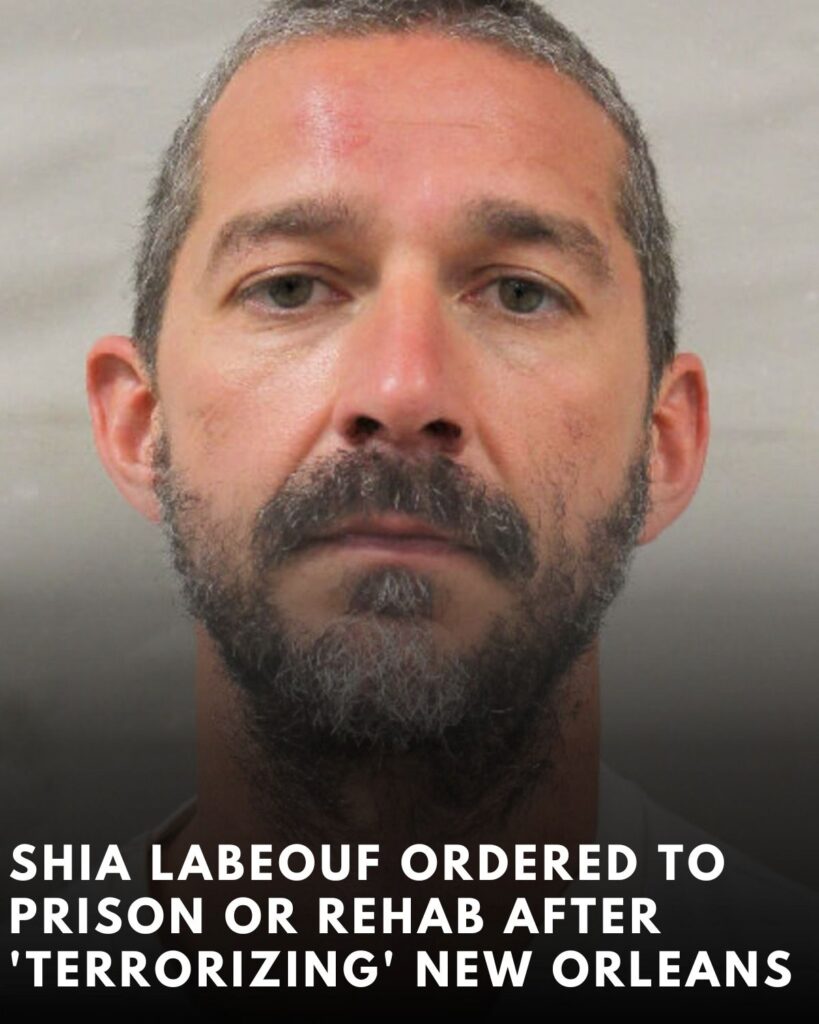
A New Orleans judge has ordered actor Shia LaBeouf to return to rehabilitation and submit to regular drug testing after his arrest during Mardi Gras celebrations, in a case that has put the 39-year-old back before the courts over allegations of violence and abusive language in the French Quarter.
LaBeouf, best known for films including Holes and the Transformers franchise, appeared in Orleans Parish Criminal Court where Judge Simone Levine imposed strict release conditions, set a $100,000 bond and required him to undergo substance-abuse treatment. In court, Levine questioned whether the actor was taking his drinking seriously, telling him he did not seem to be taking “his alcohol addiction seriously” and voicing doubt he could “handle his alcohol”, according to reporting on the hearing.
The judge’s orders followed LaBeouf’s arrest earlier this month on two counts of simple battery. Police say the alleged assaults happened amid crowded Mardi Gras festivities outside a bar near the French Quarter. A police report described LaBeouf as “causing a disturbance” before becoming increasingly “aggressive”, and said he struck two people during a scuffle. The report also alleged LaBeouf shouted homophobic slurs during the confrontation.
In court, Levine framed the incident as a wider public-safety concern, particularly for LGBTQ+ residents and visitors in a city where Mardi Gras draws large crowds and where the French Quarter is closely associated with nightlife and tourism. “This court does not believe he understands the level of seriousness when it comes to these allegations,” Levine said, adding that his actions raised concerns about “the safety of this larger community, especially relative to a marginalized [LBGTQ+] community that has gone through so much terror.”
As part of the conditions, LaBeouf was ordered to take a drug test immediately and submit to weekly testing going forward. The judge also instructed him to avoid contact with the alleged victims and to stay away from the bar where the incident occurred.
LaBeouf avoided being held in jail after agreeing to seek treatment and posting the bond, with the court placing him under ongoing supervision while the case proceeds. He has not yet been formally arraigned on the charges, and no plea has been entered.
His attorney, Sarah Chervinsky, challenged the severity of the judge’s orders and the size of the bond, arguing that drinking during Mardi Gras was not itself illegal. “Frankly,” Chervinsky told the judge, “being drunk on Mardi Gras is not a crime.” She also said the drug test administered after the hearing showed no evidence of illegal substances in his system.
The hearing also addressed LaBeouf’s request to travel overseas next month. Levine denied an application for him to go to Rome in March for what the court heard were “religious observations,” including his father’s baptism. In refusing the request, the judge pointed to concerns about whether LaBeouf could comply with the court’s restrictions and remain sober while out of the jurisdiction.
The allegations against LaBeouf emerged after what authorities describe as a chaotic scene outside a French Quarter bar during one of the city’s busiest annual events. Mardi Gras, which culminates in major parades and extensive street celebrations, brings heavy police presence and a long history of alcohol-fuelled incidents. In this case, police say LaBeouf’s behaviour escalated into violence, with accounts that he struck multiple people before bystanders restrained him until officers arrived.
Court reporting has indicated that one of the alleged victims claimed he was punched in the face and that his nose may have been dislocated, though authorities have not released a detailed public medical summary. LaBeouf was also treated at a hospital for injuries that were not specified in the initial reports before he was booked into custody.
The New Orleans case adds to a long public record of legal and personal turmoil for LaBeouf, who rose to fame as a child actor in Disney’s Even Stevens before transitioning into major studio films. Over the years, he has spoken publicly about addiction, therapy and efforts to change his behaviour, while also facing repeated scrutiny over arrests and allegations of erratic conduct.

In 2020, the musician FKA twigs filed a lawsuit accusing LaBeouf of physical, emotional and mental abuse during their relationship. In public reporting at the time, LaBeouf said he had struggled with alcoholism and post-traumatic stress disorder and described himself as being in treatment. “I am not cured of my PTSD and alcoholism,” he wrote, adding that he was “a sober member of a 12-step program” and in therapy.
Those earlier statements have resurfaced in public discussion as the New Orleans case focuses heavily on substance use and conduct in public. Levine’s comments from the bench, emphasising alcohol and community safety, suggested she viewed the latest allegations through the lens of a pattern rather than an isolated lapse.
The judge’s order for rehabilitation is not a conviction and does not determine guilt, but it does impose immediate behavioural requirements on LaBeouf while prosecutors pursue the case. Such conditions are often used in lower-level assault cases where courts consider defendants a potential public-safety risk or where a judge believes treatment may reduce the likelihood of reoffending.
The case is expected to return to court in the coming weeks, with LaBeouf facing the prospect of further hearings on the battery charges and any associated allegations referenced in the police report. Reporting on the proceedings indicated that he has largely avoided speaking publicly about the New Orleans incident since his arrest.
For now, the actor remains free under the bond conditions, but his movements and conduct will be monitored through regular testing and the requirement to participate in treatment. The judge’s refusal to allow travel, combined with the emphasis on rehabilitation, signals the court intends to keep him under close supervision as Mardi Gras-related allegations move through New Orleans’ criminal justice system.