
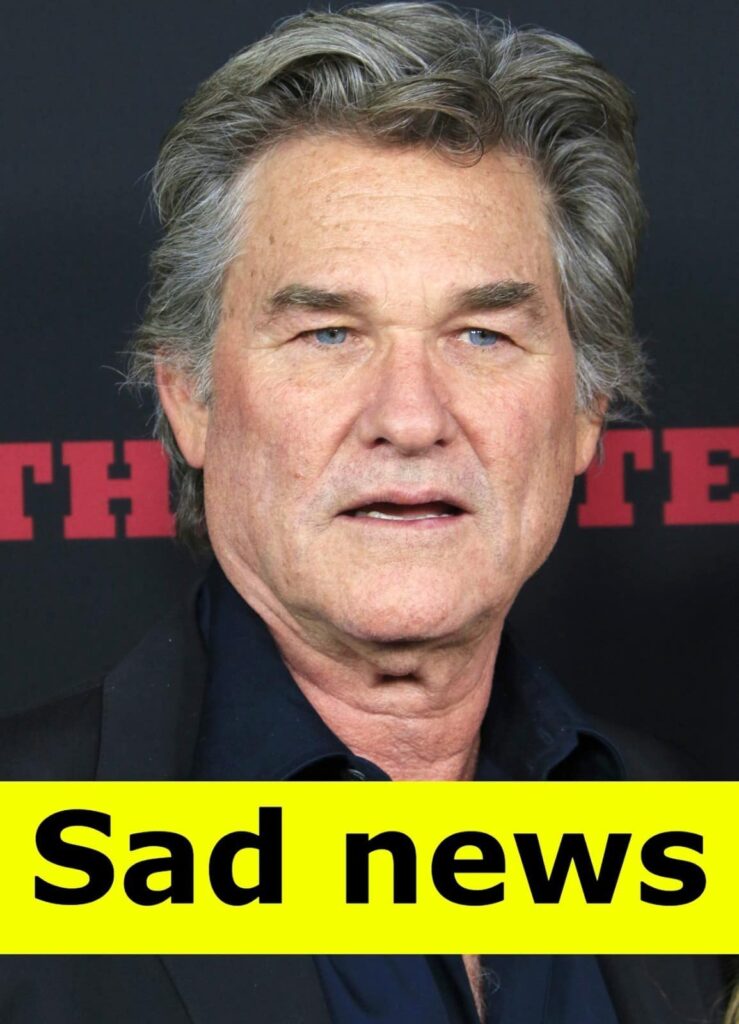
Kurt Vogel Russell entered the world on March 17, 1951, born into a family that viewed the “Dream Factory” not as a fantasy, but as a family business. His father, Bing Russell, was a quintessential working character actor, perhaps most immortalized as Deputy Clem Foster on the seminal Western Bonanza. Growing up on the perimeter of soundstages and television backlots, Kurt was socialized into the grueling, unglamorous rhythms of production before most children learn to ride a bike.
Crucially, Bing Russell did not present acting as a golden ticket to a life of ease. He framed it as a trade—a profession demanding punctuality, a thick skin, and a fundamental understanding that a “call sheet” was a contract of professional responsibility. Bing knew the volatile nature of the industry; he understood that roles were temporary and success was a moving target. This grounded realism became the skeletal structure of Kurt’s professional identity.
Beyond the screen, Bing’s maverick spirit was evident in his ownership of the independent Portland Mavericks baseball team in the 1970s. This willingness to operate outside the centralized Hollywood machine left an indelible mark on his son. Kurt has frequently cited his father’s example as the source of his own independence and self-reliance. When Bing passed away in 2003, the loss was a seismic event for Kurt. Their bond was a complex tapestry of family, mentorship, and shared creative DNA. Processing that grief required a significant emotional recalibration, as so much of Kurt’s direction had been tethered to his father’s steady hand.
The Disney Era: Navigating Child Stardom
Russell’s professional life began in earnest during the late 1950s and early 1960s. His natural charisma and “boy-next-door” presence eventually secured him a high-profile, long-term contract with The Walt Disney Company. Throughout the 1960s, he became the face of the studio’s live-action family slate, starring in hits like The Computer Wore Tennis Shoes, The Barefoot Executive, and Now You See Him, Now You Don’t.
While many child stars find the transition to adulthood a psychological minefield, Russell navigated these years with a workmanlike detachment from the “fame” aspect of his job. He focused on growth rather than notoriety. The studio’s faith in him was legendary; a piece of Hollywood lore suggests that among the final words Walt Disney ever wrote before his death in 1966 was the name “Kurt Russell.” Whether a casting note or a premonition, the anecdote underscores the gravity Russell held within the studio system even as a teenager.
A Fork in the Road: The Baseball Years
Acting was never Russell’s sole ambition. During the early 1970s, he pursued professional baseball with a seriousness that matched his screen work, playing in the minor leagues with legitimate athletic promise. It took a definitive shoulder injury to end his aspirations on the diamond—a turning point that redirected his focus entirely toward cinema.
In the analytical eye of a journalist, this was a pivotal moment of redirection. Rather than mourning the loss of a sports career, Russell channeled that competitive energy back into film. He has later mused that losing baseball was a clarifying moment; it forced him to commit to film with a renewed sense of purpose. This era reinforced a recurring theme in his biography: the ability to treat setbacks not as failures, but as necessary redirections.
The Carpenter Collaboration and Radical Reinvention
The most significant shift in Russell’s career occurred when he began a creative partnership with director John Carpenter. This collaboration allowed Russell to shed his “wholesome Disney” image in favor of something far more visceral.
The 1981 release of Escape from New York introduced the world to Snake Plissken, an eye-patched antihero who stood in stark contrast to Russell’s earlier roles. This performance established him as a legitimate action star and a cult icon. This was followed by 1982’s The Thing. Though it was initially met with a lukewarm reception and modest box office returns, the film has since been canonized as a science fiction-horror masterpiece. Russell’s portrayal of helicopter pilot R.J. MacReady remains one of his most analyzed and respected performances, proving he was willing to inhabit dark, complex territory rather than remain within the safety of his earlier image.
Dramatic Evolution: Silkwood, Tombstone, and Miracle
As the 1980s progressed, Russell’s dramatic range became undeniable. In Mike Nichols’ Silkwood, he delivered an understated, emotionally grounded performance as Drew Stephens, holding his own alongside acting titans Meryl Streep and Cher. While major awards often eluded him, critics consistently praised his ability to anchor an ensemble and support intense, character-driven storytelling.
His filmography continued to expand with the 1993 classic Tombstone, where his portrayal of Wyatt Earp provided the moral center for a cast that included Val Kilmer’s legendary Doc Holliday. Later, in Miracle, he channeled his lifelong passion for sports and leadership into the role of hockey coach Herb Brooks. The performance was disciplined, inspiring, and devoid of vanity, reflecting a deep-seated respect for the real-life figure and the U.S. Olympic team’s 1980 victory.
Legacy Over Laurels: The Hawn Partnership and Beyond
Perhaps the most extraordinary aspect of Russell’s life is his enduring partnership with Goldie Hawn. Since reconnecting on the set of Swing Shift in 1983, the two have become one of Hollywood’s most resilient and private couples. By choosing not to marry, they emphasized a commitment based on mutual respect and daily choice rather than legal ceremony.
Together, they raised a blended family—including actress Kate Hudson and their son, actor Wyatt Russell—with Kurt often stating that his success is measured by the stability of his home life rather than his box office receipts. For him, family has consistently taken precedence over career ambition.
Even in his later years, Russell has remained a vital presence in the industry, seamlessly joining the Fast & Furious franchise and collaborating with Quentin Tarantino on The Hateful Eight. These roles have introduced his authoritative yet subtly humorous style to a new generation of cinemagoers while reinforcing his reputation as a seasoned performer.
Conclusion: The Measure of a Career
The brilliance of Kurt Russell’s story lies in its lack of histrionics. He survived the precarious transition from child stardom to adult relevance without the typical “peaks and valleys” of a Hollywood tragedy. He did not rely on controversy to stay relevant, nor did he orient his life around the pursuit of trophies.
His legacy is built on the rare qualities of durability and professional reliability. From Disney comedies to dystopian thrillers, gritty Westerns, and sports dramas, Russell has demonstrated that in a field driven by fleeting trends, integrity and a steady dedication to the craft are the ultimate measures of success. Kurt Russell didn’t just survive Hollywood; he mastered it on his own terms.