

When radio legend Paul Harvey delivered his broadcast “If I Were the Devil” in 1965, most listeners heard it as thought-provoking commentary. Nearly six decades later, it sounds eerily like a prophecy fulfilled.
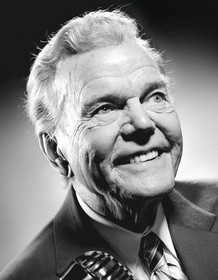
In his calm yet commanding voice, Harvey didn’t describe a world destroyed by war or violence — but one quietly undone by temptation, distraction, and moral decay. His message wasn’t about chaos from the outside, but corruption from within.
“If I were the Devil,” he said,
“I would whisper: Do as you please.
I’d tell the young that the Bible is a myth,
convince them that man created God instead of the other way around.
I’d remove God from the courthouse, the schoolhouse — even the church.
I’d peddle drugs and alcohol freely.
I’d distract families, divide them, weaken their resolve.
I’d teach people to pray, not to God — but to government.
I’d replace wisdom with pleasure, truth with opinion — and call it freedom.
And I’d keep doing it… until the world slipped quietly into my hands.”

Those words were spoken in a time before social media, smartphones, or viral trends. Yet Harvey’s message about fading faith, broken families, and shifting values feels hauntingly current.
What once sounded like radio theater now feels like reflection — a mirror held up to the world we live in today.
Some interpret it politically. Others see it spiritually. But nearly everyone who hears it today feels the same quiet chill: he saw it coming.
Harvey’s genius wasn’t just in prediction — it was in clarity. He understood that the downfall of a nation doesn’t always begin with violence, but with apathy. “Self-government won’t work without self-discipline,” he once said. And perhaps that’s the part we’ve forgotten.
Nearly 60 years later, his words still echo — not as fear, but as a reminder: the smallest compromises often create the biggest changes.