

It was supposed to be a dream job—working aboard the luxury superyacht Far From It, navigating the turquoise waters of the Bahamas, mingling with elite guests, and learning the ropes of high-end hospitality. For 20-year-old Paige Bell, it was the chance to chart her own course in the world, combining her love for travel with ambition and drive. But that dream dissolved into a nightmare that no one aboard the vessel could have imagined.
On the morning of her disappearance, Paige was last seen around 10 a.m., saying goodbye to her boyfriend before he took a tender to shore. She wore her customary smile, eager to get to work, and waved as he departed. When the tender returned hours later, the yacht’s crew noticed her absence. Initial searches were frantic but disorganized—Paige was nowhere to be found. The sense of unease soon gave way to horror: she was discovered in the engine room, lifeless, her young life extinguished.
Standing over her body was Brigido Lara Munoz, the yacht’s engineer, 39, a man now accused of one of the most chilling betrayals imaginable: the murder of a young colleague. Authorities report that Munoz was found with a bloodied knife and severe wrist injuries, suggesting a suicide attempt. He was immediately detained, denied bail, and faces charges that could see him spend the rest of his life behind bars. His next court appearance is scheduled for November, but the shockwaves of this incident have already swept across the yachting industry, igniting urgent questions about safety, oversight, and accountability.
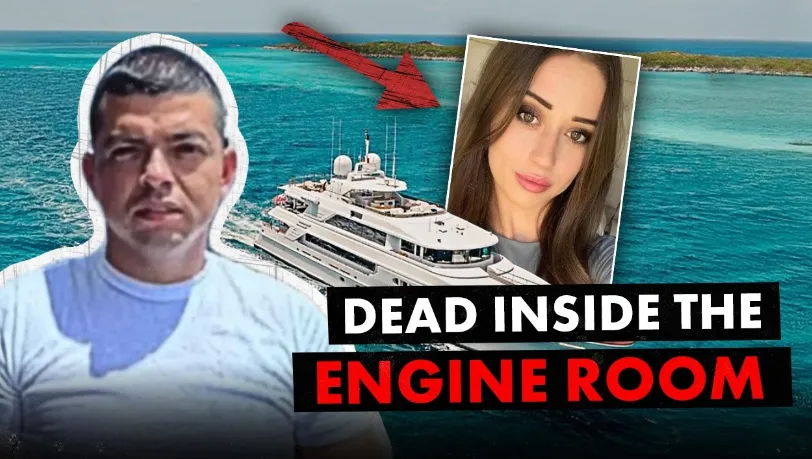
Paige Bell was more than a stewardess; she was a beacon of hope and kindness in a world that often demands perfection under high-pressure conditions. Just days away from her 21st birthday, she had dreams of becoming a doctor, a goal fueled by compassion and determination. Crew members remembered her as cheerful, dependable, and endlessly patient, qualities that made her a favorite among both guests and colleagues. Her colleagues now speak of her in hushed tones, their grief palpable, as they grapple with the knowledge that someone they worked alongside, someone they trusted in close quarters, had taken her life.
The details emerging from the investigation paint a disturbing picture. Paige had previously reported Munoz to the yacht’s captain for sexual harassment, yet he remained employed aboard the vessel. According to insiders, this was not an isolated incident; warnings about Munoz’s behavior had been raised before, but systemic lapses in the yachting industry allowed him to remain on board. “We were aware of complaints, but the processes for background checks are inconsistent,” a former crew member told the press. “There’s a culture of silence in the industry—everyone wants to keep the ship running smoothly, and sometimes that means ignoring red flags.”

This failure has sparked outrage among former and current crew members. Many stress that the incident is not simply a tragic outlier but a symptom of broader structural issues: the yachting world remains largely unregulated in terms of crew vetting, with minimal oversight for hiring practices. Criminal background checks, psychological assessments, and mandatory reporting of complaints are often optional, leaving young and vulnerable crew members exposed. “Paige’s death could have been prevented,” said a colleague who wished to remain anonymous. “There were warning signs, and nobody acted. That’s the real tragedy here.”
The luxury superyacht itself, once a symbol of opulence and escapism, has become a grim reminder of what can happen when oversight fails. The Far From It, its decks previously echoing with laughter, now sits shrouded in solemnity, the memory of a vibrant young life lost within its walls. Investigators continue to comb through logs, surveillance footage, and crew interviews, seeking not just answers about Paige’s final hours, but also accountability for the lapses that enabled this tragedy.

The impact of Paige’s death resonates far beyond the decks of the yacht. Social media has become a platform for mourning and advocacy. Hashtags calling for safer working conditions, mandatory background checks, and crew protections have surged across Instagram, Twitter, and X, with former crewmates and advocacy groups amplifying Paige’s story. International boating and maritime organizations are facing unprecedented scrutiny, and lawmakers are being pressed to consider legislation that would establish uniform safety standards across private vessels. “No one should ever step onto a yacht and fear for their life,” said Angela Martinez, a maritime safety advocate. “Paige’s death must catalyze change.”
Friends and family continue to grieve, painting a portrait of a young woman whose potential was limitless. Her boyfriend, who last saw her alive, struggles to reconcile the memory of her laughter with the brutality of her death. “She was kind, intelligent, full of life,” he said, voice cracking. “I can’t understand why someone would do this. Paige didn’t deserve any of it.” Her parents, distraught and angry, have called for transparency in the investigation and accountability from the industry that allowed such a tragedy to occur.

Beyond personal loss, Paige’s murder underscores a broader societal dilemma: how do industries built around exclusivity and leisure protect the vulnerable employees who make them function? Yacht crews are often young, far from home, and working in isolated conditions with little oversight. These factors create a perfect storm for harassment, abuse, and, in the worst cases, violence. Paige’s death has become a clarion call to reform the yachting sector, to implement safeguards that protect crew members from predators and ensure that no one is left exposed in an environment where luxury masks vulnerability.
Memorials and vigils for Paige have begun to dot the yachting community, both on shore and at sea. Colleagues from previous assignments, friends, and concerned advocates have gathered to remember her light, placing flowers, candles, and personal mementos on docks and marina walkways. “Paige’s life was a gift, and it’s devastating to think it was cut short so senselessly,” said one coworker. “We honor her by demanding change, so no one else has to suffer like this.”
As authorities continue their investigation, the case is emblematic of the delicate balance between freedom and safety on private vessels. It has ignited conversations not only about workplace protections, but also about the legal responsibilities of yacht owners, captains, and companies that manage crew. Advocates argue that mandatory criminal background checks, psychological evaluations, and clear reporting protocols must become standard—not optional—to prevent future tragedies.
For Paige Bell, justice may take time. Munoz’s trial, his mental state, and the full unraveling of events leading up to her death will unfold in courtrooms far from the sunlit waters she once navigated with hope. But for the yachting community and for those who care about protecting young workers, her story has already made waves. It serves as a stark reminder that luxury and isolation should never come at the cost of safety, and that vigilance and accountability must be uncompromising, even in paradise.
In the end, Paige’s bright life, her ambitions, her laughter, and her dreams will not be forgotten. Her story has illuminated the shadows aboard private vessels and sparked a conversation that could save lives. While grief and outrage persist, the hope remains that her tragic death will be a turning point—an enduring call for change that ensures no other young crew member pays the ultimate price.