

It did not begin with a police call.
It did not begin with a crime scene.
It did not begin with blood on pavement or officers racing toward flashing lights.
It began with a dog.
A small two-year-old German Shepherd mix named Chicarin, who belonged to a quiet family in Center Point, and who wandered the neighborhood the way many dogs do — curious, playful, unimportant to anyone except those who loved her.
But Chicarin would become the single thread pulling apart a mystery that had been buried for nearly two years.
Because four times in one year, she carried home human remains.
Four times she placed pieces of a missing life right at her family’s doorstep.
And no one understood why.
No one knew where she found them.
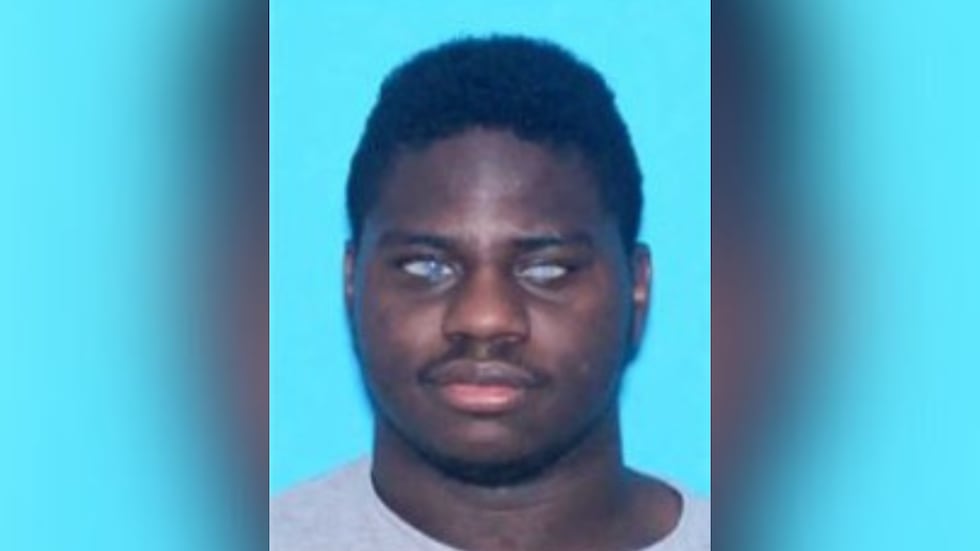
No one imagined that these bones belonged to a young man namedCurtis Taylor Jr. — a 25-year-old who vanished in February 2024, leaving behind a family that waited for answers no one seemed able to give.

On Thursday, the Jefferson County Coroner’s Office confirmed what the bones had been trying to say for a year.
The remains were identified as Curtis, using DNA and dental records — the tools investigators only turn to when a body is no longer whole enough to speak for itself.
Curtis was visually impaired, legally blind yet still able to see shapes and shadows.
He had attended the Alabama Institute for Deaf and Blind.
He was young, gentle, and building a life that ended before it truly began.
The last time anyone saw him was February 6, 2024.
He told his mother he was going to stay with his father for a while.
Both parents lived near each other, so nothing felt unusual.
Nothing seemed wrong.
Nothing suggested he would never walk through that door again.
But two weeks passed with no call, no message, no sign.
His mother reached out to his father — and learned Curtis had
never arrived.
His phone was off.
Missing-person reports were filed.
Searches were launched again and again.
And still, nothing.
Curtis had simply disappeared into a silence that felt too heavy to name.

Then came August 20, 2024.
A normal morning.
A normal day.
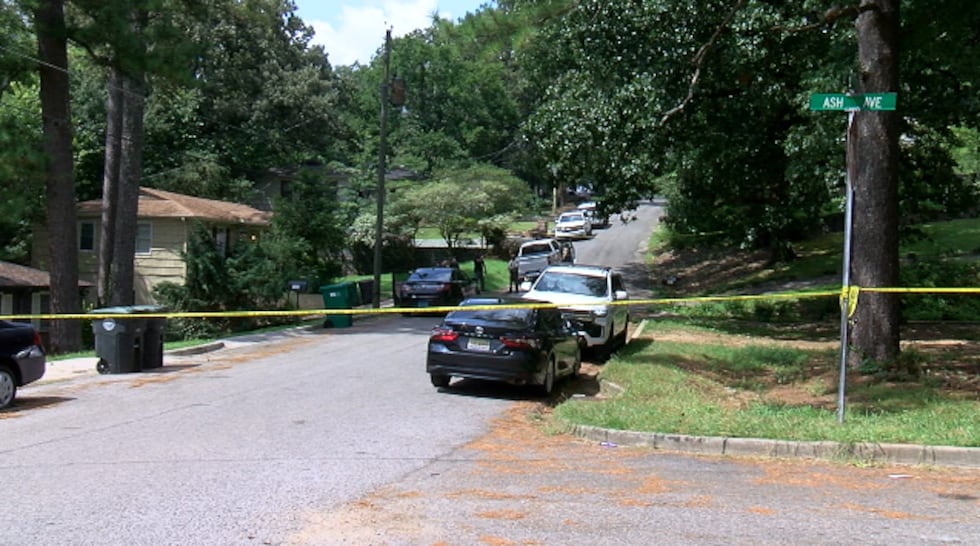
Until Orlin Manchame Marroquin walked outside and saw his dog playing with something in the road.
Something round.
Something white.
Something that didn’t belong in a dog’s mouth.
It was a human skull.
Police were called.
The area was searched.
Nothing else was found.
And no one could answer the question that hung in the air like a storm that refused to break:
Where was the rest of the body?
Months passed.
Winter arrived.
And on December 12, 2024, Chicarin returned again — this time with a tibia, a long leg bone, left casually in the front yard as if the dog were bringing back a stick from the woods.
Investigators checked yards, woods, abandoned lots.
They knocked on doors.
They questioned neighbors.
They asked for Ring footage.
One neighbor reported seeing the dog walking up the street.
Another recalled seeing her gnawing on a bone.
Yates even stopped the mail carrier to ask if he had noticed anything unusual.
Still, the mystery only deepened.
Medical examination of the skull revealed the victim had been shot
, and the case was officially declared a homicide.
A full DNA profile was created — but it matched no one in CODIS, the national database maintained by the FBI.
Whoever this person was, they existed outside every system designed to find them.
In March 2025, DNA confirmed the skull and tibia belonged to the same victim.
But the victim still had no name.
Then, on April 10, 2025, Chicarin struck again.
She returned home carrying a femur.
A search of the yard uncovered a mandible, a human jawbone lying in the dirt.
All were part of the same body — slowly returning home piece by piece, carried by a dog who seemed unwilling to let the dead be forgotten.
Authorities fitted Chicarin with a GPS tracker.
They mapped her routes.
They searched every place she wandered.
But for months, the trail led nowhere.
Hope thinned.
The case quieted.
And then, on August 8, 2025, investigators found what they had been searching for — the final remains belonging to the same victim.
Enough to identify him.
Enough to say his name.
Enough to give a grieving family the truth they had begged for since 2024.
Curtis Taylor Jr. had been found.
Not intact.
Not whole.
Not alive.
But found.

His death is now being investigated as a homicide.
A new chapter in a tragedy that has already lasted too long.
A chapter filled with questions that no one yet knows how to answer:
Where was Curtis taken after he left home?
How did he die?
Who shot him?
Why was his body left to decompose in a place only a roaming dog could reach?
And how long did he lie there — alone, unrecognized, unseen — before Chicarin began carrying him back to the world?
For his family, the confirmation is both relief and devastation.
Relief that he is no longer missing.
Devastation that this is how he was found.
Because no mother imagines the last trace of her child will be a skull in a dog’s mouth.
No father imagines identification will come from bones scattered across seasons.
No family imagines hope will be replaced with a forensic report and a case number.

Yet through all of this — through the silence, through the waiting, through the aching mystery — it was a dog who refused to let Curtis vanish completely.
A dog who brought him home again and again, as if returning a secret the world needed to face.
A dog who would not allow the earth to swallow the truth.
Four times she carried him back.
Four times she said what no human voice could say:
“He is still here.
Don’t stop looking.”
And because of her, his story moves forward.
Because of her, investigators now have a path to follow.
Because of her, justice — however late, however heavy — can finally begin.