

On a freezing February night in Anchorage, Alaska, the ordinary life of an 18-year-old high school senior was shattered in a matter of minutes. Samantha Koenig was a bright, happy young woman with dreams of becoming a veterinarian. She lived with her father, James, who adored her, and her life was filled with the promise of a future that any teenager would look forward to. On the evening of February 1, 2012, Samantha was closing up her shift at a small, isolated coffee stand called Common Grounds. The security cameras were rolling, capturing what seemed like a mundane end to a workday. But as the clock ticked past 8:00 PM, a shadow emerged from the darkness of the parking lot, signaling the beginning of a nightmare that would grip the entire nation.
The footage shows Samantha busy with her closing duties, wiping down counters and preparing to leave. Suddenly, a figure approaches the drive-thru window. At first, the interaction appears normal—Samantha prepares a drink, perhaps assuming it is just a late-night customer. But then, her body language shifts drastically. She recoils, raising her hands in a gesture of terrified surrender. It becomes clear to anyone watching that the person on the other side of the glass is not there for coffee. The man, obscured by the darkness, is armed and dangerous. Under his command, Samantha turns off the lights, plunging the stand into ominous darkness. She hands over cash from the register, but robbery is not his only intent. In a move that chills the blood, the man climbs through the window, invading the small, enclosed space.
For several agonizing minutes, Samantha is trapped with her abductor. When they finally emerge, her hands are bound, and something is stuffed in her mouth to silence her. He leads her away into the freezing night, across the snowy parking lot, and out of the frame. Samantha Koenig has vanished. But in the chaos of her abduction, a critical detail was left behind—a “clue” that would later baffle and then guide investigators. Her cell phone, which lit up with incoming texts from her worried boyfriend, remained on the counter. Yet, hours later, her boyfriend would receive a text message from that very phone, a calculated move by the abductor to buy time and sow confusion. This digital manipulation was the first sign that they were dealing with a criminal of unusual cunning and cruelty.
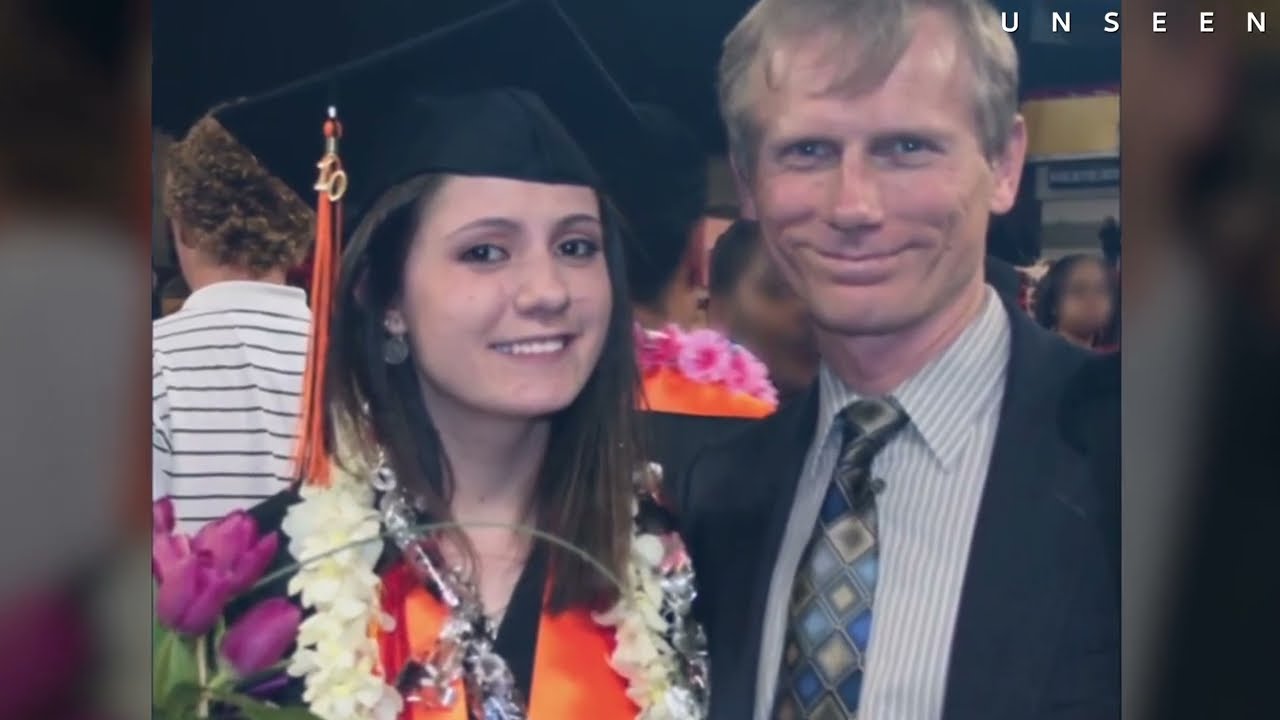
The panic set in quickly. Samantha’s boyfriend, Dwayne, arrived to pick her up but found the stand dark and empty. When he finally received the strange text hours later, claiming she was running away to clear her head, her father James knew immediately that something was wrong. “That doesn’t sound like Samantha,” he insisted. The next morning, James reported his daughter missing, sparking a massive manhunt. The police were initially baffled. Was it a runaway case? A robbery gone wrong? But as they analyzed the security footage, the terrifying reality of a stranger abduction became undeniable. The man in the video was efficient, calm, and terrifyingly controlled. He was not a chaotic amateur; he was a predator who knew exactly what he was doing.
As days turned into weeks, the investigation seemed to hit a wall. There were no leads, no witnesses, and no trace of Samantha. Her father, desperate and heartbroken, rallied the community, raising thousands of dollars for a reward and keeping her face in the public eye. But the abductor was watching. Nearly a month after she disappeared, a chilling breakthrough occurred. A text message directed the family to a park where they found a ransom note demanded $30,000. Accompanying the note was a polaroid photo that gave the family hope: it showed Samantha looking terrified but alive, holding a current newspaper. This “proof of life” was the lifeline James Koenig clung to, believing he could simply pay to get his daughter back. He didn’t know that he was playing a game with a monster who had already decided the outcome.
The ransom demand led to a digital trail that would ultimately be the predator’s undoing. The family deposited the money into Samantha’s account, and the FBI lay in wait, monitoring the debit card. The abductor, arrogant and feeling invincible, began to use the card. But he didn’t use it in Alaska. He traveled thousands of miles, withdrawing cash from ATMs in Arizona, New Mexico, and finally, Texas. Surveillance cameras captured a figure bundled in a disguise, driving a white Ford Focus. It was a race against time. Was Samantha in the car with him? Was she being transported across the country? The FBI and local law enforcement coordinated a desperate net to entrap the man driving the white car.
The breakthrough came on a highway in Texas. A sharp-eyed state trooper spotted the white Ford Focus and initiated a traffic stop. The driver was a man named Israel Keyes. When officers looked inside the vehicle, they didn’t find Samantha. Instead, they found the tools of a professional kidnapper: a disguise matching the ATM footage, Samantha’s cell phone, and her debit card. Keyes was arrested, and the house of cards began to crumble. But the capture of Israel Keyes was not the end of the mystery; it was the opening of a Pandora’s box. Keyes was not just a kidnapper; he was a prolific serial predator who had traveled the country for years, hunting victims with terrifying randomness.
Under interrogation, the horrifying truth about Samantha’s fate was revealed. Keyes confessed that the “proof of life” photo was a macabre stage production. Samantha had tragically lost her life the very night she was taken, long before the ransom note was ever sent. Keyes had returned to her body weeks later, applied makeup to her face, and sewn her eyes open to make her appear alive for the photo. It was a level of depravity that shocked even seasoned investigators. He admitted to killing her and disposing of her remains in a frozen lake north of Anchorage. The hope that had sustained James Koenig was crushed in an instant. His daughter was never coming home.
Israel Keyes proved to be a nightmare for law enforcement. He detailed how he buried “kill kits” containing weapons and supplies in various locations across the US, waiting years to return and use them. He had no specific victim profile, no geographic pattern, and no motive other than the thrill of the hunt. He was a “ghost” who had operated in the shadows, and Samantha Koenig was the victim who finally brought him into the light. Her case forced him to deviate from his usual meticulous planning. By taking her debit card and using it, he left a digital footprint—a “clue”—that he had avoided in his previous crimes. In a way, Samantha’s abduction was the catalyst that ended his reign of terror.
The tragedy of Samantha Koenig is a story of immense loss, but also of the relentless power of a father’s love and the persistence of justice. Israel Keyes ultimately took his own life in his jail cell, robbing the families of his other victims of a full confession and a trial. However, because of the investigation into Samantha’s disappearance, the world learned the name of a monster who might otherwise have continued to harm innocent people. James Koenig channeled his grief into action, founding an organization to help find other missing persons and fighting for workplace safety laws in his daughter’s name. Samantha’s legacy lives on, not just as a victim, but as the young woman whose case stopped a predator in his tracks.