

The small town of Dickinson, Texas, was a quiet place in 1990, a community where life moved at a gentle pace. But on a muggy morning in August, a shadow fell over the town that would linger for nearly two decades. The focal point of this terror was Jennifer Schuett, an eight-year-old girl living with her single mother, Ellen. Jennifer often sought comfort sleeping with her mother, finding safety in the shared space. However, on August 9, 1990, Ellen, needing to wake early, asked her daughter to sleep in her own room. It was a mundane request that set the stage for a waking nightmare.
In the morning, Ellen went to wake Jennifer, but the room was empty. The window, which opened out to the parking lot, was wide open. Panic set in instantly. Jennifer was gone. The police arrived swiftly, and almost immediately, investigators dismissed the idea of a runaway. Everything pointed to a terrifying, forced abduction. As the hours dragged by, the desperation in the community mounted. The case was quickly escalating from a missing person report to something far more sinister, demanding every resource the small police department possessed.
The police were operating on the terrible assumption that they were searching for a recovery, not a rescue. That evening, around 6:30 PM, the worst fears seemed confirmed when a group of children playing in a field stumbled upon a horrifying discovery. It was the severely wounded body of a little girl, left for perished on top of a small hill. Emergency services were immediately called, and the decision was made to airlift the child to a hospital as time was running out. Investigators on the scene felt certain they were dealing with a case of life taken; the child’s injuries were so grave that survival seemed highly improbable. Jennifer’s throat had been brutally wounded, cut almost from ear to ear, and she had suffered a heinous act of violation. The state she was in was so horrific that her mother was initially barred from entering the room.
However, the perpetrator had made a fatal error: he had missed all major arteries. Jennifer was clinging to life. After critical surgery, her airway was stabilized, and when she regained consciousness, a new challenge emerged. Jennifer could not speak. Her vocal cords were so severely damaged that doctors doubted they would ever fully reconnect. Beyond her physical injuries, the eight-year-old’s behavior had changed dramatically. She was in a constant state of panic, particularly around men. This intense fear extended even to male doctors and police officers, leaving investigators bewildered and frustrated. Every man in the room, Ellen noted, made Jennifer fearful, causing her to panic and retreat.
Faced with a survivor who could not communicate, investigators, in a brilliant move, handed Jennifer a notebook and pens, asking her to answer their questions in writing. She was only eight, but remarkably intelligent and articulate for her age, and incredibly detail-oriented. The notes she wrote to her mother, who then relayed them to the police, became the lifeblood of the investigation. Through this silent communication, Jennifer began to recount the terrible events. She had woken up in the arms of a stranger. When she tried to scream, he covered her nose and mouth, whispering a chilling lie: he claimed he was a police officer and she needed to stay calm. He then forced her into a car, holding her on his lap as they drove. At that moment, Jennifer knew something was profoundly wrong. She had been taught by her mother not to trust strangers, but her mind was at war—police were the ‘good guys,’ but this man felt like pure danger. This detail immediately clicked with investigators, explaining her deep-seated mistrust of the male officers who were supposed to be her protectors.
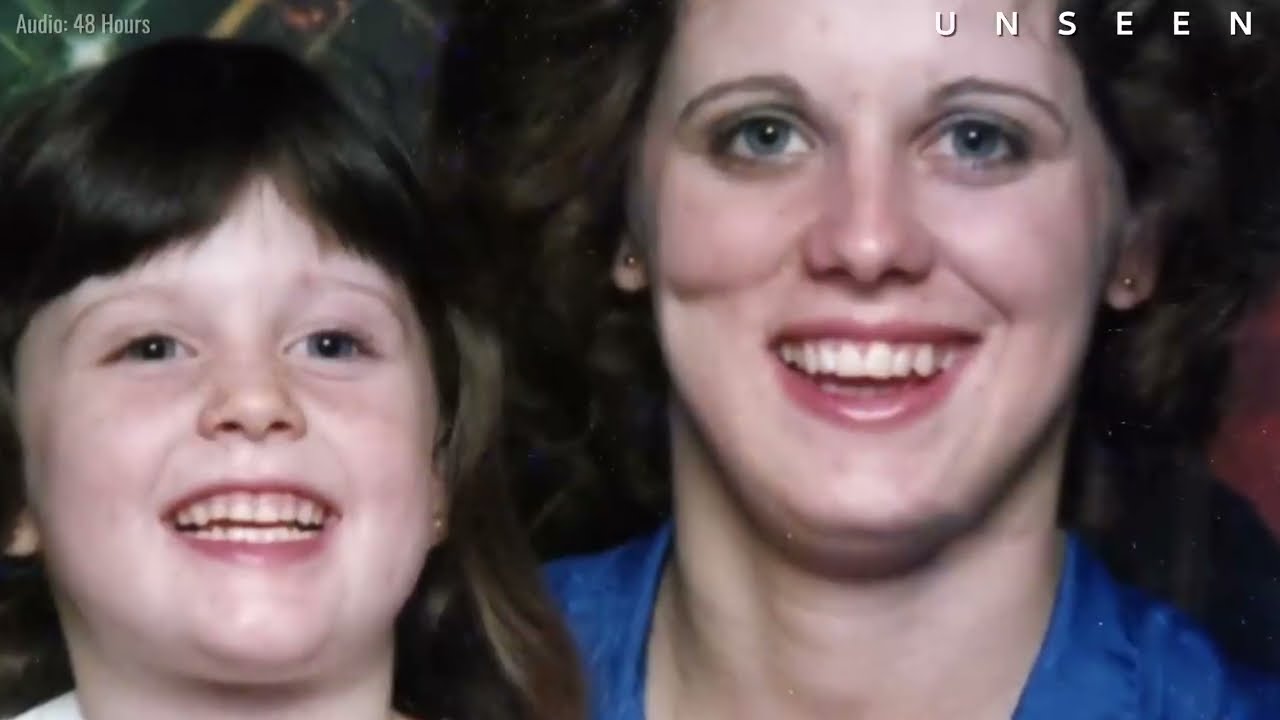
The man had stopped the car at a local elementary school, falsely claiming they would wait for her mother to pick her up when the sun rose. Jennifer waited anxiously, but no headlights ever appeared. He drank and offered her candy, classic stranger danger warning signs. Finally, he started the car, telling her, “Your mom’s not coming.” They drove out of town to the field. Even in her terror, Jennifer, the curious eight-year-old, began to interrogate him, demanding to see his badge and his firearm, trying to prove his claim as a law enforcement officer was false. He told her his gun was in the back seat. She stood on the front bucket seat to look, and that was the moment the devastating aggression began. Out of profound respect for Jennifer and the other victims of this perpetrator, the graphic details of the violation will not be recounted, focusing instead on her incredible fortitude.
When she awoke, she was being dragged by her ankle, left naked and gravely injured in the field. Despite the shock and pain, and knowing she couldn’t scream, the eight-year-old made a deliberate choice to survive. She played along, pretending to be still, a masterful act of self-preservation. When the man walked off, leaving her for perished, she was alone on the hill. As the sun began to rise, the fire ants started biting, keeping her from drifting completely out of consciousness. Even as she fought for every breath, she maintained her focus, keeping a mental inventory of every detail she could remember, believing that if she lived, she would catch him. She wrote that he looked “greasy” and may have had a scar. She meticulously noted the brand of cigarettes and the beer cans in the car. Most astonishingly, she remembered the name he had given her while she questioned him: Dennis.
A sketch artist was brought in to work with the silent witness. Through the painstaking process of notes and gestures, Jennifer helped produce a composite sketch of the aggressor. Sadly, the sketch did not lead to an immediate apprehension, and the case grew cold. Jennifer tried to express her disagreement and anger, frustrated that her inability to speak was hindering justice. Then, in one of her silent rants, a tiny sound escaped her mouth. The doctors were astounded. Despite her vocal cords being nearly severed, they had begun to reconnect. The impossible had happened. Jennifer regained her voice while still in the hospital, a true miracle of physical and spiritual resilience. “I haven’t shut up since,” she would later say, reflecting on her recovery.
Jennifer was discharged and returned to her life, but the vicious aggression she had endured haunted the entire community. The small town of Dickinson was on edge; no one knew who the perpetrator was, and every stranger was a potential threat. The police department bolstered its forces, posting officers in schoolyards and even inside classrooms. As months turned into years, the leads dwindled, and the case grew colder. Jennifer waited for 18 years, seeing no progress, her initial optimism fading as time passed.
Then, the long-awaited call came. Detective Tim Cromey was taking over the cold case. Their first meeting was life-changing. Cromey looked Jennifer in the eye and promised, “I will do whatever I can do in my power until the end of my career to get you the answers that you need for this case.” That simple sentence reignited Jennifer’s hope and dedication. She wanted to be actively involved in solving her own case, recognizing that she was the only living witness. Cromey contacted the FBI, recognizing that the advancement of DNA technology was the only chance they had. He submitted the pieces of clothing found at the scene 18 years prior for analysis. The process took an entire year, a period of agonizing waiting, but the efforts were not in vain.
At 2:30 in the morning, Cromey’s phone rang—it was the DNA lab. “We got a hit.” On September 22, 2009, the FBI provided a name: Dennis Earl Bradford. Initially, the name was unknown to investigators, but the connection was quickly made when Cromey went back to Jennifer’s notes from 1990: “He said his name was Dennis.” The fact that an eight-year-old, medicated and unable to speak, had accurately provided the name of her aggressor years later was hailed as a monumental validation of her testimony. Bradford, 39 years old at the time, was from Arkansas and had recently been released from prison for another kidnapping. His pattern of aggression was chillingly consistent: only six months after the Schuett case, he was apprehended for attempting a heinous act against another woman, and seven years later, he had choked a woman and held a knife to her throat, just as he had done to Jennifer. It was the DNA from that later aggression that had been placed in the national database, finally matching the evidence submitted from the Schuett case. Furthermore, a copy of his 1990 driver’s license photo was obtained, and it was a perfect match for the sketch Jennifer had silently guided the artist to create. Her memory, intact and razor-sharp, was undeniable proof.
Bradford was quickly apprehended. Police hoped for a full confession to ensure the case was airtight. When the news of the capture broke, Jennifer, now an adult, stood before the media, giving thanks to Cromey for keeping his promise and for “hearing my voice and seeing my determination.” She prepared her victim impact statement for the trial, which was symbolically set for August 10, 2010—exactly 20 years after the attack. However, justice in the courtroom was not to be. Bradford committed self-harm in his cell before the trial could commence. On the day the trial would have taken place, Jennifer went to his resting place. There, she read her victim impact statement, a powerful declaration of survival and triumph: “Dennis Bradford, you chose the wrong little 45-pound eight-year-old girl to try and end her life because for 19 years, I’ve thought of you every single day and helped in searching for you.” As a final, strange moment of closure, she was bitten by a fire ant, just like the ones that had kept her conscious in the field all those years ago. She took it as a sign, a final confirmation.
Jennifer had two main goals: to ensure the person who committed the heinous act against her would not harm anyone else, and to use her voice to inspire other survivors of violent crime. She has proudly accomplished both. Jennifer refused to let her victim status define her life. After being told that, due to the terrible violation she had endured, it would be almost impossible for her to conceive, she found a doctor to help her. Today, she is the mother of two children, a daughter and a son, calling them her “happy ending.” She continues to speak out as a victim advocate, her life a living testament that strength can be forged in the darkest of moments. The aggressor tried to silence her, but she proved she was always stronger. Jennifer Schuett’s enduring message is one of profound victory: “I am not a victim but instead victorious.”