
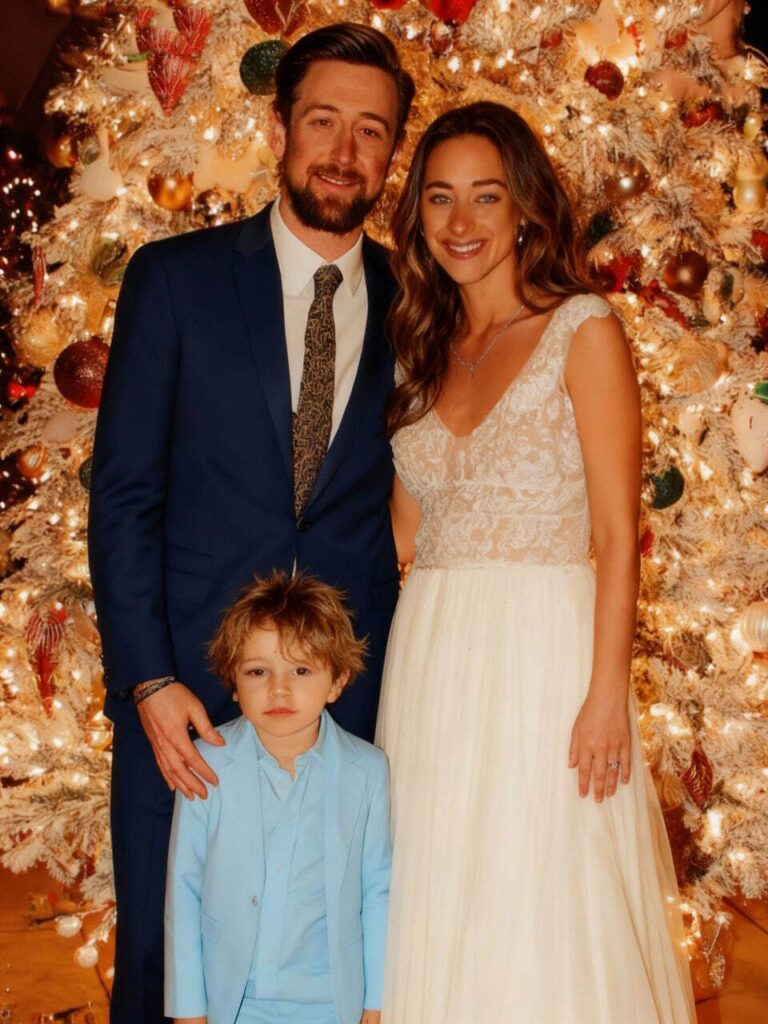
Some people grow up believing love is soft and forgiving. I grew up learning that love could be measured, inspected, and quietly withdrawn if you failed to earn it.
My mother taught me that lesson early.
When my father left our home, there were no tears and no raised voices. No slammed doors followed by regret. She simply watched him go, removed their wedding photo from the wall, and placed it into the fire without hesitation. Then she turned to me. I was five years old, standing very still, already aware that silence could be a kind of safety.
“It’s just us now, Jonathan,” she said. “And we don’t break.”
That sentence became the foundation of my childhood.
My mother did not raise me with hugs or bedtime stories. She raised me with rules, standards, and expectations that never rested. I attended the best schools. I learned piano before I learned how to express frustration. I practiced posture, eye contact, and gratitude notes written in perfect cursive. Every mistake was a lesson. Every success only raised the bar higher.
She wasn’t preparing me for happiness. She was preparing me to endure.
By the time I reached my late twenties, I understood something important. No matter how accomplished I became, my mother’s approval would always remain just out of reach. And slowly, quietly, I stopped chasing it.
That was around the time I met Anna.
I didn’t plan on telling my mother about her right away. Old habits die hard. But honesty felt easier than secrecy, so I asked my mother to meet me for dinner at one of her favorite restaurants. The kind of place where conversations are hushed and napkins are folded with precision.
She arrived wearing navy blue, her color of authority, and ordered wine before I sat down.
“Well?” she said, studying me. “Is this important news, or are we wasting time?”
“I’m seeing someone,” I told her.
Her interest sharpened instantly. “Tell me about her.”
“Her name is Anna. She’s a nurse. She works nights at a clinic near the hospital.”
I noticed the brief approval flicker across her face.
“She’s steady,” my mother said. “Responsible. Good.”
“She has a son,” I added. “His name is Aaron. He’s seven.”
The pause was subtle, but it was there. She lifted her glass, took a controlled sip, and recalculated.
“That’s a great deal of responsibility,” she replied evenly.
“She’s a wonderful mother,” I said quickly. “And Aaron is a good kid. He told me I was his favorite adult last week.”
“I’m sure she appreciates the support,” my mother said, her tone cooling. “Men who step in are… useful.”
She never said Anna’s name again that night.
A few weeks later, despite every instinct warning me otherwise, I introduced them.
We met at a small café near my apartment. Anna arrived late, apologizing as she rushed in with Aaron at her side. Her babysitter had canceled. There was no alternative.
Anna looked exactly like herself. Kind. Slightly tired. Real. Aaron clung to her hand, eyeing the pastry display with open curiosity.
My mother greeted them politely, but warmth never entered the room.
“You must be exhausted,” she said to Anna.
“I am,” Anna replied with a small laugh. “That’s part of the job.”
My mother asked Aaron a single question about school. When he said his favorite subject was art, she gave a thin smile and disengaged completely. When the bill arrived, she paid only for herself.
On the drive home, Anna looked straight ahead.
“She doesn’t like me,” she said calmly.
“She doesn’t know you,” I answered.
“She doesn’t want to,” Anna replied.
Two years passed.
Anna and I built a quiet life together. One grounded in shared mornings, tired laughter, and the small victories of daily routine. Aaron grew comfortable around me. Comfortable enough to trust. Comfortable enough to belong.
One afternoon, my mother asked me to meet her at a piano showroom downtown. It was a place she loved, a place she once said exposed flaws without mercy.
She ran her fingers along a polished grand piano.
“So,” she said. “Is this relationship going anywhere?”
“Yes,” I answered without hesitation. “I asked Anna to marry me.”
Her hand froze midair.
“I see,” she said.
“She said yes.”
My mother straightened her jacket and finally looked at me.
“If you marry her,” she said carefully, “don’t ask me for anything. You’re choosing that life.”
There was no anger. No debate. Just dismissal.
I waited for doubt. It never came.
And so I walked away.
Anna and I married quietly in a backyard filled with string lights and genuine laughter. We moved into a modest rental with stubborn drawers and a lemon tree in the yard. Aaron painted his bedroom green and pressed his hands into the walls, leaving marks we never erased.
Our life wasn’t impressive by my mother’s standards. But it was full.
One evening, years later, my phone rang. My mother’s name lit up the screen.
“So this is the life you chose,” she said, as if no time had passed.
“It is,” I replied.
“I’m in town,” she continued. “I’d like to see it. Send me your address.”
When I told Anna, she simply smiled.
“Let her come,” she said. “This is who we are.”
And for the first time, I wasn’t afraid of what my mother might see.
My mother arrived the next afternoon exactly on time.
She always did.
Her heels clicked sharply against the uneven concrete of our walkway, a sound so familiar it tightened something in my chest. I smelled her perfume before I saw her, the same crisp scent she had worn my entire childhood. It announced her presence the way she always had, before a word was spoken.
When I opened the door, she stepped past me without a greeting.
Her eyes moved quickly, taking everything in as if she were inspecting a property rather than entering a home.
The thrift-store couch.
The nicked coffee table.
The basket of unmatched shoes by the door.
She stopped just inside the living room and reached for the doorframe, gripping it lightly as if to steady herself.
“Oh my,” she said. “What is this?”
Not a question. A verdict.
She walked farther in, heels careful on the worn rug. Her gaze skimmed every surface, lingering on the magnet-covered refrigerator, the family calendar scribbled with school events and work shifts, the stack of library books waiting to be returned.
Nothing here matched her idea of success.
Nothing was staged.
Nothing was pretending to be something it wasn’t.
I didn’t rush to explain. For once, I let the silence do the work.
She stopped in the hallway.
Her eyes fixed on the faded handprints just outside Aaron’s bedroom door. Green paint, slightly uneven. The marks of small hands pressed proudly into fresh color.
She stared at them longer than I expected.
In the corner of the living room stood the upright piano. Old. Scarred. A secondhand instrument I had tuned twice myself. One key stuck. The left pedal creaked. It was imperfect in ways my mother had never tolerated.
From the kitchen, Aaron appeared holding a juice box.
He glanced at my mother.
Then at the piano.
Without a word, he climbed onto the bench and began to play.
The melody was hesitant, uneven in places, but unmistakable.
Chopin.
The same piece my mother had forced me to practice endlessly as a child. The piece that had left my fingers aching and my confidence thin.
My mother turned sharply at the sound.
She didn’t move again.
“Where did he learn that?” she asked quietly.
“He wanted to,” I said. “So I taught him.”
Aaron finished the piece, slid off the bench, and disappeared into his room. He returned moments later holding a folded piece of paper in both hands.
“I made you something,” he said, walking straight up to her.
He opened the drawing carefully.
It showed our family standing on the front porch. Anna and me in the center. Aaron smiling between us. In the upstairs window, he had drawn my mother surrounded by flowers.
“I didn’t know what kind you liked,” he explained, “so I drew all of them.”
She stared at the picture.
Then he added, matter-of-factly, “We don’t yell here. Daddy says yelling makes the house forget how to breathe.”
The room went very quiet.
My mother blinked once. Then again. Her mouth tightened, but no words came.
Later, we sat at the kitchen table. Anna poured tea. Aaron worked on homework, humming softly to himself.
My mother barely touched her cup.
“This could have been different,” she said finally. “You could have been someone. You could have been great.”
I met her gaze.
“I am someone,” I said. “I just stopped performing for you.”
She opened her mouth, then closed it. For the first time in my life, she looked unsure of what to say.
Anna spoke then, her voice calm but steady.
“Jonathan didn’t choose this life to hurt you,” she said. “And we’re not a punishment.”
My mother looked down at the drawing again.
“My father said the same thing when I married Jonathan’s father,” she said slowly. “He told me I was throwing everything away. When your father left…” Her voice faltered. She swallowed. “I thought if everything was flawless, no one could walk out.”
Control, I realized, had always been her shield.
“You lost us anyway,” I said gently. “Because you never gave us room to choose.”
She flinched, but didn’t deny it.
She left shortly after.
No hug.
No apology.
Just a long look at Aaron as he poured juice into a glass already too full. It spilled over the edge. She opened her mouth, as if instinct might take over.
Then she stopped herself.
That night, long after the house had gone quiet, I opened the door to find an envelope tucked beneath the mat.
Inside was a music store gift card.
And a small note, written in her precise, careful handwriting.
“For Aaron. Let him play because he wants to.”
I stood there for a long time, the paper warm in my hands.
For the first time in years, nothing felt broken.
It wasn’t forgiveness.
It wasn’t closure.
But it was something new.
And sometimes, that’s where healing begins.
The days after my mother’s visit passed quietly, almost cautiously, as if the house itself were adjusting to what had happened.
Nothing dramatic changed. There were no follow-up phone calls. No sudden confessions. No emotional letters slid under the door.
But something had shifted all the same.
I noticed it in the way I breathed easier while standing in the kitchen. In how I didn’t replay her words over and over the way I once would have. For years, her voice had lived in my head, correcting my posture, questioning my choices, reminding me of what I “could have been.”
Now it sounded distant. Smaller.
Aaron asked about her once, the morning after she left. He was sitting at the table, cereal scattered across his bowl like confetti.
“Is she mad at us?” he asked, not accusing, just curious.
“No,” I said. “She’s just learning.”
He nodded as if that made perfect sense.
Children understand things adults complicate.
Anna watched me carefully that week. She didn’t press. She didn’t analyze. She just stayed close, offering small, grounding moments. A hand on my shoulder while I washed dishes. A quiet smile when our eyes met across the room.
One evening, as we folded laundry together, she spoke softly.
“You okay?”
I thought about it for a moment before answering.
“Yes,” I said. “I really am.”
And I was surprised to realize it was true.
A few days later, we used the gift card.
Aaron held it like it was something fragile and important. We drove to a small music store across town, not the pristine showroom my mother loved, but a place that smelled like old wood and sheet music. The kind of store where the owner remembers your name and doesn’t mind if a kid presses the keys too hard.
Aaron tried three different pianos before settling on one. He didn’t ask which was best. He chose the one that felt right.
As he played, unpolished and joyful, I realized something my mother never had.
He wasn’t trying to be impressive.
He was trying to be happy.
That night, after Aaron went to bed, I sat alone in the living room. The house was quiet except for the hum of the refrigerator and the soft creak of settling walls.
I thought about my childhood.
About the nights spent practicing until my fingers burned. About the way praise always felt conditional. About how love, in my mother’s world, had to be earned and maintained like a performance.
And then I looked around.
At the crooked picture frames.
The stack of school papers on the counter.
The worn piano bench with one loose screw.
None of it was perfect.
All of it was real.
Weeks turned into months.
My mother didn’t disappear from my life, but she no longer hovered over it either. Occasionally, she sent a short message. A comment about the weather. A question about Aaron’s piano lessons. Once, a clipped note telling me she hoped I was “well.”
They weren’t warm.
But they weren’t weapons either.
And that was progress.
One afternoon, Anna found me standing in the hallway, staring at the green handprints by Aaron’s door.
“You could paint over those,” she said gently.
“I know,” I replied.
“But you won’t.”
I smiled. “No. I won’t.”
Those marks weren’t messes. They were memories. Evidence of a life being lived, not curated.
I thought about legacy then.
My mother believed legacy was something you protected fiercely. Something fragile that could be ruined by the wrong choices, the wrong people, the wrong kind of love.
I had learned something different.
Legacy isn’t about perfection.
It’s about presence.
It’s about showing up on tired mornings and listening when a child talks too much. It’s about choosing kindness over control. About allowing space for mistakes, laughter, and second chances.
Months later, Aaron came home from school waving a paper.
“I got invited to play at the winter recital,” he said, beaming.
“That’s amazing,” Anna said, pulling him into a hug.
He turned to me. “Will you sit in the front?”
“Always,” I told him.
That night, as I tucked him into bed, he asked one last question.
“Do you think she’d like to hear me play?”
I paused.
“Maybe someday,” I said honestly. “But you don’t play for her.”
He smiled, already drifting off.
“I play because it makes me feel good.”
I sat there for a while after he fell asleep, listening to his breathing, feeling something settle inside me.
For most of my life, I believed love came with terms and conditions. That approval was something you earned by being smaller, quieter, better.
Now I knew better.
Love isn’t about being chosen because you fit.
It’s about being chosen because you’re you.
My mother may never fully understand the life I built. She may always see it as something less than what she imagined.
But when she laughed at my choices years ago, she believed I was giving everything up.
What she didn’t see was that I was finally choosing something real.
And three years later, standing in a home filled with music, laughter, and imperfect joy, I knew the truth.
I hadn’t lost anything that mattered.
I had gained everything.