
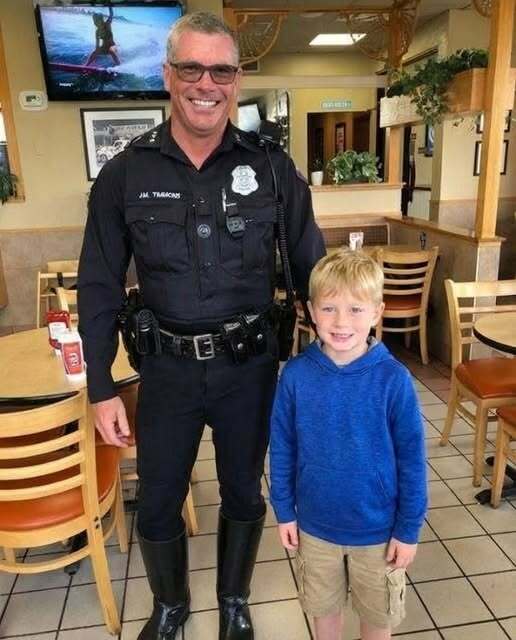
The morning began the way so many others had, with quiet effort and careful pretending. In the small diner, beneath flickering lights and the hum of tired machinery, a mother and her son sat across from each other, stretching warmth and patience to cover what money could not. Every choice was measured, every glance weighed. When the waitress mentioned cake, the boy shook his head quickly, not because he didn’t want it, but because wanting felt dangerous. He had learned, far too young, how easily hope could become embarrassment.
His refusal was an act of protection. He wasn’t shielding himself so much as his mother, who already carried enough worry in her eyes. Asking for more meant risking disappointment, meant drawing attention to what they lacked. That kind of awareness didn’t belong in a child, yet there it was, heavy and practiced. The love between them filled the space, but it could not fully silence the ache of scarcity that hovered over the table.
Then kindness arrived without warning. A stranger noticed, not with pity, but with understanding. The offer was simple, almost casual, yet it shifted the air in the room. Outside, a bicycle waited, its ribbon catching the light, promising movement and possibility. It was more than an object; it was a message delivered without words.
As the boy climbed on, uncertainty gave way to laughter. The parking lot became a place of freedom rather than limitation. Apologies faded, replaced by joy that felt unfamiliar but real. His mother watched, something unclenching in her chest as she saw her son simply be a child.
That day stayed with them. Not because of the gift alone, but because of what it represented. The world, harsh as it often was, had made room for gentleness. Someone had seen them and chosen kindness.
Long after the diner faded into memory, the lesson remained: even in moments shaped by lack, compassion can arrive unannounced. Sometimes the greatest gift is the reminder that they were never as alone as fear had made them believe.