
Vanished in the Night: The Haunting Case of ‘Daddy’s Princess’ and the Secrets of Violette Avenue
The Morning the Silence Broke
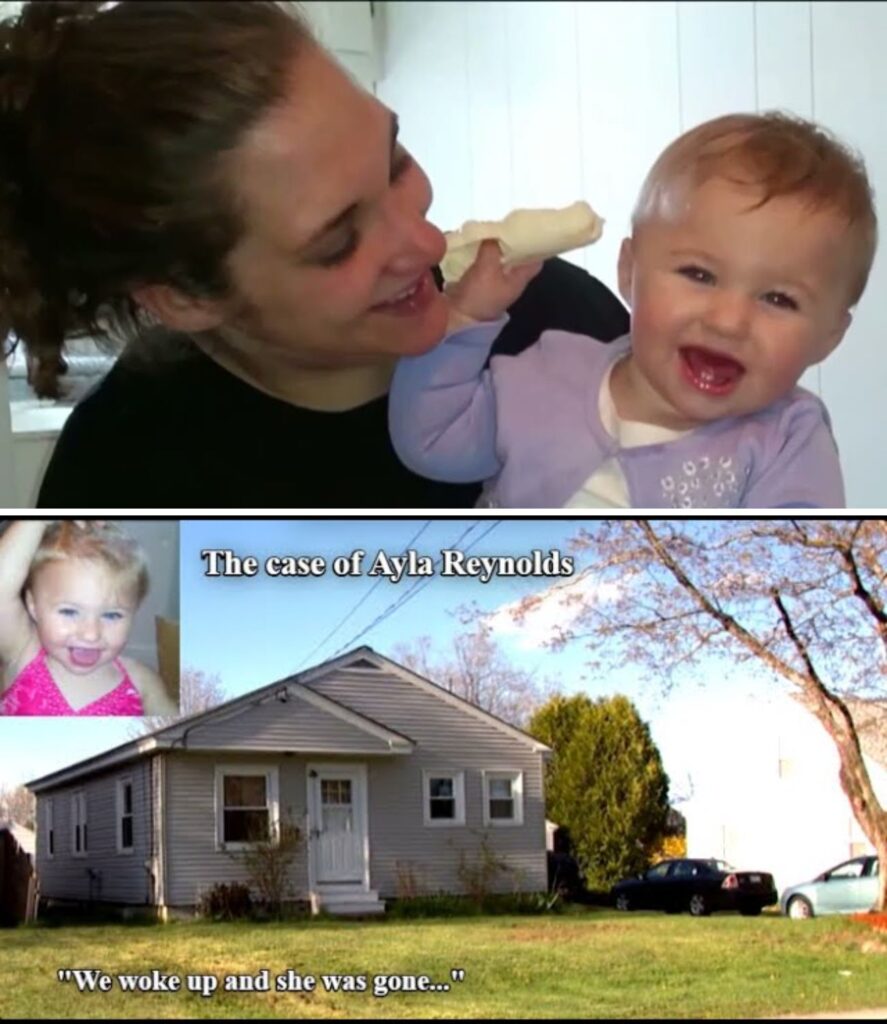
It was a bone-chilling morning in Waterville, Maine. The date was December 17, 2011, and the temperature hovered near freezing, a biting reminder of the harsh New England winter settling in. Inside the modest, pale-sided house at 29 Violette Avenue, a panic was supposedly unfolding that would soon ripple across the entire nation. At 8:51 a.m., a call came into the Waterville Police Department. The voice on the other end was Justin DiPietro, a young father who claimed he had woken up to every parent’s worst nightmare. His daughter, 20-month-old Ayla Reynolds, was gone.
The details he provided to the dispatcher were specific, the kind that sear into your memory and refuse to fade. Ayla was a tiny thing, standing just 2 feet 9 inches tall and weighing a mere 30 pounds. She had wispy blonde hair and piercing blue eyes that seemed to hold a universe of curiosity. But it was the description of her clothing that would break hearts across the country: green pajamas covered in white polka dots, emblazoned with the words “Daddy’s Princess.”
To make the image even more vulnerable, Justin explained that Ayla wasn’t just a toddler wandering off; she was injured. Her left arm was in a sling, wrapped in a soft cast and white bandage, the result of a nasty fall just weeks prior. How could a 20-month-old child, hindered by a broken arm and bulky cast, climb out of her crib, navigate a house full of sleeping adults, open a door, and vanish into the freezing cold without a trace? It was a question that would haunt investigators, the community, and Ayla’s mother, Trista Reynolds, for more than a decade.
Police officers arrived at the scene within minutes, expecting perhaps a wandering child who had strayed too far into the neighborhood. They conducted a cursory search of the home and the immediate area, their breath misting in the frigid air as they called out her name. “Ayla! Ayla!” But the silence that returned was deafening. By mid-morning, the search had escalated into a full-blown operation. Twenty to twenty-five officers, soon joined by the Warden Service, the State Police, and eventually the FBI, began to comb the streets. They knocked on doors, checked backyards, and stared into the dark, icy waters of the nearby Mesalonsky Stream. But of the little girl in the polka-dot pajamas, there was not a single sign.
A Broken System and a Broken Arm
To understand the tragedy of that December morning, we have to rewind the clock. The relationship between Ayla’s parents, Trista Reynolds and Justin DiPietro, was complicated, fractured by the struggles of young adulthood and personal demons. Trista, who lived in Portland, Maine, adored her daughter but was battling her own issues at the time. She had made the agonizing decision to let Ayla stay with Justin temporarily while she sought help and tried to get her life back on track. It was a decision born of love and necessity, a mother trying to do the responsible thing.
“I thought it would be the safest place for her to be,” Trista would later lament in a heart-wrenching interview, tears streaming down her face. “I was wrong.”
In October 2011, the custody arrangement shifted. Justin, with the help of his mother Phoebe, had convinced social workers that he should have physical custody of Ayla. The transition was abrupt and, according to Trista, aggressive. She recalled the day Justin came to take Ayla away from her sister’s care in Lewiston, accompanied by a police officer. The report from that day paints a devastating picture: Ayla, happy and playing in the kitchen one moment, and then breaking down into uncontrollable sobs the moment she saw her father. She tried to run away, a toddler’s instinct screaming that something was wrong. It was a premonition that went unheeded.
In the weeks leading up to her disappearance, communication between Trista and Justin deteriorated. Trista claimed that Ayla often returned from visits with mysterious bruises, but the most alarming incident occurred just weeks before she vanished. Justin reported that he had tripped while carrying Ayla up the stairs, falling on top of her. The result was a broken arm for the toddler.
Trista was furious and terrified. She alleged that Justin didn’t seek medical attention for the child for 24 hours after the incident. “Who waits that long?” she demanded of the press. To her, it was a sign of negligence, or worse. She felt her influence slipping away, her calls to check on her daughter often going unanswered or met with excuses. “She’s watching a movie,” or “She’s sleeping,” Justin would say. The last time Trista spoke to Justin before the disappearance was Thursday, December 15th. He told her he wasn’t bringing Ayla down for a visit that weekend. Two days later, Ayla was gone.
The Narrative of the Night
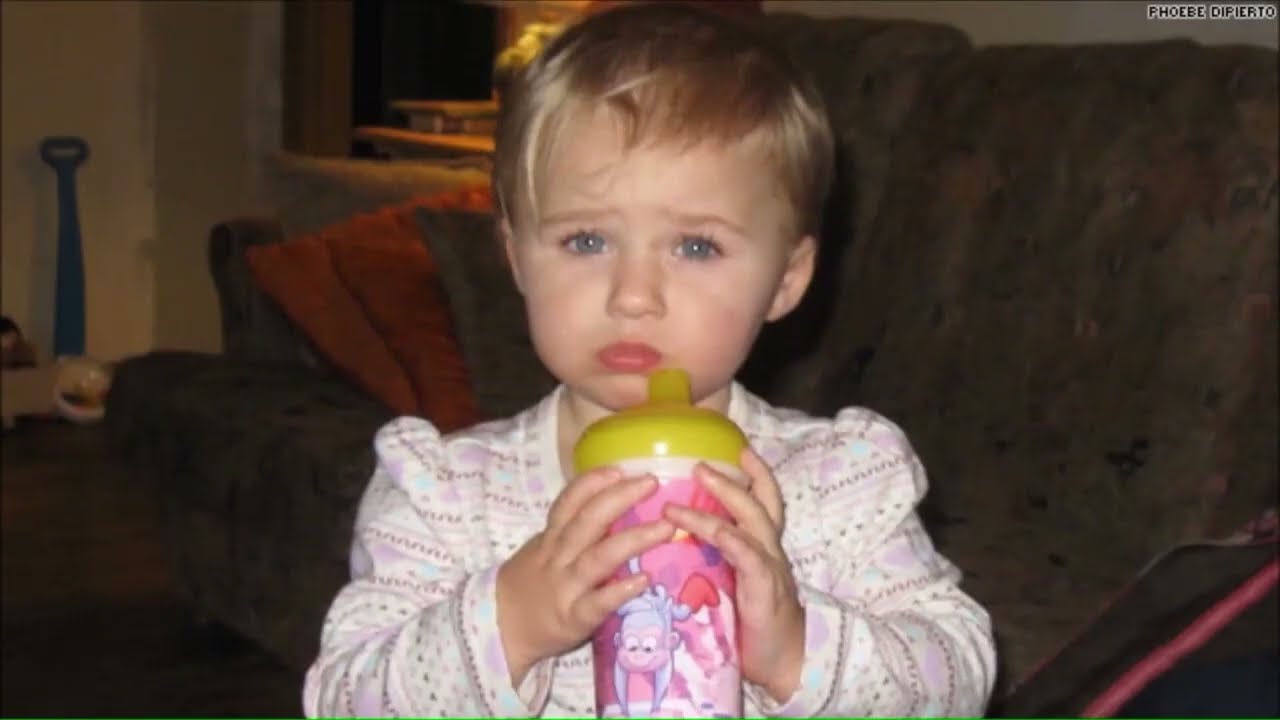
The timeline of the night before Ayla disappeared is a murky haze of conflicting stories and suspicious details. According to Justin, Friday, December 16th, was a “normal night.” He claimed he put Ayla to bed around 8:00 p.m. in a bedroom on the main floor of the small ranch-style house. He then went about his evening, allegedly watching TV and having dinner.
But Justin wasn’t alone in the house. Also present that night were his sister, Elisha DiPietro, and his girlfriend at the time, Courtney Roberts. Both women had their own children with them as well. It was a full house—three adults and three children. Justin told police he checked on Ayla later in the evening, and she was sound asleep. He then went to sleep in the basement, where he had set up his bedroom.
When he woke up the next morning around 8:30 or 8:45 a.m., he said he went to check on Ayla and found her bed empty. The house was quiet. No crying, no open doors (initially), just an empty crib.
However, as investigators dug deeper, the “normal night” narrative began to fray. Rumors swirled in the tight-knit community of Waterville. Neighbors whispered about a party at the DiPietro house that night, about loud noises and extra cars. Justin and his family vehemently denied these claims. “There was no party,” Elisha would later tell reporters, her face set in a mask of defiance. “We had dinner, watched TV, and went to bed.”
But one person’s location became a point of intense confusion: the grandmother, Phoebe DiPietro. Initially, it was believed she was in the house. Then, reports surfaced that she wasn’t. Phoebe herself gave conflicting statements to the media, first implying she heard nothing because she was asleep, and later clarifying—or confusing matters further—by stating she wasn’t even there that night. “I was somewhere else,” she told a reporter, refusing to disclose the location. This shifting game of musical chairs regarding who was actually in the home that night only fueled the growing suspicion that the adults were hiding something.
The Search for a Ghost
In the days following the 911 call, the community of Waterville mobilized in a way that was nothing short of heroic. It was Christmas time, a season of miracles, and everyone wanted to bring the “princess” home. Hundreds of volunteers scoured the woods, walking shoulder-to-shoulder through snow-covered fields. They poked through dumpsters, looked under porches, and tacked up thousands of “MISSING” flyers featuring Ayla’s smiling face.
The police chief, Joseph Massey, was initially optimistic, treating it as a missing person case. “We are looking at all possibilities,” he said. They drained the Mesalonsky Stream, bringing in airboats and divers to search the icy depths. They used cadaver dogs to sniff the perimeter of the house and the surrounding woodlands.
Kimberlin Smith, a 23-year-old local, took the day off work to join the search. “I grew up in this community,” she told a news crew, shivering in her winter coat. “We look out for our neighbors. This just doesn’t happen here.” It was a sentiment shared by many—a mix of disbelief and a desperate need to do something.
But as the days turned into weeks, the hope began to curdle into dread. The dogs picked up no scent trails leading away from the house. There were no footprints in the snow outside the window where an “abductor” would have had to exit. The police began to tow cars from the driveway and cordon off the house with yellow crime scene tape. The narrative was shifting. This was no longer a rescue mission; it was a hunt for evidence.
The Blood in the Basement
The turning point came in late December, just weeks after Ayla vanished. State Police investigators, frustration etched into their features, announced that they no longer believed Ayla had walked out of the house on her own. They also dropped a bombshell: the abduction theory was “not plausible.”
“We believe that someone was involved in taking her out of the house,” a spokesperson said grimly. But the real horror was revealed in the forensic details that leaked out over the following months.
Investigators had found blood in the house. Not just a drop or a smear from a toddler’s scraped knee, but a significant amount. Trista Reynolds, briefed by the police, shared the gruesome details with the public, her voice trembling with a mixture of rage and grief.
“They found blood in the basement,” she revealed. “In Justin’s bedroom.”
The specific locations of the blood evidence were chilling. It was found on Ayla’s slippers. It was found on a baby doll she loved. It was found on her car seat. And perhaps most damning of all, there was a stain described as “silver dollar-sized” on the living room sofa, and blood splatter on the wall. Trista was told the total amount of blood found was “more than a cup.”
“You don’t lose a cup of blood from a cut finger,” Trista argued. “That’s violence. That’s murder.”
The police confirmed that the blood was Ayla’s. They also found evidence of a cleanup attempt. Someone had tried to wipe away the stains, to scrub the house clean of the violence that had occurred. The bleach could hide the visual stains, but it couldn’t fool the luminol or the forensic experts. The house at 29 Violette Avenue wasn’t just a home; it was a crime scene.
The Circle of Silence
With the revelation of the blood evidence, the public’s gaze turned squarely onto the three adults who had been in the house: Justin, Elisha, and Courtney. Police publicly stated that they believed the three were “withholding information.”
“We think they know more than they are telling us,” Chief Massey said. It was a polite way of saying the police believed the people closest to Ayla were lying.
Justin DiPietro stopped talking to the media. He hired a lawyer. When reporters did manage to ambush him, his demeanor was often described as cold or defensive. In one infamous interaction, when asked about the blood, he claimed Ayla had vomited because of lactose intolerance, or that the blood was from a minor cut. “It’s ludicrous,” he said of the accusations. “I would never hurt my child.”
But his actions spoke louder than his few words. He refused to take a polygraph test initially, or at least, the results were mired in controversy. He later claimed to the media that he “smoked it”—meaning he passed with flying colors—but police refused to confirm this, and usually, if a suspect is cleared by a polygraph, law enforcement is quick to say so to redirect the investigation. Their silence on his test results was a deafening indictment.
Elisha and Courtney also lawyered up and went silent. The “three adults” became a unified front, a stone wall that investigators could not breach. They stuck to their story: they went to sleep, and Ayla was gone. The dissonance between their story and the forensic evidence—the impossible amount of blood, the cleanup, the lack of forced entry—enraged the public.
A Mother’s Crusade
While the DiPietro family retreated behind closed doors and “No Trespassing” signs, Trista Reynolds stepped into the spotlight. She became the face of the movement to find Ayla, transforming her grief into a weapon. She led marches, held vigils, and gave countless interviews, ensuring that Ayla’s name never left the headlines.
Her confrontations with Justin were raw and explosive. In one heart-stopping scene captured by news cameras outside a courthouse, Trista chased Justin and his mother Phoebe down the street.
“Tell me what you did with her!” Trista screamed, her voice breaking. “Phoebe, look at me! You’re a grandmother! How can you do this?”
Justin, wearing sunglasses and looking straight ahead, walked briskly to a waiting car, ignoring the mother of his child. Phoebe, clutching her purse, refused to make eye contact. It was a scene of Shakespearean tragedy played out on the gritty pavement of Portland.
Trista’s life became a cycle of anniversaries and disappointments. Every Christmas was a reminder of the empty stocking. Every birthday was a milestone Ayla never reached. She started a website, Justice for Ayla, and rallied an online army of supporters who dissected every interview, every photo, and every statement made by the DiPietros.
“I won’t stop,” Trista vowed. “I will live inside a courtroom until the day I get justice for her. I need to know where she is. I need to bury my baby.”
The Civil Suit: A desperate Bid for Truth
Years turned into half a decade, then more. The criminal investigation stalled. Without a body or a confession, the State Police were hamstrung. They couldn’t prove who delivered the fatal blow, only that Ayla had likely died in that house.
In a strategic move to force answers, Trista Reynolds filed a wrongful death lawsuit in 2018. But first, she had to do something unthinkable: she had to petition a judge to declare her daughter legally dead. It was a bureaucratic formality required to file the suit, but emotionally, it was the final nail in the coffin of hope. On May 30, 2017, a judge signed the paper. Ayla Reynolds was officially gone.
The lawsuit named Justin DiPietro as the defendant. It alleged that he caused Ayla’s death through “intentional wrongful actions” and subjected the child to “pre-death pain, fright, terror, and physical injuries.” The goal of the lawsuit wasn’t just financial damages; it was discovery. Trista wanted to put Justin, Elisha, and Courtney under oath. She wanted to force them to answer questions in a deposition where lying could mean perjury charges.
“We intend on taking the depositions of many of the people involved,” Trista’s lawyer announced. “We want to see how they react. We want to discern the truth.”
The legal battle was slow and grueling. Justin, who had moved away and was difficult to locate, eventually had to respond. But even in the civil arena, the “circle of silence” held strong. The depositions yielded few cracks in their armor. They maintained their innocence, despite the overwhelming circumstantial evidence against them.
What Does It Mean?
The case of Ayla Reynolds is a terrifying example of how the American justice system can be paralyzed by silence. We grow up believing that forensic science—blood, DNA, luminol—is a magic wand that solves crimes. CSI and Law & Order teach us that evidence always leads to an arrest. But Ayla’s case proves that without a body or a confession, “beyond a reasonable doubt” is a high bar to clear.
It also highlights the dark side of family loyalty. If the police theory is correct, multiple people—a father, an aunt, a grandmother, a girlfriend—have kept a dark secret for over a decade. They have watched a mother grieve, watched a community mourn, and watched a little girl fade into memory, all to protect… whom? And why?
For Trista, it means a life of suspended animation. She cannot fully grieve because she has no grave to visit. She cannot move on because the people she believes killed her daughter are walking free, living their lives, perhaps even having more children.
The Court of Public Opinion: Netizen Reactions
If the legal system has been slow to judge, the internet has been swift and merciless. Online forums, Reddit threads, and Facebook groups dedicated to Ayla Reynolds are filled with a mixture of sorrow and fiery rage.
“It makes me sick to my stomach,” writes one user on a popular true crime forum. “They know. All of them know. You don’t have a cup of blood in the basement and not know your kid is dead. Justin is a coward.”
Another commenter, a parent themselves, focuses on the “broken arm” detail: “That poor baby suffered so much before she died. The broken arm was the warning sign. The system failed her before she even went missing. Why was she sent back to that house?”
Others express frustration with the lack of charges: “This is the perfect crime. If everyone keeps their mouth shut, they get away with murder. It’s terrifying. Stay strong, Trista. We haven’t forgotten.”
There is also a pervasive sense of helplessness in the comments. “I remember the search,” a local resident posted. “We looked everywhere. To think she was likely dead before we even put on our boots… it breaks my heart. That little girl deserved so much better than a shallow grave and a family of liars.”
Conclusion: The Empty Crib
Today, the house on Violette Avenue stands silent, the secrets of that December night absorbed into its walls. Ayla Reynolds would be a teenager now. She would be in high school, perhaps learning to drive, going to prom, arguing with her mom about curfew. Instead, she is frozen in time as a 20-month-old in polka-dot pajamas, her arm in a sling, her smile capturing the hearts of strangers.
The case remains open. The Maine State Police emphasize that it is not a “cold case,” but an active investigation. They are one tip, one confession, one found bone away from solving it.
But for Trista Reynolds, the fight isn’t about police terminology. It’s about a promise she made to her daughter.
“I wonder if our daughter haunts your dreams,” Trista publicly addressed Justin on the seventh anniversary of the disappearance. “I promise you, wherever you are, one day you will have to face me and tell me the truth.”
Until that day comes, Ayla Reynolds waits. And so do we.
Call to Action: Do you have information about the disappearance of Ayla Reynolds? It is never too late to do the right thing. Even the smallest detail could be the key to bringing Ayla home. Contact the Maine State Police Major Crimes Unit at 207-624-7076 or leave an anonymous tip.
What do you think really happened that night on Violette Avenue? Do you believe justice will ever be served? Share your thoughts and theories in the comments below. Let’s keep Ayla’s name alive.