
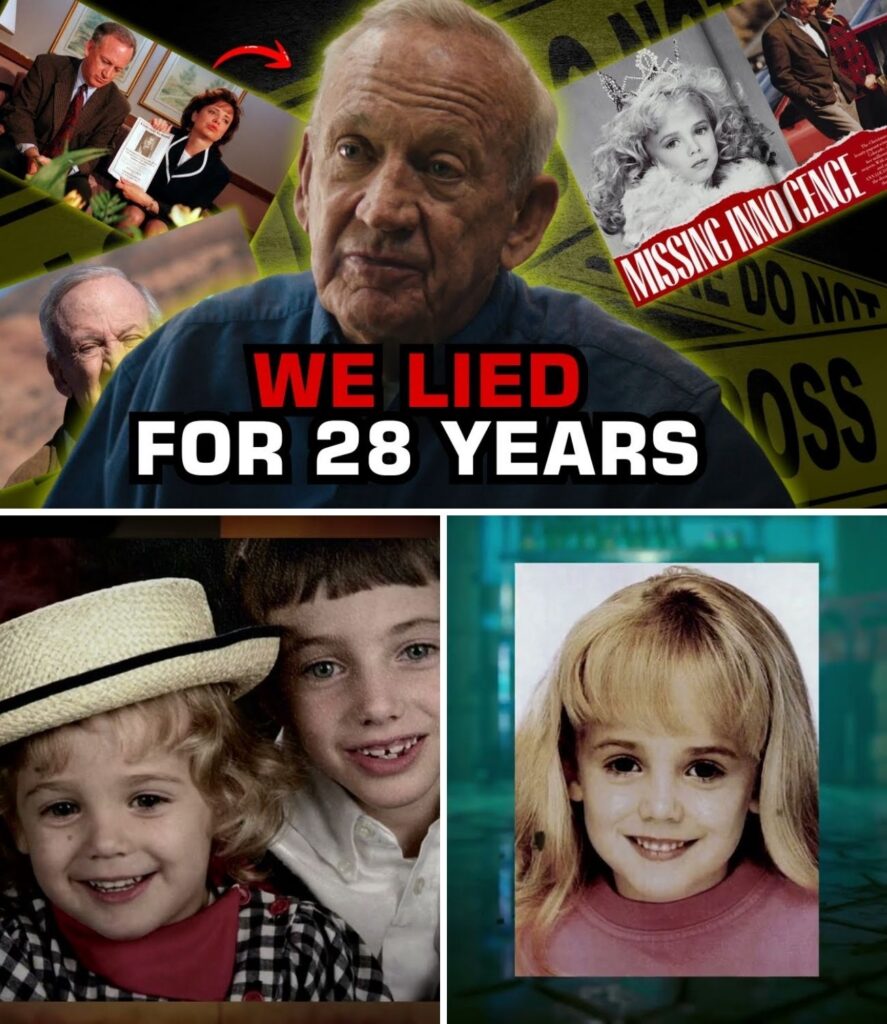
The 370-Word Lie: How a Ransom Note Exposed the Darkest Secrets of the JonBenét Ramsey Murder

It was a piece of paper that shouldn’t have existed. Lying on the spiral staircase of a sprawling Tudor mansion in Boulder, Colorado, sat a manifesto of madness—two and a half pages of theatrical demands, specific threats, and bizarre movie quotes. It was meant to be the ticket to a little girl’s freedom, a roadmap for a terrified father to save his daughter from a “small foreign faction.” Instead, those 370 words became the most damning confession in the history of American crime. They didn’t point to a foreign terrorist cell or a ruthless kidnapper lurking in the shadows. For twenty-eight agonizing years, investigators, experts, and armchair detectives have stared at that note, realizing with creeping horror that the ink didn’t come from an intruder’s pen. It came from inside the house.
The ransom note found on the morning of December 26, 1996, was a masterclass in deception, a desperate attempt to rewrite reality while a six-year-old beauty queen lay dead in the wine cellar just feet away. It wasn’t just a clue; it was the narrative anchor for a cover-up so elaborate, so panicked, and so utterly tragic that it has divided a nation for nearly three decades. This wasn’t a kidnapping gone wrong. The evidence, cold and unyielding, suggests that the “kidnapping” never happened at all. The truth wasn’t stolen in the night; it was written down, drafted, and revised on a kitchen counter while the world slept, hiding a family secret that would destroy lives and leave justice rotting on the vine.
The Night the Lights Went Out in Boulder
To understand the horror of that morning, you have to understand the perfection that preceded it. The Ramsey family was the American Dream personified. John Ramsey was a titan of industry, a self-made millionaire whose company, Access Graphics, had just shattered the billion-dollar revenue mark. He was a man of power, influence, and quiet confidence, the kind of father who could provide anything his family desired.
Patsy Ramsey was his perfect counterpart. A former Miss West Virginia, she was a woman who didn’t just live life; she performed it. She brought the glitz and discipline of the pageant world into her home, managing the household with the same intensity she applied to her daughter’s competitions. She was social, active, and deeply involved in the community, crafting an image of domestic bliss that was admired by all who knew them.
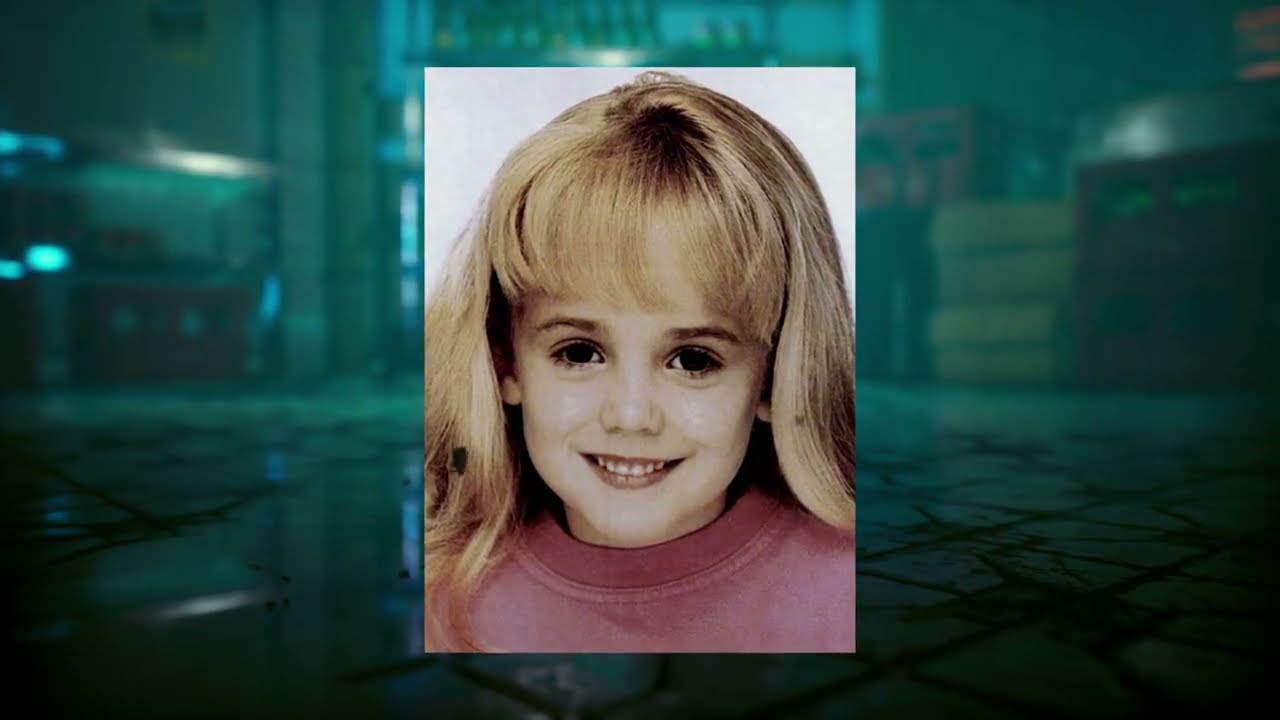
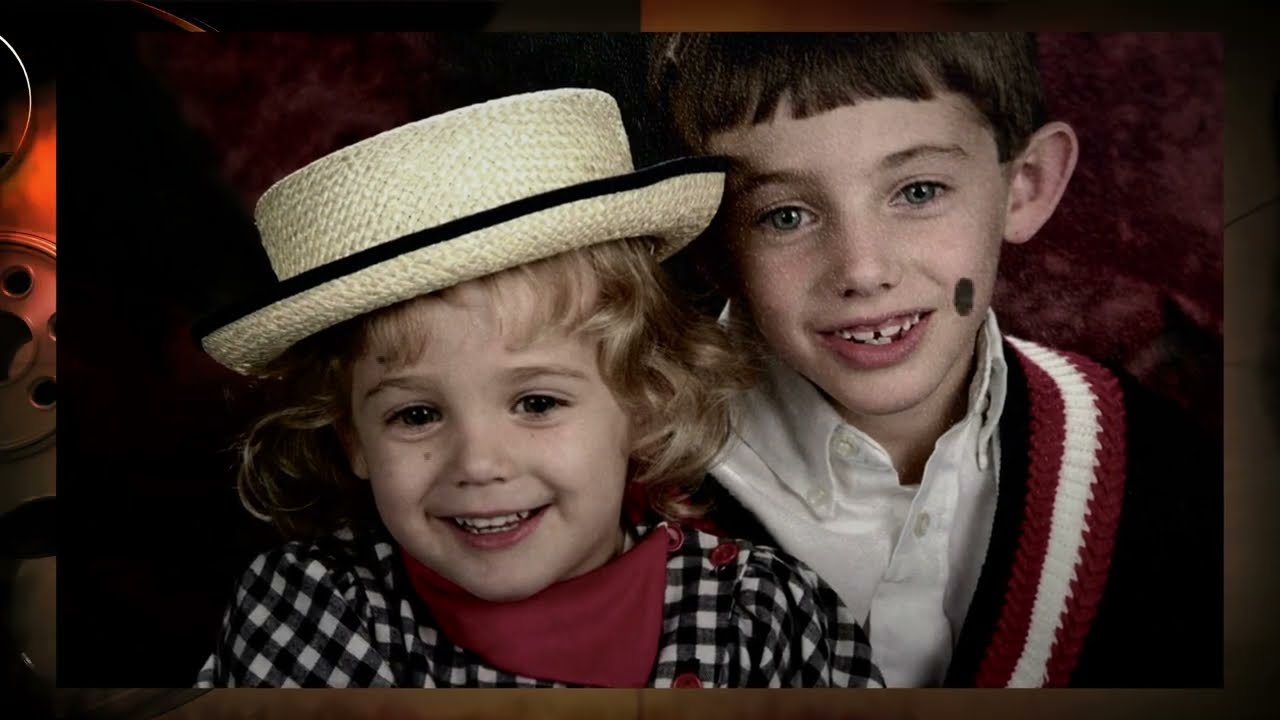
Then there were the children. Burke, nine years old, was the quiet one, a boy happier with his video games and model trains than the spotlight. And JonBenét. At six years old, she was already a star, a miniature celebrity with a crown of blonde hair and a smile that had won titles like Little Miss Colorado. She was the golden child, the center of their universe, doted on and dressed up, a living doll in a world of adults.
Christmas 1996 was supposed to be the pinnacle of their happiness. The house on 15th Street was a fortress of festive cheer, decorated within an inch of its life. On Christmas night, the family attended a party at the home of their friends, the Whites. By all accounts, it was a night of normalcy. Children played, parents drank wine, and laughter filled the air. There was no sign of the darkness waiting for them at home.
The family returned to their mansion around 9:00 PM. The story told to police was simple, almost wholesome: the children had fallen asleep in the car. John carried a sleeping JonBenét up to her room, tucking her into bed in her red turtleneck and velvet pants. Patsy checked on them one last time. By 10:00 PM, the house was silent. The Ramseys were asleep. The perfect Christmas was over.
But the silence was a lie. The timeline the Ramseys presented to the world would soon be shredded by a simple bowl of fruit. In the kitchen, a bowl of fresh pineapple sat on the table, a serving spoon resting inside. Fingerprints on the bowl belonged to Burke and Patsy. And inside JonBenét’s stomach, medical examiners would later find that same pineapple, partially digested.
She hadn’t drifted off to peaceful dreams at 9:00 PM. She had been awake. She had eaten. Someone had fed her, or she had snatched a piece from her brother’s bowl. The house wasn’t asleep; it was alive with movement, tension, and secrets. Between the hours of 10:00 PM and the frantic call at dawn, the mansion became a pressure cooker. Something happened in the dark that turned a family home into a slaughterhouse.
The Discovery That Changed Everything
At 5:52 AM, the facade shattered. Patsy Ramsey stood in the kitchen, her screams echoing off the high ceilings. She had found the note. “Mr. Ramsey, Listen carefully!” it began, a commanding opening that sent chills through anyone who read it. She dialed 911, her voice a jagged edge of hysteria. “We have a kidnapping! Hurry, please!”
The call itself is a artifact of chaos. Patsy was frantic, hyperventilating, begging for help. The operator tried to calm her, to get details. “Are you sure she’s not hiding?” the operator asked. Patsy insisted she was gone. John Ramsey’s voice, briefly on the line, was starkly different—controlled, calm, almost detached. But it was the end of the call that would haunt investigators for years.
Patsy thought she had hung up. She hadn’t. For several seconds, the line remained open, recording the ambient noise of a house in crisis. Years later, audio experts would isolate three distinct sounds: John’s voice, sharp and angry, saying, “We’re not speaking to you.” Patsy’s voice, moaning, “Help me, Jesus.” And a third voice, small and confused, asking, “What did you find?”
If that voice was Burke’s, the parents’ story was dead on arrival. They had claimed Burke slept through the entire ordeal, only waking up hours later when police arrived. If he was awake, standing in that kitchen while his mother screamed into the phone, then the Ramseys began their day with a lie. And if they lied about their son being awake, what else were they lying about?
Police arrived within minutes, but the damage was already done. Officer Rick French entered a scene of utter confusion. Friends and neighbors, called by the Ramseys in their panic, were flooding the house. They walked through rooms, sat on furniture, and wiped tears with tissues that would be left behind. The crime scene was being contaminated with every passing second, trampled by well-meaning intruders who had no idea they were erasing the truth.
Officer French made a fatal mistake that morning. He searched the house, moving down to the basement, past the train room, to a small wine cellar door. It was latched. He paused, hand hovering near the wood. A latched door meant no one had exited through it. He assumed it was empty. He turned away. Behind that door, in the cold darkness, JonBenét lay dead. If he had opened it, the investigation would have started hours earlier. The body would have been preserved. The truth might have been saved.
The Longest Morning
For seven hours, the house sat in a state of suspended animation. The ransom note demanded $118,000—a bizarrely specific sum that matched John Ramsey’s Christmas bonus almost to the penny. It warned against calling the police, yet the police were everywhere. It promised a call from the “foreign faction” between 8:00 and 10:00 AM. The deadline came. The phone remained silent.
Detective Linda Arndt was left alone with the family as the morning dragged on. The atmosphere was suffocating. John was pacing, making phone calls to his pilot to arrange a flight to Atlanta, a move that baffled investigators. Who plans a trip when their daughter is missing? Patsy was sedated, clutching a crucifix, surrounded by friends.
By 1:00 PM, Detective Arndt made a desperate call. She asked John and his friend Fleet White to search the house again, hoping to find something, anything, that had been missed. It was a Hail Mary pass that would result in a catastrophe. John went straight to the basement. He didn’t wander; he didn’t hesitate. He went to the wine cellar.
He opened the door, screamed, and carried his daughter’s lifeless body up the stairs. In that moment, the crime scene was destroyed. He laid her on the living room floor, her white skin stark against the rug. She was stiff, cold. Rigor mortis had set in. She had been dead for hours, long before the sun rose, long before the 911 call.
The Note That Screamed “Fake”
The ransom note is the smoking gun of the Ramsey case. Real kidnappers do not write 370-word essays. They do not sit in the victim’s kitchen, using the victim’s notepad and pen, to draft a manifesto. They grab the child and leave. They leave a short, scribbled demand or make a phone call. They want money, not a literary award.
This writer took their time. They started, stopped, and started again. Investigators found a practice draft in the notepad—”Mr. and Mrs. Ramsey”—crossed out and discarded. The final note was theatrical, filled with phrases lifted from action movies. “Don’t try to grow a brain” was a line from the movie Speed. The references to a “foreign faction” and “beheading” felt like a bad script, a pastiche of what someone thought a kidnapping should look like.
But the most chilling detail was the handwriting. Experts poured over the loops and curves, comparing them to samples from everyone in the house. John was ruled out immediately. But Patsy? Patsy was a problem. Four different experts couldn’t rule her out. The spacing, the unique way she formed her letters, the phrasing—it all bore a haunting resemblance to the mother’s hand.
Why would a mother write a ransom note for her own child? It makes no sense—unless there was no kidnapping. Unless the child was already dead, and the note was a desperate attempt to explain the body in the basement. The note was a shield, designed to point the finger at a phantom enemy, a “foreign faction” that didn’t exist, to protect the people who did.
The Autopsy of a Nightmare
The medical examiner’s report painted a picture of brutality that belied the peaceful image of the sleeping beauty. JonBenét had not just been strangled; her skull had been crushed. A massive fracture, eight and a half inches long, ran along the side of her head. It was a blow of terrifying force, consistent with a heavy flashlight or a bat.
But the timeline of injuries told a darker story. Experts believe the head blow came first, knocking her unconscious but not killing her immediately. She lay there, possibly for an hour or more, her brain swelling, her breath shallow. She was dying, but she wasn’t dead.
Then came the garrote. A white nylon cord was wrapped around her neck, tightened with a broken paintbrush handle taken from Patsy’s art supplies. The force used was savage, embedding the cord deep into her flesh. This wasn’t a quick kill. This was a finishing move.
Why the gap? Why hit her, wait an hour, and then strangle her? One theory suggests a cover-up in real-time. Perhaps the head blow was an accident—a fit of rage from a family member that went too far. The parents find her, think she’s dead, and panic. To make it look like an intruder, a “foreign faction,” they have to make it look like a murder. The strangulation wasn’t an act of hate; it was an act of staging.
The Brother in the Shadows
For years, the public focus was on John and Patsy. But the evidence has slowly, steadily turned its gaze toward the nine-year-old boy in the background. Burke Ramsey. The boy who was “asleep” but whose voice might be on the 911 tape. The boy whose fingerprints were on the pineapple bowl.
The theory is harrowing: A sibling dispute over a midnight snack. JonBenét tries to steal a piece of pineapple. Burke, holding a heavy flashlight, swings out in frustration. It’s a moment of childish anger, but the consequences are fatal. The flashlight connects with her skull. She falls.
In this scenario, the parents aren’t child killers; they are parents facing the ultimate impossible choice. They can call the police and lose both children—one to the morgue, one to the system. Or they can protect the living son at the expense of the truth. They choose the son. They write the note. They stage the scene. They invite the world to investigate a lie to keep the truth buried in the basement.
It explains the lack of footprints in the snow. It explains the no forced entry. It explains the weirdly specific ransom amount—money John could easily access without raising alarms. It explains why the parents lawyered up immediately, refusing to speak to the police who were trying to find their daughter’s killer. They weren’t hiding a kidnapper; they were hiding their boy.
The Indictment That Vanished
The most infuriating chapter of this saga occurred in secret. In 1999, a grand jury voted to indict John and Patsy Ramsey. They had heard the evidence, seen the photos, and listened to the experts. They didn’t charge them with murder. They charged them with child abuse resulting in death and being accessories to a crime.
The grand jury believed the parents didn’t kill her, but they knew who did. They believed the Ramseys “permitted a child to be placed in a situation that posed a threat to her life.” It was a legal acknowledgment of the cover-up theory. But the District Attorney, Alex Hunter, refused to sign it. He buried the indictment, telling the public there wasn’t enough evidence. It was a lie that stood for fourteen years until a judge finally unsealed the documents. The system had worked, and then it had been silenced.
Netizen Reactions: The Internet Never Forgets
The release of the documentary has reignited the online firestorm, with thousands of armchair detectives flooding forums and comment sections. The consensus has shifted. The sympathy for the parents has evaporated, replaced by a cynical, heartbreaking realization.
“The pineapple is the key,” writes one user, accumulating thousands of likes. “You don’t eat pineapple and then go to sleep for hours without digesting it. The parents lied about the timeline because the truth puts everyone in the kitchen at midnight.”
“I always wanted to believe it was an intruder,” comments another fan. “It’s just too horrible to think a mother could write a ransom note while her baby lay dying downstairs. But the 2.5 pages? The practice draft? No intruder does that. That’s pure panic and planning.”
“The grand jury knew,” says a top comment. “Imagine being a juror, voting to indict, and then watching the DA let them walk. The system failed JonBenét more than anyone.”
“It was Burke,” states a blunt, controversial reply. “He didn’t mean to kill her. Kids fight. But the parents decided one lost child was enough. It’s the only theory that fits every single piece of weird evidence.”
“Stay strong, Boulder PD,” a supporter chimes in. “DNA genealogy is the last hope. If there’s an intruder, find him. If not, prove it was the family once and for all.”
Conclusion: A Ghost in the Machine
Twenty-eight years later, the house on 15th Street stands as a silent monument to a little girl who never saw 1997. The case is officially unsolved, a “cold case” that burns hot in the American psyche. John Ramsey, now in his 80s, still searches for an intruder. Burke lives a quiet life, shielded by settlements and silence.
But the ransom note remains. It is the unblinking eye of the investigation, the document that refuses to fit into the “intruder” narrative. It screams of intimacy, of knowledge, of a desperate need to control the story. It is a confession without a signature.
JonBenét Ramsey deserves more than to be a tabloid mystery. She deserves the truth. The science of genetic genealogy is advancing; the DNA found on her clothing—trace amounts that might be from a killer or might be a factory worker—is being re-examined. There is a slim, fragile hope that science might do what the law could not.
Until then, we are left with the note. Read it again. “Listen carefully.” The killer was speaking to us. They were telling us exactly who they were, if only we were brave enough to believe the horror staring us in the face.
What do you think? Was it a bungled kidnapping by a foreign faction, or a tragic accident covered up by a family with everything to lose? Dive into the comments below and let us know your theory. The truth is out there, waiting for someone to finally say it out loud.