
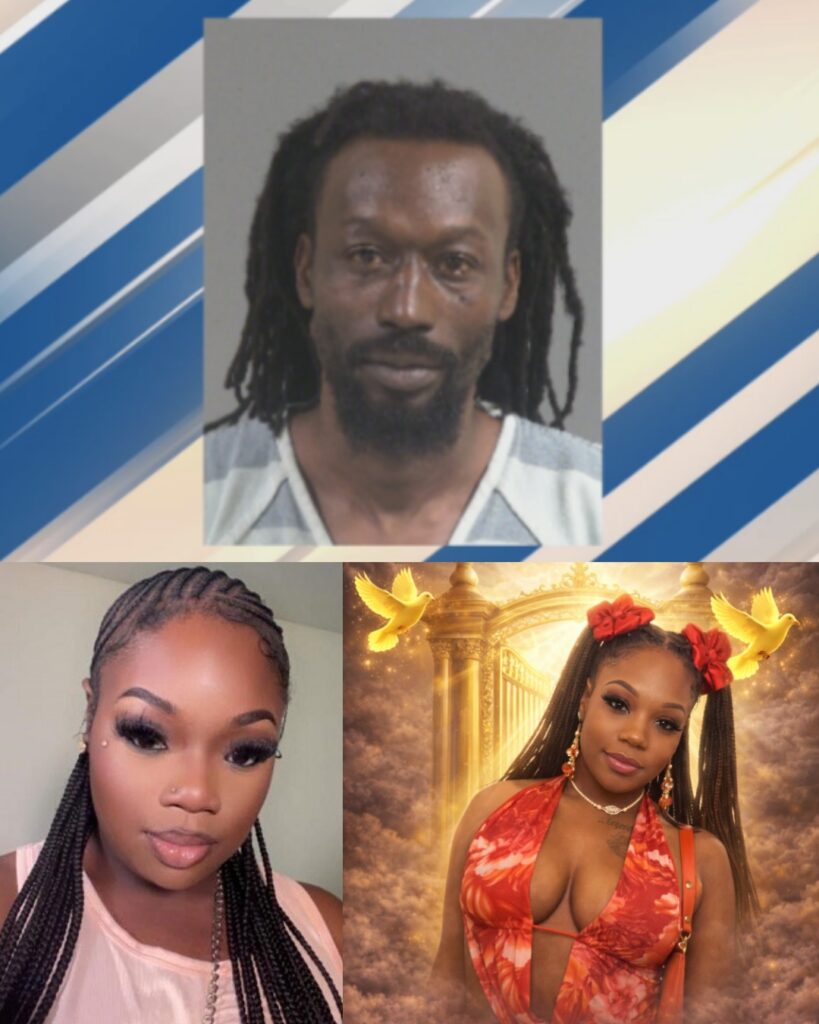
Just after midnight on January 10, when most of West Ashley was wrapped in sleep and quiet routines, a single violent moment shattered the stillness inside a modest home on Tripe Street, leaving behind a death that would echo far beyond the walls where it occurred.
Charleston police say 28-year-old Ashlyn Brianna Burkett was shot and killed in that home, her life ending abruptly in a burst of gunfire that officers would later describe only in careful, restrained terms, even as the emotional weight of the scene lingered heavily in the air.
When officers arrived after reports of shots fired, they found Burkett dead at the scene, the house transformed from an ordinary living space into the center of a homicide investigation that would quickly stretch across state lines.
Police have not publicly released a motive, and they have shared few details about what led up to the shooting, confirming only that a firearm was involved and that the investigation moved swiftly toward identifying a suspect.
That suspect, investigators say, is Antonio Jamal Kelly, a man whose name already appeared frequently in court and law enforcement records long before the night Burkett was killed.
Within days of the shooting, Charleston police determined Kelly had fled South Carolina, a move that immediately raised alarms and triggered a coordinated search beyond state borders.
With assistance from the U.S. Marshals Service, Kelly was ultimately located and arrested in Jacksonville, Florida, ending a brief but telling period on the run that authorities say followed the fatal shooting in West Ashley.
Kelly now faces a murder charge in Charleston County, along with a charge for possession of a weapon during a violent crime, and authorities say he is currently awaiting extradition back to South Carolina to face those accusations in court.
The arrest brought a measure of procedural progress, but it did little to answer the deeper questions surrounding Burkett’s death, questions that remain suspended in uncertainty as investigators continue their work.
Court and police records reveal that at the time of the shooting, Kelly was already wanted on a domestic violence charge, a fact that has drawn renewed scrutiny to events that unfolded months earlier at the very same Tripe Street address.
According to records, that earlier case dates back to May 2025, when police were called to the residence during a child custody exchange that escalated into allegations of assault.
A woman told officers she had been attacked during the exchange, and investigators documented visible injuries that, in their assessment, supported her account.
An arrest warrant for third-degree domestic violence
was issued months before the January homicide, yet the case had not reached resolution by the time gunfire erupted inside the home.

That unresolved warrant now stands as a haunting footnote in the timeline, one that raises difficult questions about warning signs, missed interventions, and the unpredictable trajectory of violence when it is allowed to persist.
A deeper look into Kelly’s background, obtained through the South Carolina Law Enforcement Division (SLED), shows a criminal history stretching back more than a decade, marked by repeated encounters with the justice system and a pattern of serious offenses.
Records indicate Kelly has multiple convictions involving firearms and drugs, including a felony conviction for possession of a firearm as a prohibited person, an offense that carries significant legal weight under both state and federal law.
He has served multiple prison sentences over the years, including one term lasting 32 months, and his time under supervision has been repeatedly disrupted by probation and parole violations
.
Those violations, documented in state records, resulted in Kelly being returned to custody on multiple occasions, reinforcing a cycle of release, violation, and re-incarceration that defined much of his adult life.
SLED records further state that Kelly is prohibited by federal law from possessing firearms or ammunition due to his prior felony convictions, a prohibition designed to reduce the risk of precisely the kind of violence now alleged in this case.
Yet despite those restrictions, police say a firearm was involved in Burkett’s killing, underscoring a persistent and troubling gap between legal prohibitions and real-world outcomes.

For investigators, the challenge now lies in assembling a case that clearly and conclusively explains what happened inside the Tripe Street home after midnight on January 10, and how a chain of prior events may have contributed to the fatal moment.
For Burkett’s loved ones, the challenge is far more personal and immeasurable, defined not by court filings or arrest warrants, but by an absence that can never be filled.
At 28 years old, Burkett’s life was still unfolding, her future unwritten, her days shaped by ordinary hopes and private struggles that rarely make headlines until tragedy forces them into public view.
Neighbors in West Ashley have not publicly spoken in detail about the night of the shooting, but the sudden presence of police vehicles, flashing lights, and investigators moving in and out of the home left an unmistakable impression on the community.
The address on Tripe Street, once just another point on a residential map, has now become synonymous with loss, violence, and unanswered questions.
Police have emphasized that while Kelly’s criminal history is extensive and well-documented, he
has not been convicted in the homicide case and is legally presumed innocent until proven guilty in a court of law.
That presumption, a cornerstone of the justice system, exists alongside public awareness of his past, creating a tension between legal standards and emotional reactions that often surface in cases involving repeat offenders.

Investigators say the case remains active, and they have indicated that additional details may be released as evidence is processed, witnesses are interviewed, and timelines are clarified.
Extradition proceedings will bring Kelly back to South Carolina, where he will face the charges tied to Burkett’s death and the weapon allegedly used in the crime.
Until then, the story remains incomplete, suspended between what is known, what is alleged, and what has yet to be proven.
What is certain is that a life ended in the quiet hours of a January morning, and that ending has set in motion a legal reckoning shaped by years of prior offenses, unresolved allegations, and a final act of violence that can no longer be undone.
In the coming months, courtrooms will fill with arguments, evidence, and testimony, each piece contributing to a narrative that seeks to explain how a history marked by guns, violations, and domestic conflict intersected with a single fatal shot.
For now, West Ashley carries the weight of that unanswered story, and the name Ashlyn Brianna Burkett stands as a reminder that behind every police report and criminal record is a human life, irrevocably altered in an instant that continues to ripple outward.