
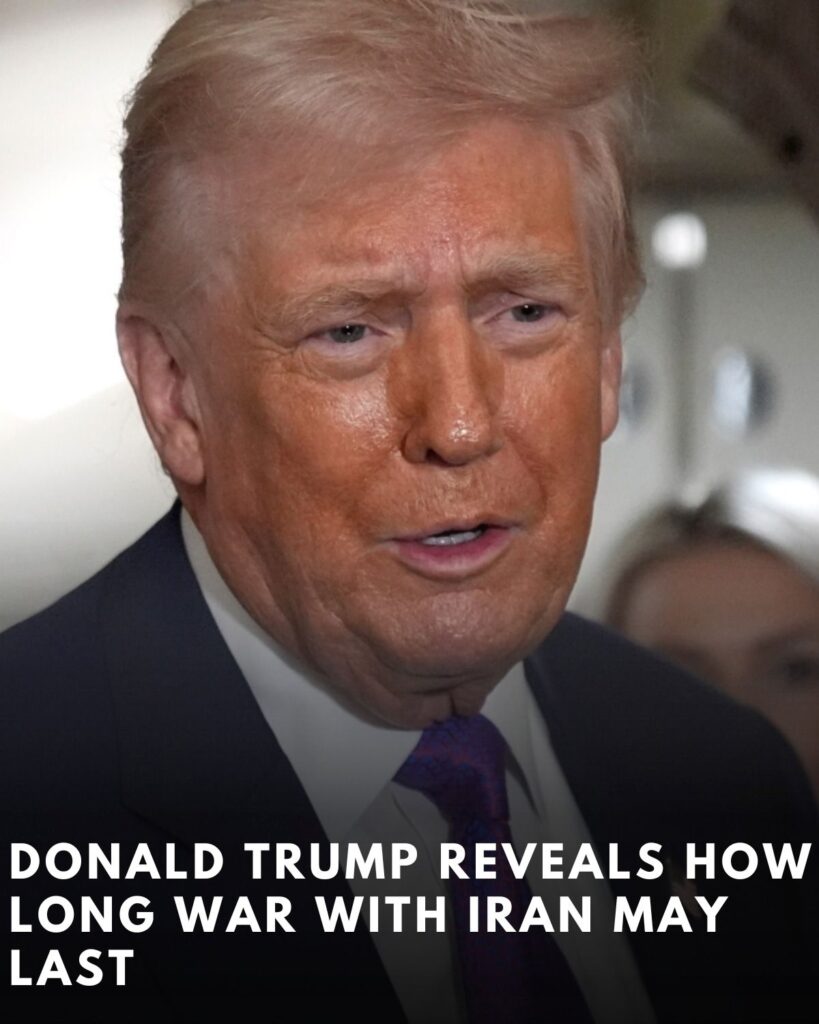
President Donald Trump has vowed that the United States will “avenge” the deaths of three American service members killed in action during combat operations against Iran, as Washington and Israel pressed ahead with an expanding military campaign that U.S. officials have said could last weeks.
In a video statement posted on Truth Social, Trump confirmed the deaths and warned that further casualties were likely, while insisting the operation would continue until U.S. objectives were met. “Combat operations continue at this time in full force, and they will continue until all of our objectives are achieved. We have very strong objectives,” he said. Trump added: “But America will avenge their deaths and deliver the most punishing blow to the terrorists who have waged war against, basically, civilization.”
The deaths were the first publicly confirmed U.S. fatalities since the start of major combat operations ordered by Trump over the weekend. U.S. Central Command said on Sunday that three service members had been killed and that five others were “seriously wounded”, adding that several other troops suffered minor shrapnel injuries and concussions. Central Command did not immediately disclose the precise circumstances of the deaths, and U.S. officials said the identities of those killed were being withheld until after next-of-kin notifications.
Two U.S. officials, speaking to Reuters on condition of anonymity, said the service members were killed on a base in Kuwait amid Iranian retaliatory attacks that followed the opening phase of the U.S. and Israeli campaign. Iranian strikes across the region were described by U.S. and military reporting as a barrage aimed at U.S. installations after the first wave of attacks on Iran.
The military operation has been referred to in U.S. reporting as Operation Epic Fury, with U.S. aircraft and warships striking targets across Iran. Reuters reported that U.S. aircraft and warships had struck more than 1,000 Iranian targets since Trump ordered the start of major combat operations, including the use of B-2 stealth bombers dropping 2,000-pound bombs on hardened, underground Iranian missile facilities.
Trump has publicly framed the campaign as necessary to prevent Iran from obtaining a nuclear weapon, to contain Iran’s missile programme, and to eliminate threats to the United States and its allies. In the same period, he has urged Iranians to rise up against their government. Reuters reported that U.S. officials have prepared the public for a multi-day operation and that planning has contemplated a sustained campaign that could last weeks. Trump was quoted by Reuters as saying the strikes could take “four weeks or less.”
Alongside the battlefield developments, the Trump administration faced growing scrutiny over its stated rationale for launching the operation. Reuters reported on Monday that administration officials acknowledged in closed-door briefings with congressional staff that there was no intelligence suggesting Iran planned to attack U.S. forces first, according to two people familiar with the matter. The officials nonetheless emphasised to lawmakers that Iran’s ballistic missiles and proxy forces posed an imminent threat to U.S. interests, Reuters said.
The briefings, which the White House said lasted more than 90 minutes, came as Democrats accused Trump of pursuing what they described as a “war of choice”. Reuters reported that senior administration officials had told reporters the day before the assault began that Trump decided to launch attacks in part because of indicators Iran might strike U.S. forces in the Middle East “perhaps preemptively.” In the congressional briefings, however, officials acknowledged there was no specific intelligence about Tehran attacking U.S. forces first, the sources told Reuters.
The military confrontation has also unfolded in public through statements on social media. Trump said in a separate social media post that the U.S. was “sinking Iran’s Navy,” claiming nine Iranian warships had been destroyed so far and that U.S. forces were “going after the rest.” “They will soon be floating at the bottom of the sea,” Trump said, adding: “Other than that, their Navy is doing very well!”
U.S. officials have provided limited detail on the exact incidents that led to the American deaths. Military Times, citing Central Command, reported that “Major combat operations continue and our response effort is ongoing,” and said U.S. officials dismissed online claims that Iran’s Islamic Revolutionary Guard Corps struck the aircraft carrier USS Abraham Lincoln. According to the publication’s account of the Central Command statement, officials said “The Lincoln was not hit,” and added: “The missiles launched didn’t even come close. The Lincoln continues to launch aircraft in support of CENTCOM’s relentless campaign to defend the American people by eliminating threats from the Iranian regime.”
The conflict has prompted reactions from senior U.S. officials beyond the White House. Reuters reported that Michael Waltz, the U.S. envoy to the United Nations, wrote in a post on X: “Freedom is never free.”
Public support for the operation has appeared uncertain as casualties mounted. A Reuters/Ipsos poll that concluded on Sunday found that 27% of Americans approved of the strikes, while 43% disapproved and 29% were not sure, Reuters reported. The same Reuters report said about nine in 10 respondents had heard at least a little about the strikes.

On the Iranian side, casualty figures have been contested and difficult to independently verify amid ongoing attacks and restrictions on information. Military Times reported that Iran’s Red Crescent Society said at least 201 people had been killed and more than 700 injured across Iran.
Trump’s vow to “avenge” the deaths of the three service members was amplified by Fox News and other accounts in posts sharing excerpts of his Truth Social statement, as the White House and Pentagon sought to project resolve while signalling the risk of further losses. For U.S. commanders and diplomats, the deaths and injuries add urgency to the immediate challenge of protecting U.S. forces in the region while sustaining a campaign that the president has said will continue until Washington’s objectives are achieved.