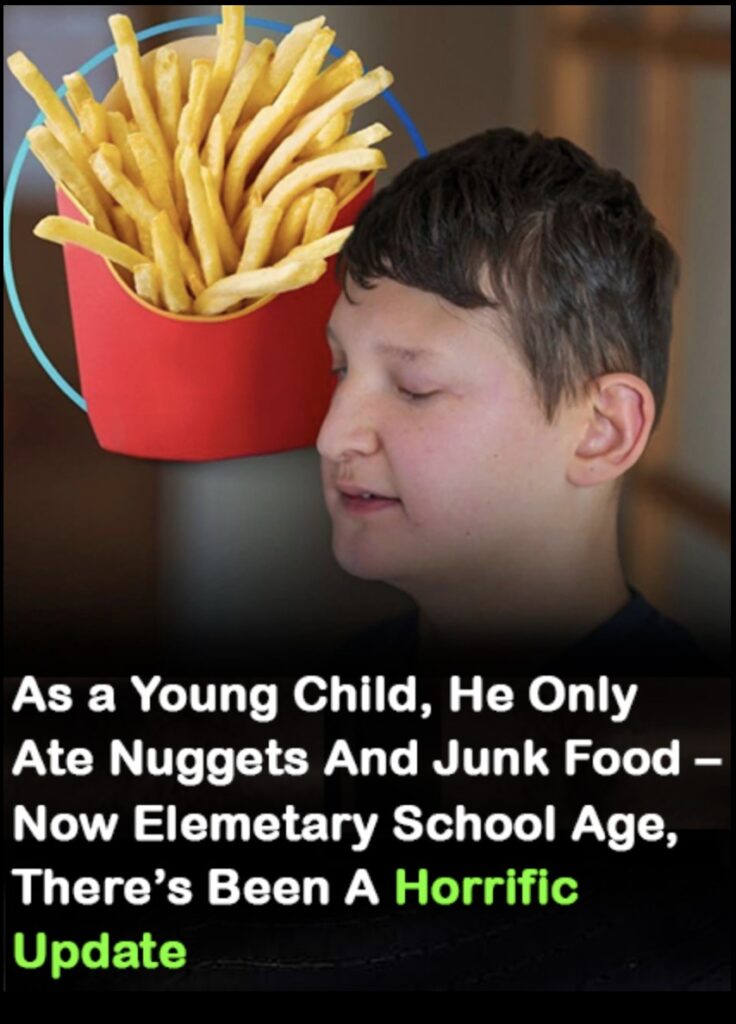
In a medical tragedy that has shocked healthcare professionals across Southeast Asia, an 8-year-old Malaysian boy has been declared permanently blind—the victim of a restrictive, nutrient-void diet consisting almost entirely of ultra-processed snacks.
The case, which underscores the catastrophic potential of severe vitamin deficiencies in the modern age, came to a heartbreaking head in a local classroom. According to reports from iHeart, the child turned to his teacher and asked, “Why can’t I see anything?” Sensing an immediate crisis, school officials rushed the student to a nearby hospital, where the extent of the damage was finally revealed.
The Diagnosis: A Preventable Tragedy
Doctors discovered that the boy was suffering from an extreme Vitamin A deficiency. The lack of essential nutrients had progressed to optic atrophy—a condition where the optic nerve, responsible for transmitting visual information from the eye to the brain, undergoes irreversible death.
While Vitamin A deficiency is often associated with famine-stricken regions, this case was driven by a self-imposed “food desert” within the home. Since infancy, the child had reportedly refused almost all sustenance except for chicken nuggets, sausages, and cookies.
Dr. Erna Nadia, a prominent Malaysian physician and health advocate, took to Facebook to share the clinical details of the case, aiming to alert parents to the silent dangers of “picky eating” taken to a pathological extreme.
“As a mother, I understand it’s not always easy to prepare nutritious meals when you’re busy,” Dr. Nadia wrote. “Pity for the parents of this student—it’s not easy for them to accept.”

Understanding Vitamin A and Vision
Vitamin A is a critical component of rhodopsin, a protein in the eyes that allows us to see in low-light conditions. Without it, the surface of the eye can become dangerously dry, damaging the cornea and eventually leading to the total decay of the optic nerve.
According to the Daily Mail, Dr. Nadia highlighted several early warning signs that parents should never ignore:
- Chronic dry eyes or a lack of tear production.
- “Night blindness” or significant trouble navigating in low light.
- The appearance of Bitot’s spots—foamy, gray, or white triangular patches on the whites of the eyes.
A Global Crisis of Preventable Blindness
While uncommon in the United States and other developed nations due to food fortification, Vitamin A deficiency remains the leading cause of preventable childhood blindness worldwide. The World Health Organization (WHO) estimates that hundreds of thousands of children lose their sight annually due to the condition.
To safeguard pediatric health, the Cleveland Clinic recommends a diet rich in diverse, whole foods. Essential sources of Vitamin A include:
- Pro-Vitamin A (Carotenoids): Found in leafy greens (broccoli, spinach) and orange/yellow produce like carrots, sweet potatoes, pumpkin, mangoes, and papayas.
- Preformed Vitamin A (Retinol): Found in animal products such as eggs, dairy, liver, beef, and fatty fish like salmon.
- Fortified Staples: Many regions utilize fortified rice, wheat, and cereals to bridge nutritional gaps.
A Pattern of “Malnutrition in Plenty”
This Malaysian case is not an isolated incident. It serves as a grim echo of a similar story reported by the Daily Mail in October of last year involving a 12-year-old boy from Massachusetts. In that instance, a similarly restrictive diet led to profound vision loss, proving that severe malnutrition can occur even in nations with an abundance of food if that food lacks essential micronutrients.
For medical experts, these cases are a stark reminder that a child’s caloric intake is not a substitute for nutritional quality. When a diet is reduced to a handful of processed items, the biological toll can be permanent.