
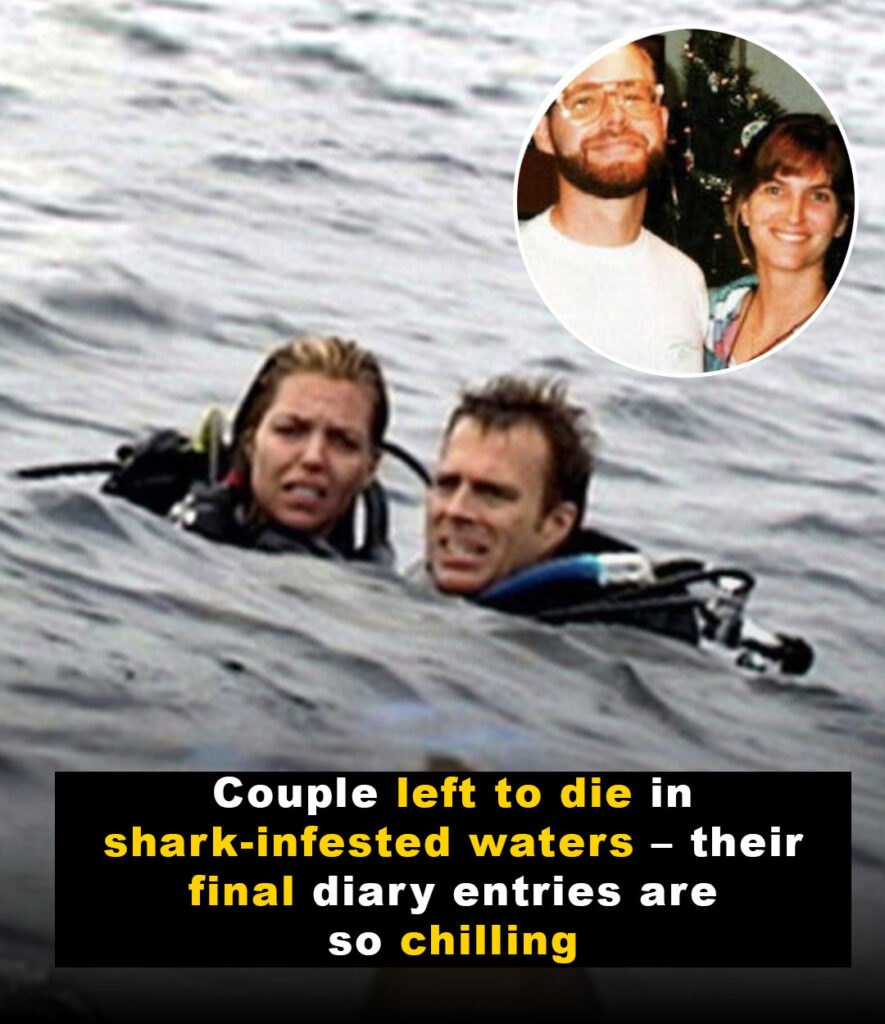
The vast, cerulean expanse of the Great Barrier Reef is often celebrated as a pinnacle of natural beauty, but for those who know the story of Tom and Eileen Lonergan, it serves as a sprawling, watery grave and the site of one of the most chilling maritime mysteries of the last century. In 1998, the Louisiana couple was accidentally abandoned in shark-populated waters during a routine diving excursion—a logistical failure that would later inspire the claustrophobic survival film Open Water and ignite decades of speculation ranging from tragic negligence to a meticulously staged vanishing.
The Last Descent at ‘Shark City’
On January 25, 1998, Tom Lonergan, 33, and his wife Eileen, 28, were nearing the end of an adventurous South Pacific odyssey. The couple, both seasoned divers who had recently concluded a two-year Peace Corps mission in Fiji, boarded the MV Outer Edge in Port Douglas, Queensland. They were among 26 passengers headed for St. Crispin’s Reef, a remote and biodiverse section of the Coral Sea.
The day’s itinerary concluded at a dive site known as “Fish City.” However, local knowledge suggested a more ominous moniker. Mick Bird, a fisherman working the area that day, later testified to an alarming concentration of predators. “Every time we threw a line, we’d pull in a shark,” Bird told the Daily Mail. “They should rename that place Shark City.”
The last person to see the Lonergans alive was fellow diver Bryan Brogdan. He recalled a moment of serene beauty: the couple hovering near a giant clam, illuminated by shafts of sunlight. As Brogdan began his ascent to comply with the crew’s timeframe, the Lonergans remained below, pushing the limits of their dive profile. It was a small decision that would lead to a catastrophic outcome.
A Chain of Fatal Assumptions
At 3:00 p.m., as the Outer Edge prepared to depart, a headcount was initiated—the final fail-safe in diving operations. What occurred next was a masterclass in human error. Crew member George Pyrohiw conducted the count, but the process was compromised by the chaotic environment of a returning vessel.
Two passengers reportedly jumped back into the ocean for last-minute photography, leading to a double-count. Pyrohiw initially tallied 24 on deck, but when he reported the figure to skipper Geoffrey “Jack” Nairn, the math was erroneously adjusted. “And two in the water makes 26,” Nairn allegedly remarked. With the ledger “balanced,” the boat weighed anchor, leaving the Lonergans to surface into an empty horizon.
The negligence continued at the docks. Two unclaimed dive bags containing the couple’s dry clothes, wallets, and passports were found on board. Rather than investigating the discrepancy, the crew simply moved the bags aside, assuming the owners had simply forgotten them. Even when Norm Stigant, a shuttle driver, reported that two of his assigned passengers had failed to show up for their hotel transport, his concerns were dismissed.
The Grim Discovery
For two days, the Outer Edge continued its commercial operations, taking fresh groups of tourists to the very site where the Lonergans were likely treading water. It wasn’t until the third day, when the unclaimed bags were finally opened and Tom’s ID was found, that the alarm was raised.
The resulting search was gargantuan. Navy aircraft, helicopters, and a fleet of civilian vessels scoured the Coral Sea, but the ocean is an unforgiving witness. Ten days later, the first physical evidence emerged: Tom’s buoyancy compensator (BCD) was found 50 miles north of the dive site. Soon after, a weathered wetsuit believed to be Eileen’s washed ashore. Forensic analysis of the garment revealed jagged tears in the posterior—damage consistent with the “rag-dolling” effect of a shark strike. Despite the recovery of their tanks and weight belts, no remains were ever found.
The “Death Wish” Diaries
As the investigation pivoted toward the couple’s background, authorities discovered personal journals in their Cairns hostel that shifted the narrative from a simple accident to something far more disturbing.
Six months prior to the trip, Tom had written a dark meditation on his own existence: “I feel as though my life is complete and I’m ready to die… It has peaked and it’s all downhill from here until my funeral.”
Even more unsettling was Eileen’s entry, penned just 16 days before they vanished: “Tom hopes to die a quick and fairly [painless] death and he hopes it happens soon. Tom’s not suicidal, but he’s got a death wish that could lead him to what he desires, and I could get caught in that.”
These entries fueled a firestorm of conspiracy theories. Skeptics questioned if the Lonergans had used the dive as a cover to stage a disappearance and start anew, or perhaps a darker “murder-suicide” pact. However, the financial evidence remains a stubborn roadblock to the “staged” theory: their bank accounts were never touched, and no life insurance claims were ever filed.
The Legacy of the Outer Edge
Geoffrey Nairn was eventually tried for manslaughter but was acquitted; his company, however, pleaded guilty to negligence and collapsed under the weight of the scandal. The case revolutionized diving regulations in Australia, making independent, verified headcounts a legal mandate.
Ultimately, the Lonergans’ story remains a haunting duality: a cautionary tale of bureaucratic failure and a disturbing psychological mystery. Were they victims of a “death wish” fulfilled by the ocean, or merely two travelers betrayed by the people tasked with their safety?