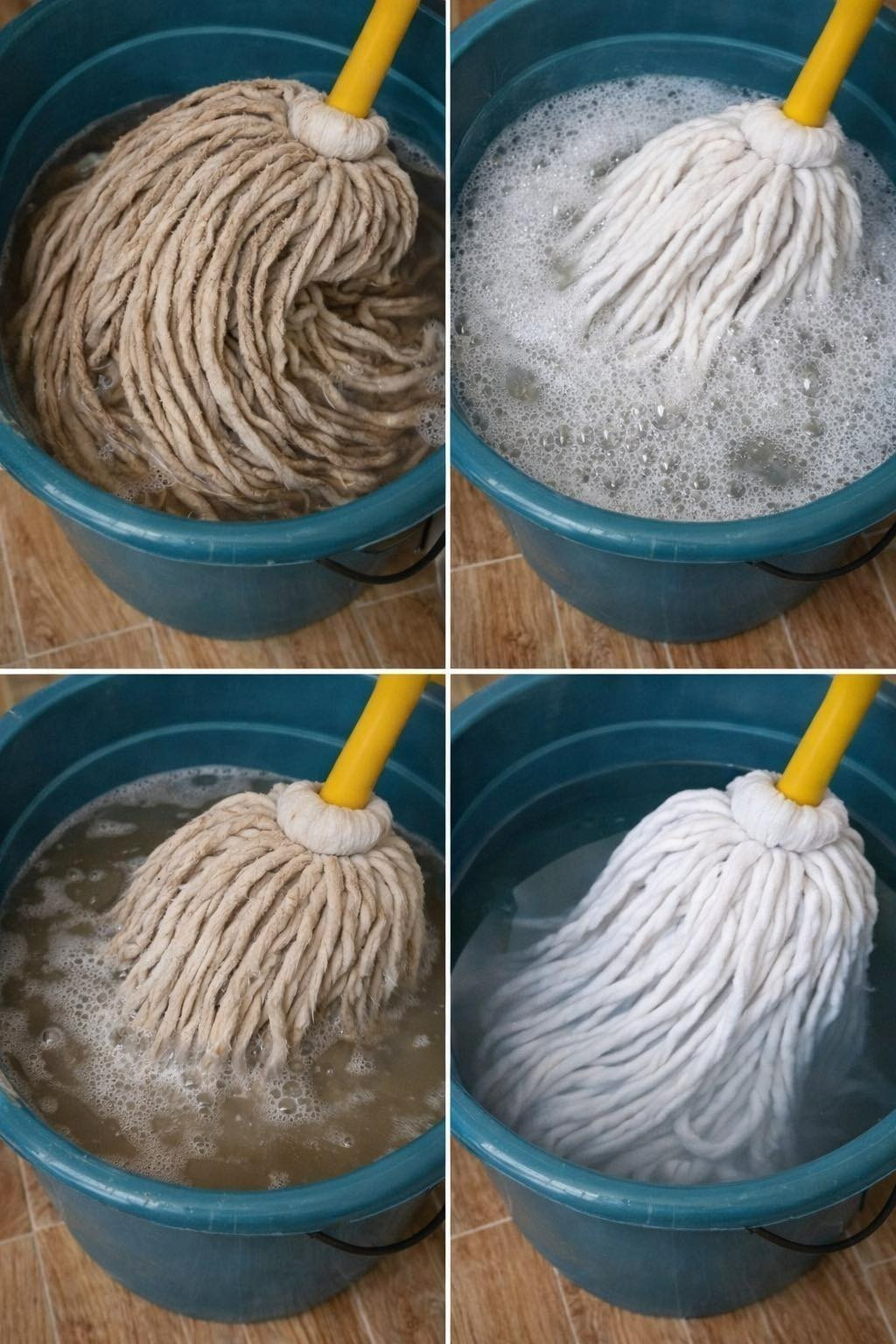
That mop has scrubbed your floors for months—but when was the last time it got cleaned? A dirty mop doesn’t just look grimy—it spreads bacteria, mildew, and odors with every swipe. The good news? You don’t need a new mop. With one powerful pantry ingredient and 30 minutes, you can restore even the grimiest mop to fresh, hygienic condition.
One ingredient. 30 minutes. Like-new mop.
The Problem: Your Mop Is Dirtier Than Your Floor
Think about it: every time you mop, you’re pushing dirty water through your mop head. Bacteria, food particles, soap scum, and mildew accumulate over time. When you use a dirty mop, you’re essentially spreading that grime back onto your floors.
A clean mop = clean floors. A dirty mop = a waste of effort.
The Secret Ingredient: Distilled White Vinegar
That’s right—the same vinegar you use for pickling, salad dressings, and cleaning windows is the powerhouse that will revive your mop.
Why vinegar works:
- Naturally antibacterial – Kills many common bacteria
- Breaks down soap scum and mineral deposits
- Neutralizes odors (doesn’t just cover them)
- Cuts through grease and grime
- Environmentally friendly and cheap
- Safe for most mop types
How to Deep Clean Your Mop (3 Methods)
Method 1: For Removable Mop Heads
What you’ll need:
- 1 cup white vinegar
- Hot water
- Large bucket or sink
Steps:
- Remove the mop head if possible.
- Rinse under hot water to remove loose debris.
- Fill a bucket with hot water and 1 cup white vinegar.
- Submerge the mop head and let soak for 30 minutes.
- Agitate the mop head in the water to loosen dirt.
- Rinse thoroughly until water runs clear.
- Wring out completely.
- Air dry in a well-ventilated area—never store damp.
Method 2: For Sponge Mops
What you’ll need:
- 1 cup white vinegar
- 1 tablespoon dish soap (optional, for extra cleaning power)
- Hot water
Steps:
- Rinse the sponge under hot water.
- Fill a bucket with hot water and 1 cup vinegar.
- Add dish soap if using.
- Submerge the sponge and let soak for 30 minutes.
- Squeeze the sponge repeatedly to work the solution through.
- Rinse thoroughly.
- Wring out completely and air dry.
Method 3: For Non-Removable Mop Heads
What you’ll need:
- 1 cup white vinegar
- Large bucket or sink
- Hot water
Steps:
- Fill a bucket or sink with hot water and 1 cup vinegar.
- Submerge the entire mop head and let soak for 30 minutes.
- Agitate the mop in the water to loosen dirt.
- Rinse under running water until clear.
- Wring out thoroughly.
- Hang to dry in a well-ventilated area.
For Extra-Stubborn Mops: The Baking Soda Boost
If your mop is especially grimy or has a lingering odor:
- Follow the vinegar soak method above.
- After soaking, sprinkle ½ cup baking soda directly onto the mop head.
- Let sit for 10 minutes.
- Scrub gently with your hands or a brush.
- Rinse thoroughly.
- Air dry completely.
Note: Don’t mix vinegar and baking soda in the same soak—they neutralize each other. Use them sequentially.
Why This Method Is Better Than Bleach
| Vinegar Method | Bleach Method |
|---|---|
| Safe for most mop types | Can damage some materials |
| No harsh fumes | Strong chemical odor |
| Environmentally friendly | Harsh on septic systems |
| Kills bacteria | Kills bacteria (and everything else) |
| Neutralizes odors naturally | Leaves chemical residue |
| Pennies per use | More expensive |
Daily Maintenance: Keep Your Mop Cleaner Longer
After each use:
- Rinse the mop head thoroughly under warm running water until water runs clear.
- Wring completely dry – A damp mop is a breeding ground for bacteria.
- Hang to air-dry in a well-ventilated area – Never store standing in a bucket.
- Never store damp – This invites odor and mold.
When to Actually Replace Your Mop
Even with perfect care, mops eventually wear out. Replace when:
- Fibers are frayed, matted, or falling out
- The mop leaves streaks or lint behind
- Odors persist even after deep cleaning
- The handle is cracked or damaged
- The sponge is torn or disintegrating
A well-maintained mop should last 6-12 months with regular use.
Bonus: How to Clean a Mop Bucket
Don’t forget the bucket! A dirty bucket undoes all your mop-cleaning work.
To clean your mop bucket:
- Rinse with hot water.
- Fill with hot water and 1 cup vinegar.
- Let sit for 15 minutes.
- Scrub with a brush.
- Rinse thoroughly.
- Air dry completely.
The Bottom Line
You don’t need to buy a new mop every time yours looks dirty. With a simple vinegar soak and 30 minutes of attention, you can restore it to like-new condition—saving money, reducing waste, and ensuring your floors actually get clean.
That trusty mop has been working hard for you. Give it the care it deserves.