
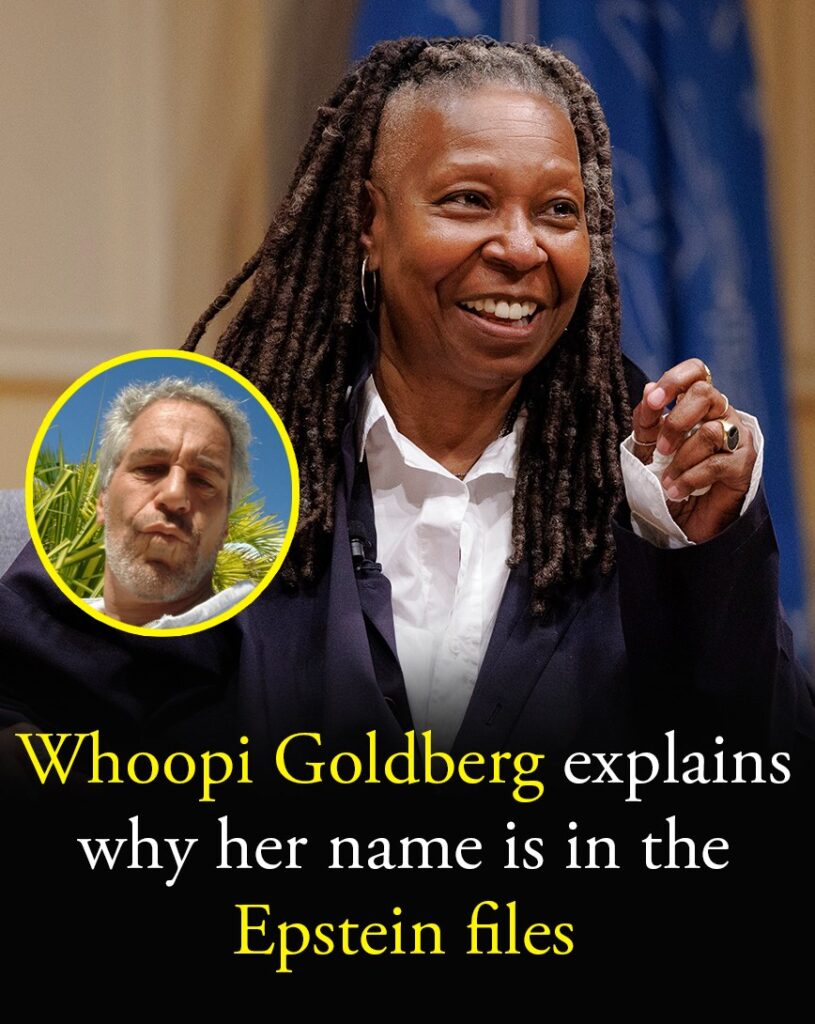
In an era where the boundary between judicial record and digital fodder has all but vanished, Whoopi Goldberg, the EGOT-winning moderator of The View, recently took the unusual step of addressing her own appearance in the sprawling legal archives connected to the late Jeffrey Epstein. The move comes as a response to a new wave of public scrutiny triggered by the unsealing of documents from litigation involving Epstein’s former associates—records that have become a hunting ground for social media sleuths and bad-faith actors alike.
During a recent broadcast, Goldberg bypassed the typical celebrity strategy of silence, opting instead for a preemptive strike rooted in radical transparency. “In the name of transparency, my name is in the files. Yes,” she told her audience, effectively de-fanging the “leaks” before they could be weaponized by the “outrage economy.”
The Anatomy of a Mention: The 2013 Monaco Email
To provide the necessary context, Goldberg read the specific excerpt of the document on air. The entry in question originates from a 2013 email chain regarding travel logistics for a high-profile charity event in Monaco. The message, as described by Goldberg, was a logistical inquiry: “Whoopi needs a plane to get to Monaco.” It further referenced that the costs for the trip would be underwritten by a charitable organization.
The crux of the digital firestorm lies in a follow-up query within that same email, asking whether Epstein, or someone within his vast network of resources, might be able to provide access to a private jet for the transit.
Goldberg’s account was definitive: the request did not originate from her personally, nor did it suggest a social intimacy with Epstein. “I wasn’t his girlfriend, I wasn’t his friend,” she stated, underscoring that she never boarded an aircraft owned or operated by the financier. This distinction is paramount. Epstein, a man who meticulously curated a “power map” of global influencers, appeared in the address books and flight logs of hundreds of public figures. However, as legal analysts have consistently cautioned, being a name in a logistical chain is not a synonym for criminal participation.
The “Hour of the Wolf” for Celebrity Reputation
The email reportedly pertained to a fundraising gala for a foundation connected to Julian Lennon, the musician and philanthropist son of John Lennon. Goldberg expressed palpable frustration with the way this professional footnote was being mutated into a narrative of personal alliance. “People actually believe that I was with him. It’s like, ‘honey, come on,’” she remarked.
Co-host Joy Behar amplified the defense, noting the inherent danger of “guilt by association” in massive document dumps. “So in other words, anyone can be on this list,” Behar commented, pointing to the reality that a person can be the subject of a third-party email without ever being aware the conversation took place.
The Logistics of Logic: Aviophobia and “The Island”
Goldberg also utilized a well-documented personal trait to dismantle the rumors: her lifelong, crippling fear of flying. For decades, the actress has been vocal about her preference for buses and trains over aircraft, a fact she used to highlight the absurdity of claims that she was a frequent flyer on Epstein’s “Lolita Express.”
“I don’t like flying,” she reminded viewers with a touch of her trademark wit, suggesting that the idea of her hopping on private jets for leisure trips contradicted years of public record regarding her travel anxieties. Furthermore, she categorically rejected viral claims that she had ever visited Epstein’s private residence in the U.S. Virgin Islands. While social media “flight logs” often circulate with celebrity names added for engagement, official judicial records have never placed Goldberg at the site.
The Epstein Legacy and the Unsealing of Maxwell
The broader context of this controversy is rooted in the 2019 arrest of Jeffrey Epstein on federal sex trafficking charges and his subsequent death in a Manhattan jail, ruled a suicide by the medical examiner. His death did not end the legal proceedings; instead, it shifted the focus to his primary associate, Ghislaine Maxwell, whose subsequent conviction on federal trafficking charges led to the unsealing of thousands of pages of depositions, contact lists, and correspondence.
Legal experts and prosecutors have warned repeatedly that these documents are “raw” materials. They contain unverified statements, incidental mentions, and logistical chatter that do not equate to accusations of misconduct. However, in the “context-free” environment of social media, an isolated line in an email can be parsed to create a misleading impression of a hidden life.
The Challenge of Media Responsibility
Goldberg’s proactive stance highlights a growing challenge for public figures in the digital age. When court documents are released in fragments, the “truth” is often whatever narrative gains the most retweets. By quoting the document directly, Goldberg attempted to reclaim her own narrative from the algorithms of misinformation.
As a recognizable figure for over forty years, Goldberg argued that a hidden romantic or social relationship with such a high-profile figure would have been impossible to maintain under the glare of the paparazzi. Her career, defined by its outspokenness and visibility, has been lived almost entirely in the open.